

When you start a renovation or build a new home, one of the most common questions is: what’s the real difference between a kitchen faucet and a bathroom faucet? Many people assume they are interchangeable, but as any professional faucet supplier will tell you, these two fixtures are designed for completely different purposes. In this article, we will explore every aspect of these differences, while repeatedly emphasizing the roles of faucet supplier, faucet manufacturer, kitchen faucet, and bathroom faucet. Whether you are a contractor, a homeowner, or a procurement officer, understanding these distinctions will help you choose the right product from your trusted faucet supplier and ensure you get the best quality from a reliable faucet manufacturer.
1. Functional Purpose
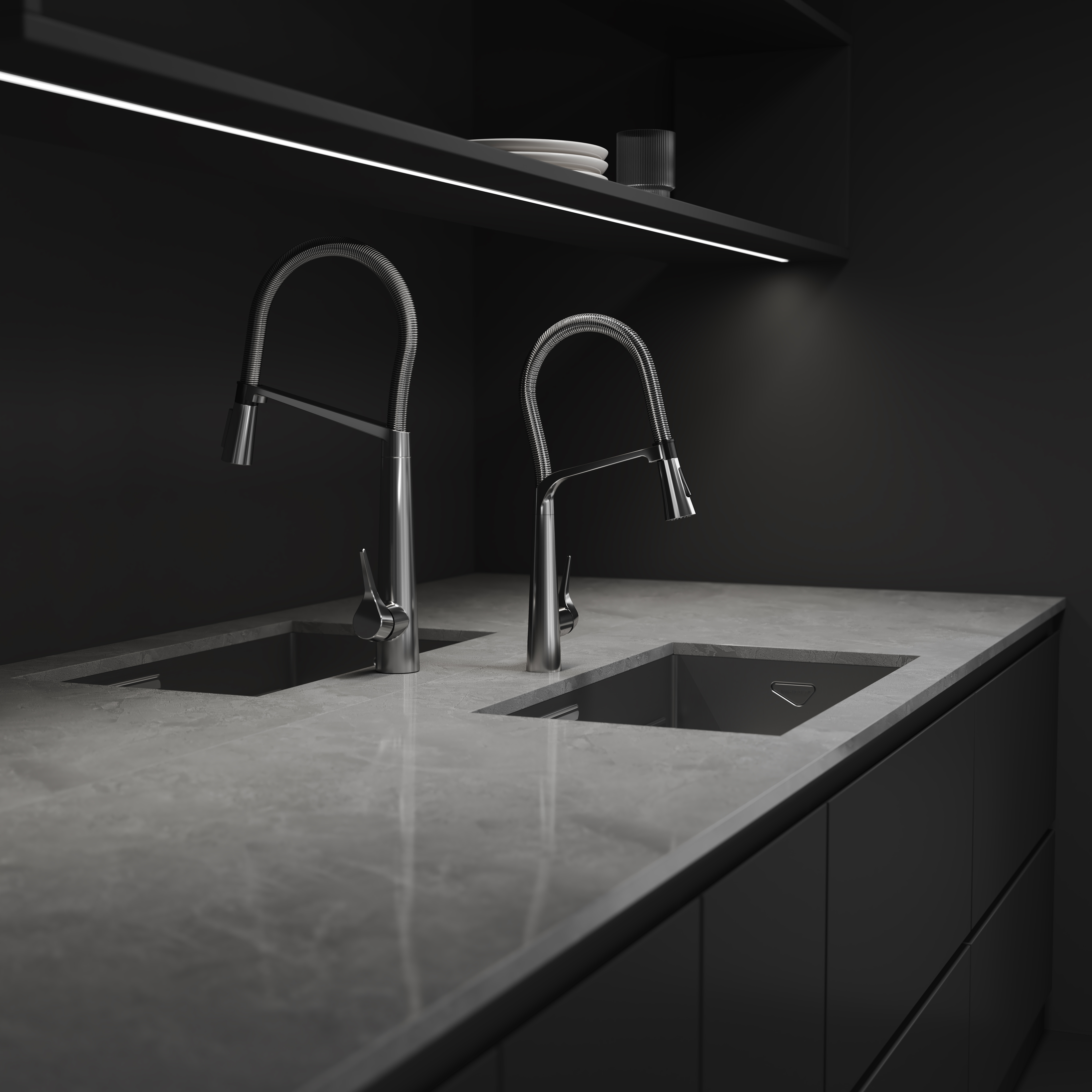
The most fundamental difference lies in their intended use. A kitchen faucet is designed for heavy-duty tasks: washing dishes, filling large pots, rinsing vegetables, and even spraying down the sink. It must handle high water flow, frequent operation, and exposure to grease, food particles, and high temperatures. In contrast, a bathroom faucet is used for personal hygiene—handwashing, face washing, toothbrushing, and shaving. It operates with lower flow rates and shorter run times. A reputable faucet manufacturer will engineer these products with distinct internal cartridges and aerators to match these usage patterns. Likewise, a professional faucet supplier will always ask about your application before recommending a model, because a kitchen faucet and a bathroom faucet are never one-size-fits-all.
2. Design and Aesthetics
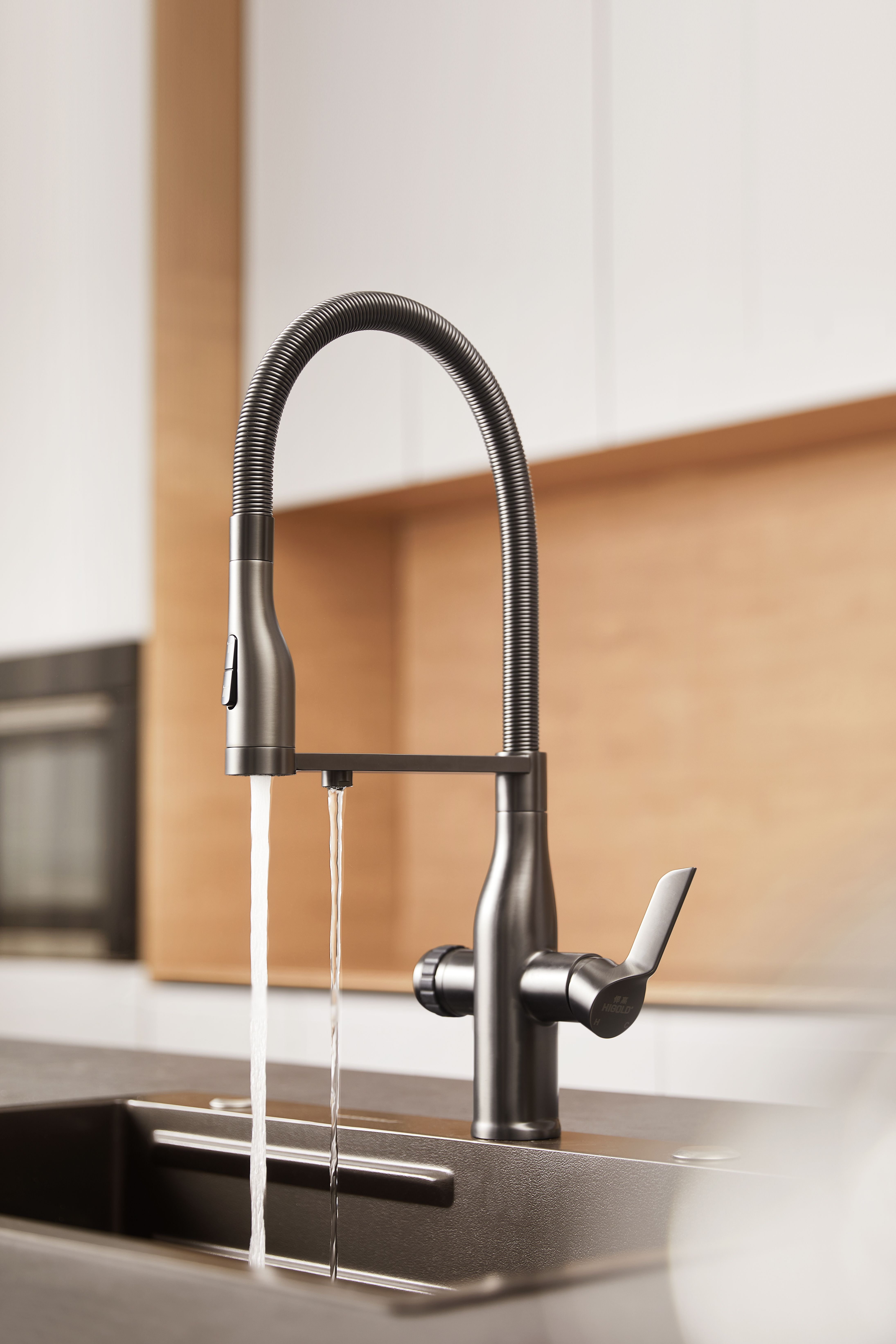
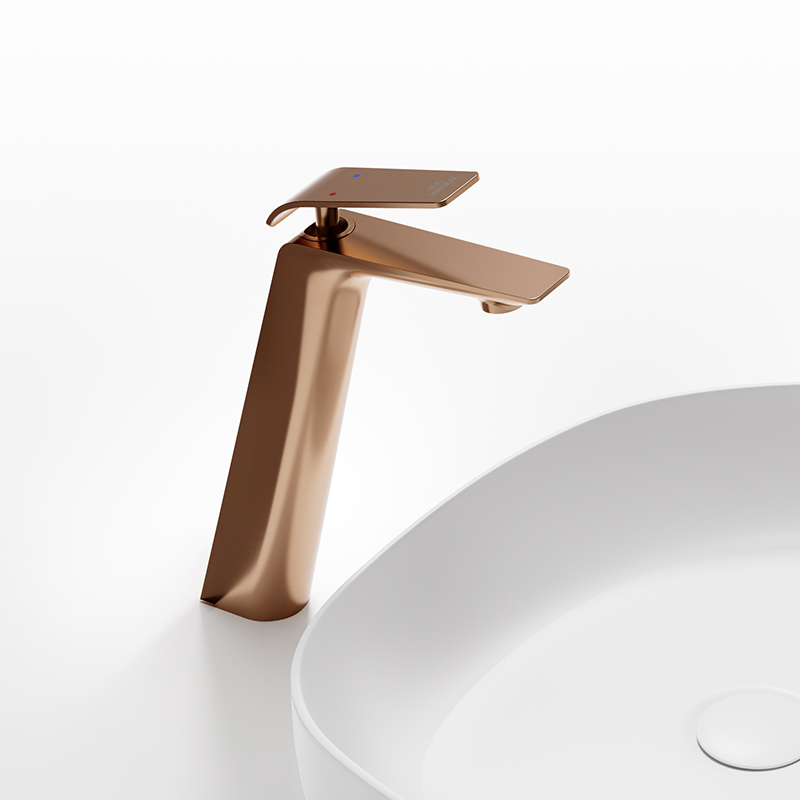
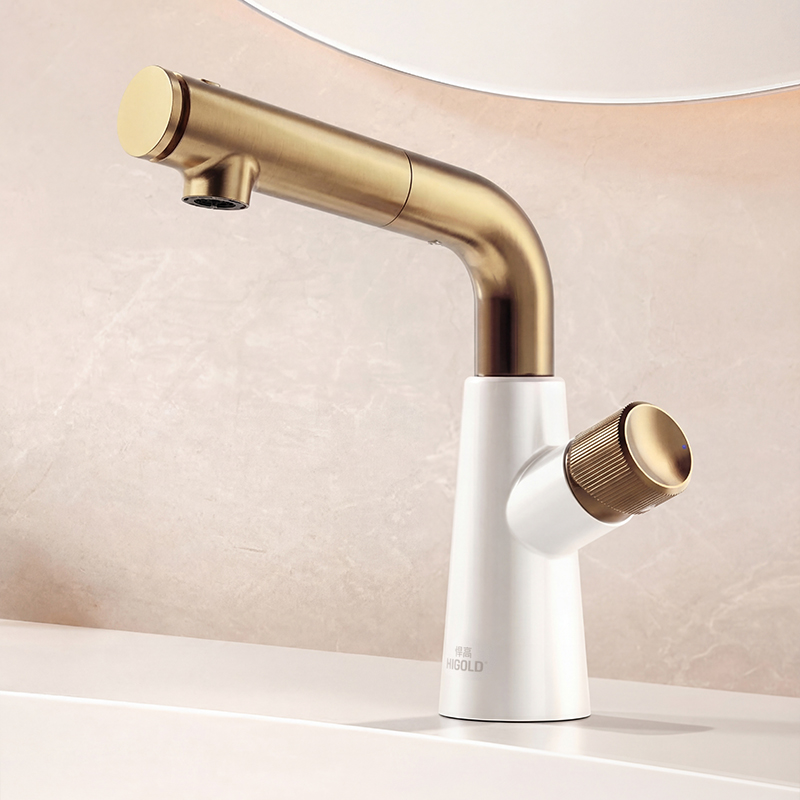
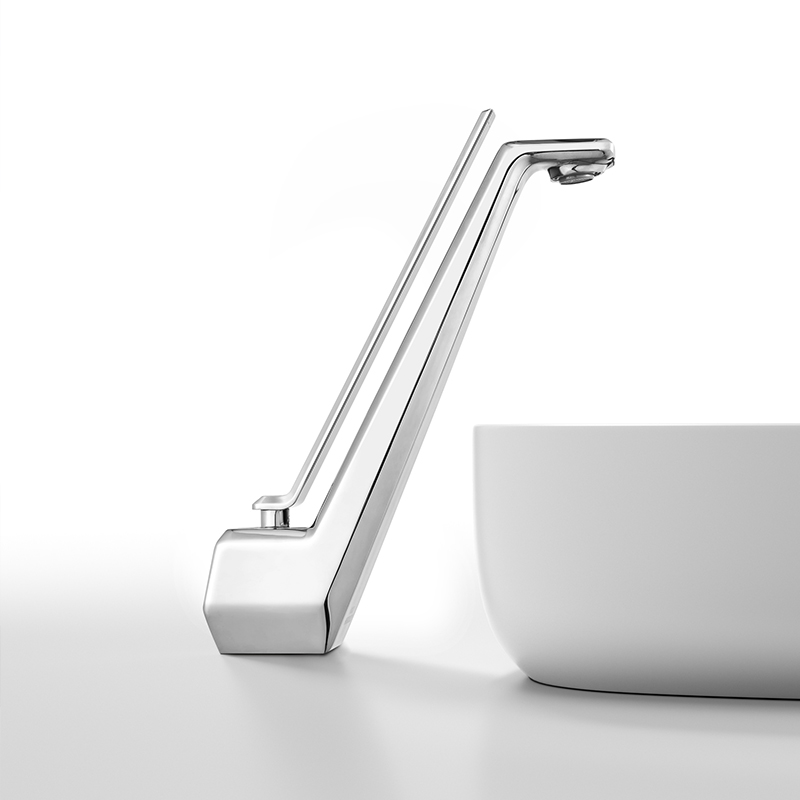
Visually, a kitchen faucet and a bathroom faucet are worlds apart. Kitchen faucet designs emphasize height and reach—high-arc gooseneck styles are extremely popular because they provide clearance for large pots and pans. They often feature pull-down or pull-out spray heads for added flexibility. Bathroom faucet designs, on the other hand, are more compact and low-profile, with shorter spouts and simpler handles. They prioritize elegance and space-saving, since bathroom vanities have limited depth. A leading faucet manufacturer will maintain separate design teams for each category, and a savvy faucet supplier will stock hundreds of finishes—from matte black to brushed gold—but the proportions and ergonomics always differ. When you visit a showroom, you can immediately spot whether a product is a kitchen faucet or a bathroom faucet just by its silhouette.
3. Spout Height and Reach
This is perhaps the most obvious technical difference. A typical kitchen faucet has a spout height of 8 to 12 inches above the deck, with a reach of 8 to 10 inches, allowing water to land in the center of a deep kitchen sink. A bathroom faucet usually has a spout height of only 4 to 6 inches and a reach of 4 to 5 inches, because bathroom sinks are shallower and narrower. Any experienced faucet manufacturer will provide detailed specifications on these dimensions, and a reliable faucet supplier will clearly label each product as kitchen faucet or bathroom faucet to prevent mismatched installations. If you accidentally install a kitchen faucet on a bathroom vanity, water will splash everywhere; if you install a bathroom faucet in a kitchen, you won’t be able to fit a stockpot underneath. So always consult your faucet supplier for the right measurements.
4. Flow Rate and Water Efficiency
Regulatory standards differ between the two categories. In the United States, a kitchen faucet is typically limited to 1.8 to 2.2 gallons per minute (GPM), while a bathroom faucet is restricted to 1.2 to 1.5 GPM. This is because kitchens require more powerful streams for cleaning, whereas bathrooms prioritize water conservation. A forward-thinking faucet manufacturer will use different aerator technologies—kitchen faucets often have larger, more open aerators to produce a strong, straight stream, while bathroom faucets use fine-mesh aerators to create a soft, splash-free flow. When you source from a professional faucet supplier, they will provide you with flow rate charts and WaterSense certifications for both kitchen faucet and bathroom faucet models. Remember, choosing the correct flow rate not only saves water but also ensures your daily tasks are performed efficiently.
5. Handle Operation and Controls
The way you turn water on and off also varies significantly. Most kitchen faucet models feature single-lever joystick handles that allow you to adjust temperature and flow with one hand—especially useful when your other hand is holding a greasy pan. Many modern kitchen faucets also include touchless or motion-sensor controls for added hygiene. Bathroom faucet designs, however, include a wider variety: two-handle widespread, single-hole, or wall-mounted options. While a bathroom faucet can also be single-lever, the lever is usually shorter and mounted closer to the spout. A quality faucet manufacturer will use ceramic disc cartridges in both types, but the torque and stroke length are calibrated differently. As a faucet supplier, we often remind buyers that a kitchen faucet needs to withstand thousands of cycles per day, while a bathroom faucet sees fewer but more delicate touches. So the internal mechanisms, though similar in principle, are optimized separately by every reputable faucet manufacturer.
6. Spray Functions and Accessories
A standout feature of any modern kitchen faucet is the integrated spray function. Pull-down or pull-out spray heads offer multiple modes—stream, spray, and sometimes even a powerful “boost” or “sweep” mode for heavy-duty cleaning. Some kitchen faucets also come with a separate side sprayer. In contrast, a bathroom faucet rarely includes such spray functions; the focus is on a clean, laminar flow that doesn’t splash. A few high-end bathroom faucets may offer a gentle aerated spray for face washing, but nothing like the powerful jet of a kitchen faucet. When you work with a knowledgeable faucet supplier, they will highlight these accessory differences, because a kitchen faucet without a spray wand is like a car without wheels. Meanwhile, a faucet manufacturer will often package kitchen faucets with extra hoses, weight balls, and quick-connect fittings, while bathroom faucets come with simpler mounting hardware. So always check with your faucet supplier about what is included in the box for each type.
7. Installation Requirements
Installing a kitchen faucet and a bathroom faucet involves different mounting holes and deck configurations. A standard kitchen faucet typically requires a single 1⅜-inch hole, but many models also need three holes (for the faucet and separate side sprayer). The deck thickness and clearance underneath the sink are also critical—kitchen faucets have longer shanks and heavier bases to support the tall spout. A bathroom faucet can be single-hole, 4-inch centerset, or 8-inch widespread, with much shorter shanks. A professional faucet manufacturer will provide detailed installation templates, and a good faucet supplier will pre-sort inventory based on hole configuration. If you are retrofitting an old sink, you must measure carefully, because a kitchen faucet cannot be swapped with a bathroom faucet without modifying the countertop. Many DIY mistakes happen precisely because people ignore this—so always ask your faucet supplier for adapter plates or compatibility guides.
8. Materials and Finishes
Both types are made from brass, stainless steel, or zinc alloy, but the thickness and plating quality often differ. A kitchen faucet faces more abrasive cleaning and acidic foods, so a top-tier faucet manufacturer will apply a thicker PVD (Physical Vapor Deposition) coating or electroplating with extra corrosion resistance. Bathroom faucet finishes, while equally beautiful, may prioritize aesthetics over extreme durability, because bathroom environments are less harsh (though they do face humidity and soap scum). A reliable faucet supplier will offer the same finish options—chrome, brushed nickel, oil-rubbed bronze, etc.—for both categories, but the underlying substrate and coating thickness may vary. When you compare a kitchen faucet and a bathroom faucet side by side from the same faucet manufacturer, you might notice that the kitchen version feels heavier and more solid. That is no coincidence; it is engineered for decades of heavy use.
9. Common Mistakes and How to Avoid Them
One of the biggest errors is buying a bathroom faucet for a kitchen sink because it looks stylish, or vice versa. We cannot stress enough: always verify the product category with your faucet supplier. Another mistake is ignoring the deck clearance—a tall kitchen faucet might hit an overhead shelf, while a short bathroom faucet won’t reach the back of a deep sink. Always check the specification sheet provided by the faucet manufacturer. Also, many people forget to check the aerator type: a kitchen faucet with a fine-mesh aerator will clog quickly from debris, and a bathroom faucet with a wide aerator will cause excessive splashing in a shallow basin. A professional faucet supplier will guide you through these nuances, and a responsive faucet manufacturer will have customer service to answer your questions. Remember, choosing between a kitchen faucet and a bathroom faucet is not just about looks—it’s about performance, longevity, and daily convenience.
10. Future Trends
Both categories are evolving with smart technology. We now see touchless kitchen faucet models with voice activation, and bathroom faucet models with LED temperature indicators. The same faucet manufacturer often produces both lines, but with different software features. A forward-looking faucet supplier will stock both traditional and smart versions. Sustainability is also a major driver—new kitchen faucets incorporate flow restrictors that maintain pressure while reducing volume, and bathroom faucets are pushing toward ultra-low flow rates below 1.0 GPM. As a buyer, you should partner with a faucet supplier who understands these trends and can offer products from a faucet manufacturer that invests in R&D. Whether it’s a kitchen faucet or a bathroom faucet, the future is about personalization, water savings, and seamless integration with home automation systems.
Conclusion
In summary, while a kitchen faucet and a bathroom faucet may look superficially similar, they are fundamentally different in function, design, flow rate, spray features, installation, materials, and price. Choosing the right one requires careful consideration of your specific needs, and working with an experienced faucet supplier is the smartest move. A top-notch faucet manufacturer will provide clear labeling, detailed specs, and robust warranties for each category. Next time you shop, remember: don’t let a pretty bathroom faucet end up in your kitchen, and don’t force a bulky kitchen faucet into a tiny bathroom. Instead, rely on your faucet supplier to match you with the perfect model, and trust that a reputable faucet manufacturer has already engineered each product for its intended environment. By understanding these distinctions, you will save money, avoid frustration, and enjoy years of reliable performance from both your kitchen faucet and your bathroom faucet.

