

1. Introduction – The Overlooked Fixture Takes Centre Stage
For decades, the kitchen faucet was an afterthought—a utilitarian spout attached to a sink, tasked with little more than delivering water. It was functional, forgettable, and firmly in the background.
Somewhere in the last fifteen years, a quiet revolution took place. The modern kitchen faucet has become a statement of engineering, a focal point of design, and a bridge between the professional culinary world and the home cook.
At the heart of this transformation lies the rise of the commercial faucet, and more specifically, the dominance of the stainless steel kitchen faucet. Today, when we discuss the soul of a kitchen, we are inevitably discussing the kitchen faucet, the commercial faucet that inspired it, and the stainless steel kitchen faucet that perfected it.
2. The Lineage – From Modest Home Fixture to Professional Workhorse
The traditional home kitchen faucet was modest—often chrome‑plated brass with two separate handles. It served its purpose but lacked gravitas.
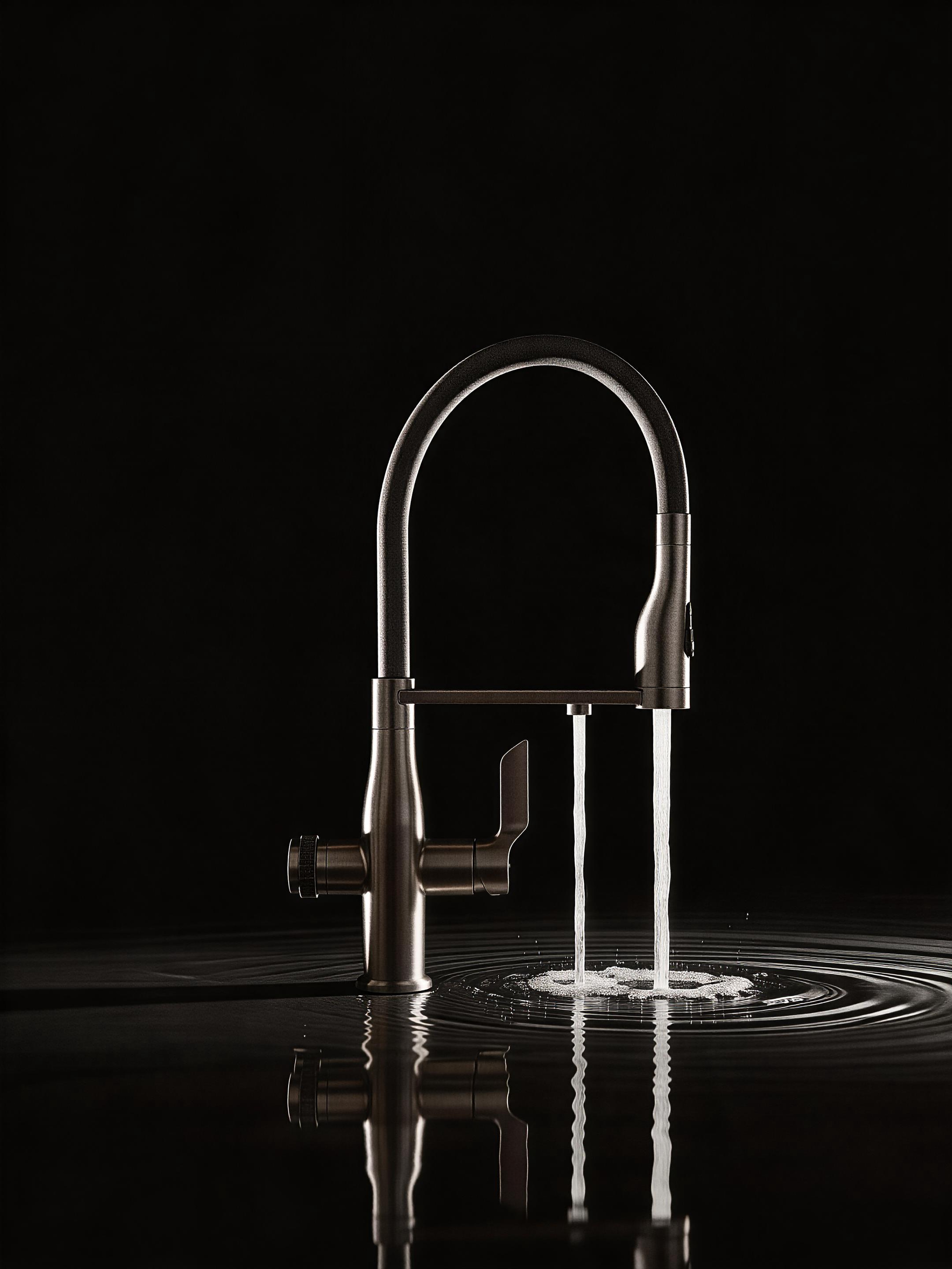
Then came the restaurant kitchen, where the commercial faucet reigned supreme. These were not delicate instruments; they were workhorses designed for speed, durability, and high‑volume usage. A commercial faucet featured a spring‑loaded neck, a high‑arc gooseneck, and a pull‑down sprayer with industrial‑grade pressure.
The commercial faucet was never meant for residential use—it was too big, too aggressive, and too expensive. But as cooking shows proliferated and open‑concept homes blurred the line between kitchen and living space, homeowners coveted that professional edge. They wanted the commercial faucet in their own islands.
Manufacturers listened and adapted the commercial faucet for home use, scaling down its footprint while retaining its commanding presence. This marked the first major shift in the evolution of the kitchen faucet.
3. Material Evolution – Why Stainless Steel Became the Gold Standard
Early adaptations of the commercial faucet faced a hurdle: material integrity. The original commercial faucet was often heavy brass or plated zinc, which showed wear over time—acceptable in a restaurant, unsightly at home.
The solution arrived in the form of the stainless steel kitchen faucet. Unlike its predecessors, the stainless steel kitchen faucet offered the ruggedness of a commercial faucet with a sleek, corrosion‑resistant finish that homeowners desired.
Suddenly, the kitchen faucet was no longer just a tool; it was a long‑term investment in aesthetics. The stainless steel kitchen faucet could withstand acidic foods, hard water minerals, and constant friction without losing its luster.
Today, when interior designers specify a kitchen faucet, the default material is almost always stainless steel, because the stainless steel kitchen faucet bridges the gap between form and function like no other.
4. The Synergy – Commercial Design Meets Stainless Steel Construction
Why has the stainless steel kitchen faucet become inextricably linked with the commercial faucet style? The answer lies in the physics of cooking. A true commercial faucet is built around a heavy‑duty spring and a flexible hose that allows the spray head to be pulled down and maneuvered directly over pots and pans.
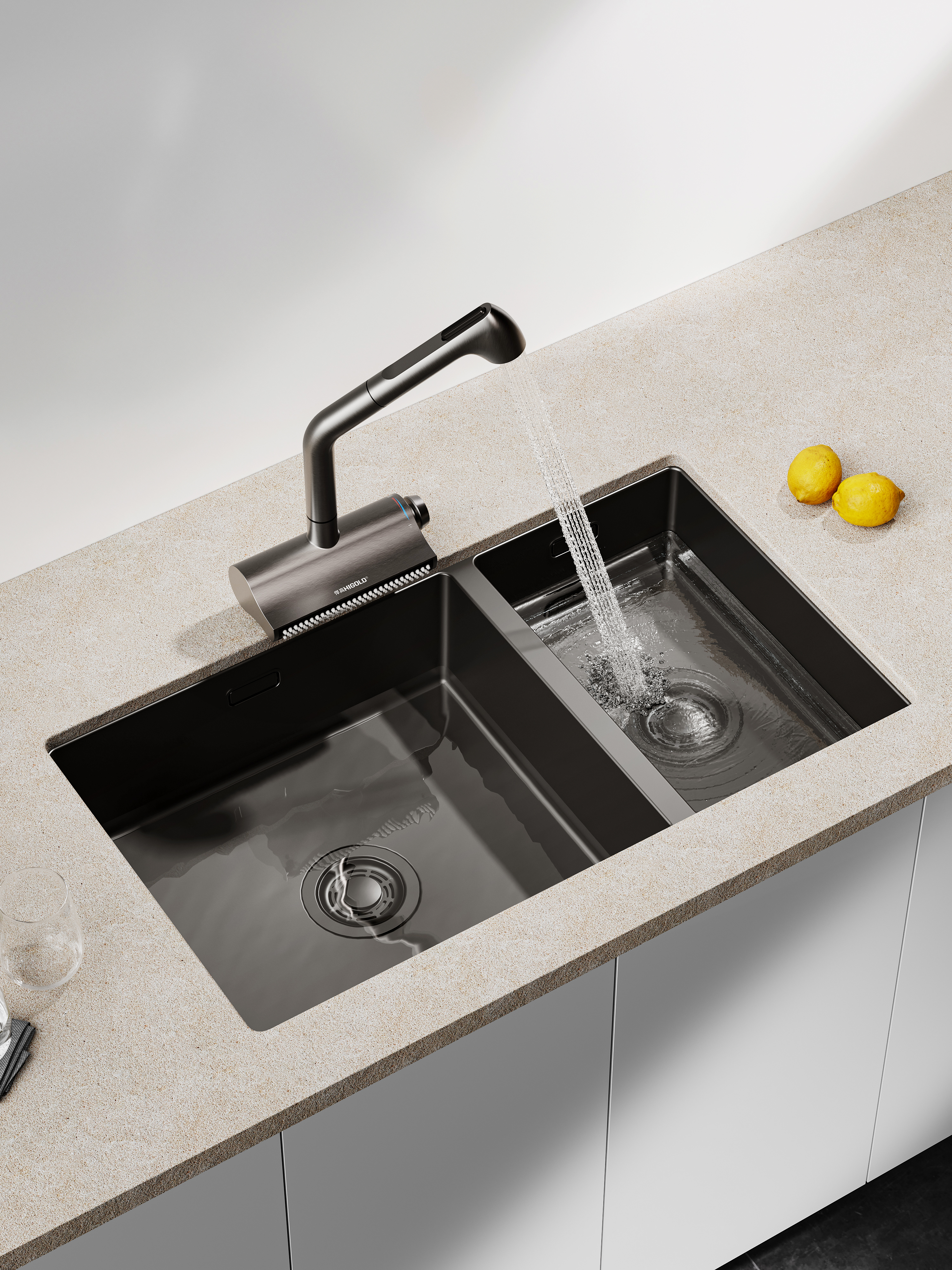
When this commercial faucet design is translated into a stainless steel kitchen faucet, the result is a fixture that does not wobble, crack, or harbor bacteria. The stainless steel kitchen faucet, when styled as a commercial faucet, provides unmatched control—filling tall pasta pots without tilting, rinsing large baking sheets with powerful spray, and reaching every corner of a deep farmhouse sink.
This synergy between the commercial faucet silhouette and the stainless steel kitchen faucet material has created the ultimate archetype: the professional‑grade kitchen faucet for the home.
5. Ergonomics and Daily Function – The Intuitive Control of a Commercial Faucet
Consider the daily ritual: in the morning, the kitchen faucet fills a kettle; at midday, the commercial faucet‑style sprayer rinses vegetables; in the evening, the stainless steel kitchen faucet handles greasy aftermaths, wiping clean with a single cloth.
Throughout this cycle, the kitchen faucet is touched more than any other surface. It is subjected to heat, moisture, and constant manipulation. A substandard kitchen faucet would show water spots within weeks, but a high‑quality stainless steel kitchen faucet, inspired by the commercial faucet, remains resilient.
The commercial faucet influence has also pushed ergonomic innovation. The traditional kitchen faucet required twisting knobs; the modern commercial faucet derivative often features touchless or touch‑activated mechanisms, or a single‑handle joystick that can be nudged with a forearm—a necessity when hands are covered in raw meat or dough.
This intuitive control is a direct descendant of the commercial faucet, where chefs avoid cross‑contamination. When paired with a stainless steel kitchen faucet, the joystick feels solid and precise—the weight of the stainless steel kitchen faucet gives substantial heft that cheap plastic or hollow brass cannot replicate.
6. Aesthetic Impact – The Kitchen Faucet as a Focal Point
A generation ago, a kitchen faucet was expected to blend into the background. Today, the kitchen faucet is a centerpiece, often positioned on a large island where it is visible from the living room.
The commercial faucet aesthetic—exposed spring, high arch, industrial detailing—provides visual drama. When that commercial faucet is rendered in a brushed stainless steel kitchen faucet finish, it creates a warm, matte texture that complements both modern minimalist cabinets and rustic farmhouse wood.
The stainless steel kitchen faucet does not reflect harsh glare like chrome, nor darken like oil‑rubbed bronze. Instead, it offers a neutral, timeless appearance that ages gracefully. Designers routinely specify a stainless steel kitchen faucet in the commercial faucet style because it anchors the room, saying “this is a place where serious cooking happens” without shouting.
7. Practical Advantages – Durability, Repairability, and Pressure Handling
The stainless steel kitchen faucet excels here because steel has a higher tensile strength than brass. This means a stainless steel kitchen faucet can handle higher water pressures without pinhole leaks.
Additionally, the stainless steel kitchen faucet is easier to maintain. While a painted or coated commercial faucet might chip, the stainless steel kitchen faucet is solid metal through and through. If scratched, you can buff it out with a fine abrasive pad—something impossible on a coloured kitchen faucet.
This repairability makes the stainless steel kitchen faucet the most sustainable choice for a commercial faucet design in a home.
8. Hygiene and Health – The Non‑Porous Surface Advantage
The commercial faucet in a restaurant must meet strict health codes, requiring smooth, non‑porous surfaces. The stainless steel kitchen faucet is the gold standard in this regard—bacteria cannot easily colonise its well‑maintained surface.
Many modern stainless steel kitchen faucet models that borrow the commercial faucet layout include a magnetic docking system for the spray head, ensuring it clicks back securely. This eliminates stagnant water, keeping the entire kitchen faucet cleaner and safer.
9. Economic and Environmental Perspectives – Long‑Term Value and Sustainability
A high‑end kitchen faucet used to be niche; today, the market is flooded with cheap imitations of the commercial faucet. However, discerning buyers recognise that a genuine stainless steel kitchen faucet in the commercial faucet style is an investment that pays off over decades. Cheap zinc or plastic versions corrode, rust, or flake, but a solid stainless steel kitchen faucet retains its integrity.
Plumbers often recommend a stainless steel kitchen faucet for hard‑water areas because it resists scale build‑up far better than other materials. Combining the commercial faucet’s high‑flow rate with the stainless steel kitchen faucet's low‑maintenance properties yields a kitchen faucet that saves water and money over its lifetime.
Modern stainless steel kitchen faucet models incorporate aerators that restrict flow to 1.8 GPM without sacrificing pressure, delivering the powerful rinse of a commercial faucet while conserving resources. Moreover, the stainless steel kitchen faucet is 100% recyclable, unlike plastic or composite alternatives. Thus, choosing a stainless steel kitchen faucet in the commercial faucet style is both a design and an environmentally responsible decision.
10. Installation and Professional Endorsement – The Plumber’s Preference
The commercial faucet traditionally required specialised mounting due to its weight. However, the contemporary stainless steel kitchen faucet is engineered with deck plates and mounting nuts that distribute weight evenly, making installation straightforward even for DIY enthusiasts.
Yet the kitchen faucet remains professional‑grade. Plumbers prefer the stainless steel kitchen faucet because the threads do not strip easily and the flexible supply lines are built to the same standard as a commercial faucet. This means fewer call‑backs and more satisfied customers. Many plumbing professionals will only install a stainless steel kitchen faucet if the homeowner insists on a commercial faucet style, because the stainless steel kitchen faucet is the only material that truly delivers the longevity expected from a commercial faucet in a residential setting.
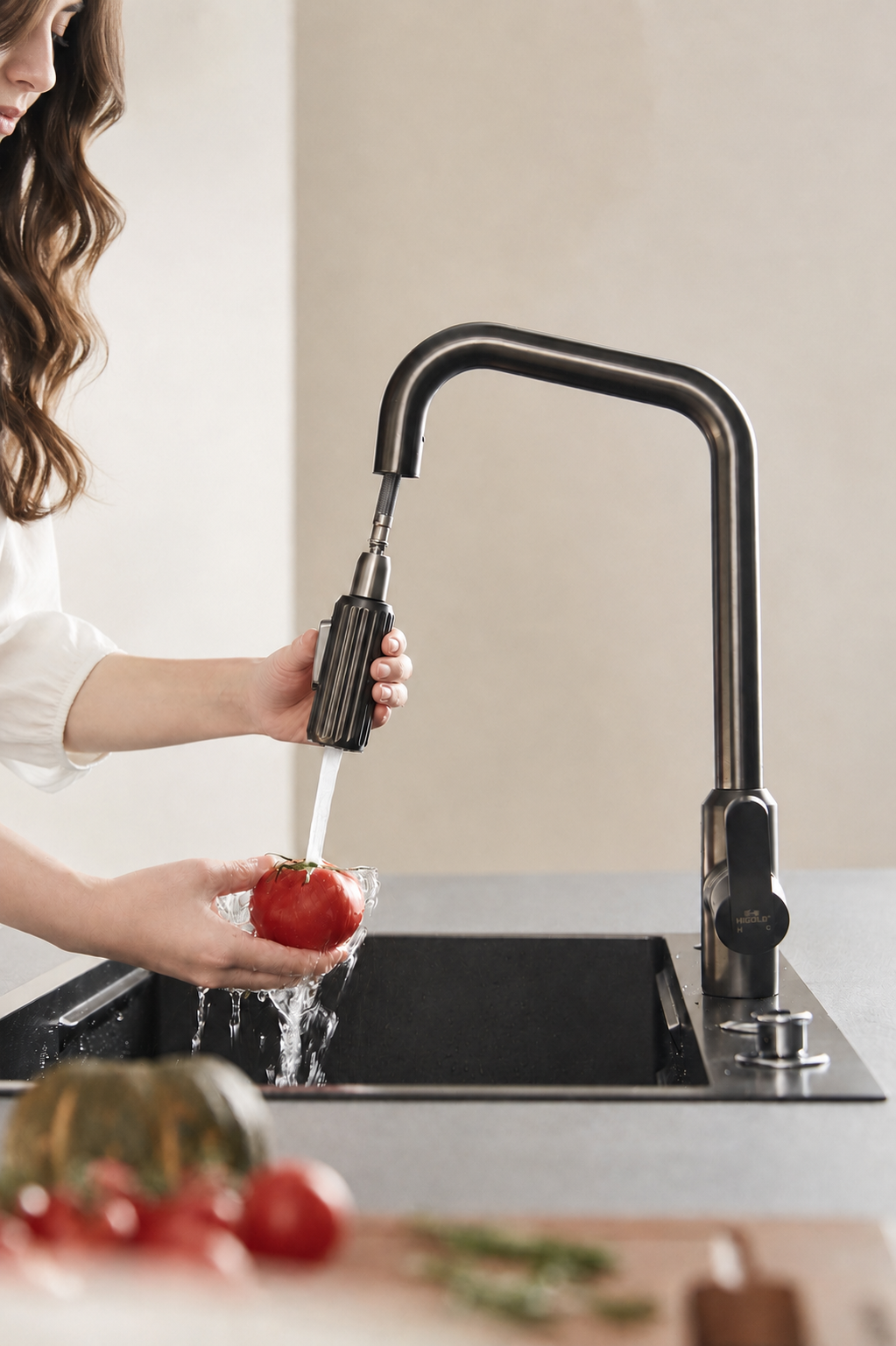
11. The Future – Smart Technology Built on a Commercial Faucet Foundation
The future of the kitchen faucet is tied to smart technology, but the foundation remains the commercial faucet and the stainless steel kitchen faucet. We are beginning to see kitchen faucet models with digital temperature displays and voice activation, yet these are almost exclusively built on a stainless steel kitchen faucet chassis with a commercial faucet spring design.
Why? Because the commercial faucet provides the structural backbone for complex electronics, and the stainless steel kitchen faucet offers the shielding and durability required for long‑term integration. So even as the kitchen faucet becomes smarter, its physical form will continue to be that of the commercial faucet, and its material will remain the stainless steel kitchen faucet. The kitchen faucet of 2030 will likely look very similar to today's commercial faucet, but with hidden sensors—and it will almost certainly be a stainless steel kitchen faucet.
Conclusion – The Ultimate Triumph of Modern Home Design
In conclusion, the modern kitchen faucet is no longer a simple fixture. It is a hybrid—a domesticated version of the commercial faucet, refined and perfected through the use of stainless steel.
The commercial faucet gave the kitchen faucet its soul: its power, its reach, and its unapologetic presence. The stainless steel kitchen faucet gave it a body that could withstand time, water, and wear.
Together, the commercial faucet and the stainless steel kitchen faucet have elevated the humble kitchen faucet to a status symbol and a workhorse. Every time you pull down the spray head of your stainless steel kitchen faucet, you engage with decades of culinary engineering. Every time you admire the sleek arch of your commercial faucet‑style kitchen faucet, you appreciate a design that bridges professional grit with domestic elegance.
The kitchen faucet is the heart of the kitchen, and today that heart beats with the strength of a commercial faucet and the enduring beauty of a stainless steel kitchen faucet. Whether you are a seasoned chef or a weekend cook, your kitchen faucet defines your experience—and nothing defines the kitchen faucet better than the marriage of the commercial faucet and stainless steel. So the next time you turn on that handle, remember: you are not just using a kitchen faucet; you are witnessing the evolution of the commercial faucet into the stainless steel kitchen faucet—the ultimate triumph of modern home design.

