

A kitchen faucet is one of the most-used fixtures in any home, yet it is also one of the most overlooked. Most people choose a kitchen faucet based on looks or price, without considering how it handles the water they actually drink. A dual-waterway faucet—one fixture that dispenses both regular tap water and purified drinking water through separate internal channels—solves a problem most households do not realize they have. Below are the key advantages of choosing this design.
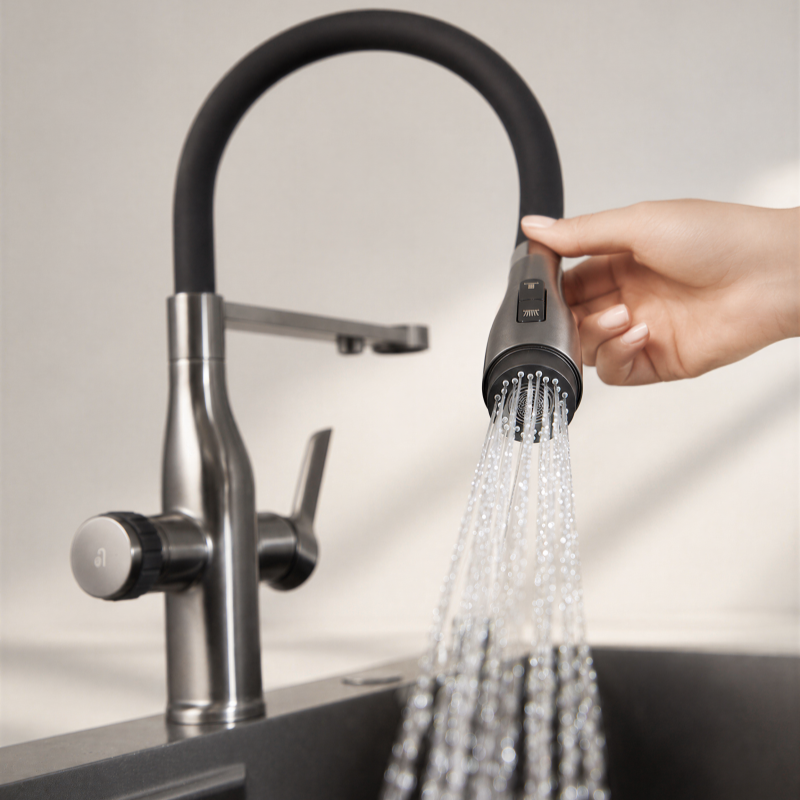
1. Cleaner, Safer Drinking Water
The most important benefit is hygiene. In a dual-waterway faucet, the filtered stream and the tap water stream never share a path. The internal ducts are completely independent, so the water you drink never touches the surfaces that handle raw tap water used for washing dishes, rinsing vegetables, or filling pots. This separation removes any risk of cross-contamination and gives you confidence that the purified water is genuinely purified. With a conventional setup where a filter is attached to the main spout, every drop of water—including the water used to scrub greasy pans—passes through the filter media, which is neither necessary nor ideal.
2. Longer Filter Life and Lower Running Costs
Because unfiltered water bypasses the filtration stage entirely, the filter cartridge only works when you actually draw drinking water. This dramatically extends cartridge life. In a normal household, most water drawn from the kitchen tap is used for cleaning and cooking, not drinking. A dual-waterway design ensures that all of that volume never touches the filter, so you replace cartridges far less often. Over time, this saves money and reduces the hassle of sourcing and installing replacements. It also means less waste, since fewer cartridges end up in landfill.
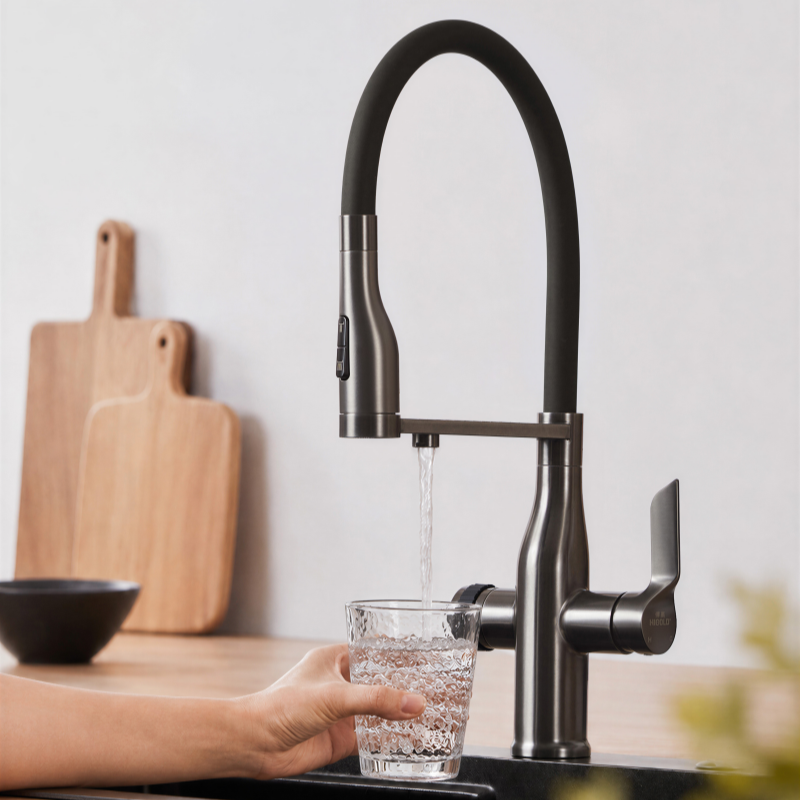
3. A Cleaner, Less Cluttered Countertop
Traditional filtered-water solutions usually involve a second, separate spigot mounted beside the main faucet. These small chrome tubes are functional but rarely elegant, and they clutter the sink area. A dual-waterway modern kitchen faucet integrates both functions into a single, cohesive body, eliminating the need for a secondary fixture. The result is a cleaner, more streamlined countertop—especially valuable in smaller kitchens where every centimeter of space matters. The faucet looks intentional rather than assembled from mismatched parts.
4. Convenience That Encourages Use
The best design is the one you actually use. Dual-waterway faucets make filtered water effortless to access. Whether the filtered function is activated by pushing the main handle backward, pressing a button on the spray head, or using a dedicated lever, the gesture becomes second nature within days. There is no fumbling for a separate spigot or remembering which of two taps does what. When clean drinking water is that easy to get, households naturally drink more of it and rely less on bottled water—a habit that is better for both health and the environment.
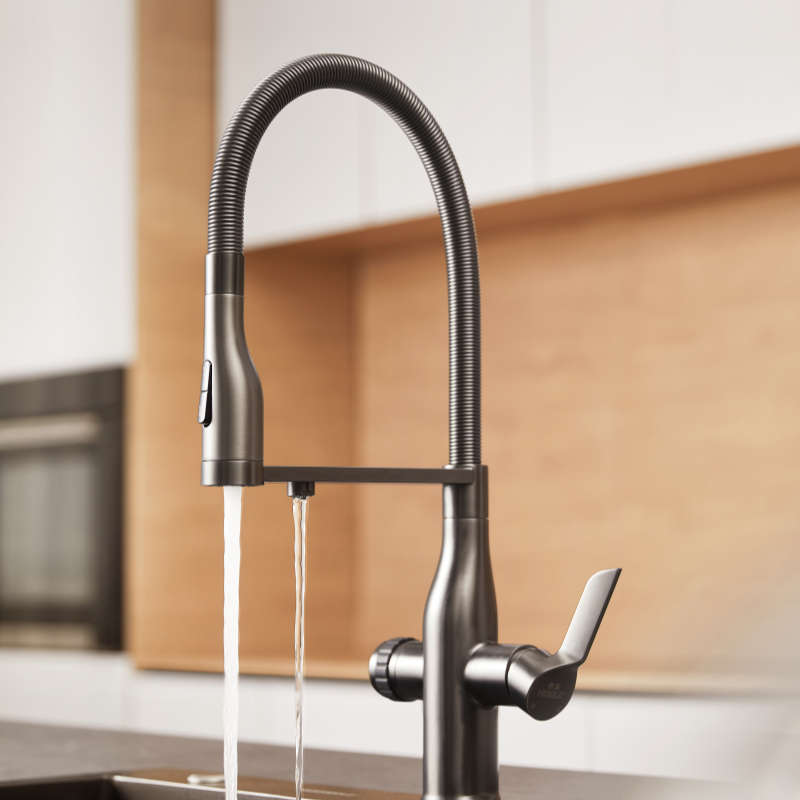
5. Savings on Bottled Water
A household that buys cases of bottled water for drinking and cooking is paying for packaging, transport, and marketing as much as for the water itself. A dual-waterway faucet with a certified filter delivers purified water directly at the sink, often at a fraction of the ongoing cost of bottled water. The upfront investment in a quality faucet and filter system is recovered over time through reduced grocery spending, and the convenience factor makes the switch easy to sustain.
6. Thoughtful Design That Fits Modern Kitchens
For years, filtered-water fixtures were treated as afterthoughts—small, utilitarian, and visually mismatched with the main faucet. The rise of modern kitchen faucets as design objects has changed that. Dual-waterway models are now designed as complete systems, with the filtered-water control integrated into the handle or spray head rather than bolted on as an extra. Finishes, proportions, and spray modes are all considered together, so the faucet enhances the kitchen rather than detracting from it. Buyers no longer have to choose between good design and clean water.
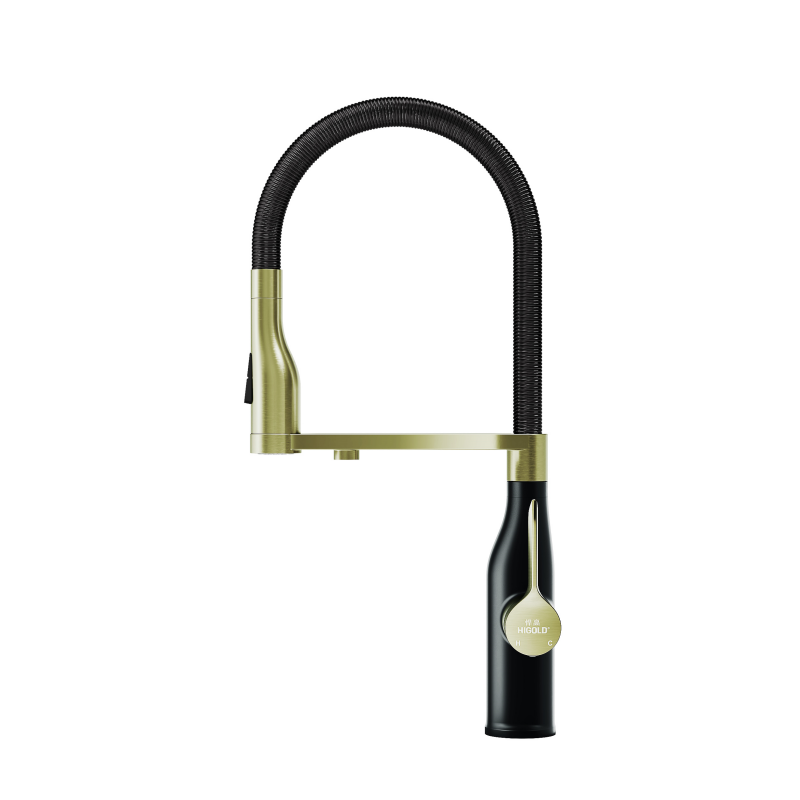
7. Better Everyday Performance
A dual-waterway faucet is still a kitchen faucet, and it should excel at the basics. The best models pair the filtration feature with a pull-down or pull-out spray head, multiple spray modes, a drip-free ceramic cartridge, and a finish that resists water spots. In other words, you are not sacrificing everyday performance for the sake of filtered water—you are getting both in one fixture. This matters because the faucet is used dozens of times a day for tasks that have nothing to do with drinking water.
A Practical Upgrade Worth Considering
The dual-waterway kitchen faucet does not announce itself with flashing lights or app connectivity. It is a quiet piece of engineering that works best when you barely notice it. But the cumulative effect—cleaner drinking water, longer filter life, lower costs, less clutter, and a more cohesive kitchen design—is felt every single day. For anyone renovating a kitchen or replacing an old tap, it is an upgrade that earns its place at the heart of the home.

