

When remodeling a kitchen, most homeowners focus on the style and finish of their new kitchen faucet. But surprisingly few ask the most fundamental question: where exactly on the sink should this kitchen faucet be placed? The answer is not as trivial as it seems. A leading kitchen faucet company will tell you that the horizontal placement of a kitchen faucet determines not only the visual harmony of your countertop but also the daily ergonomics of washing, rinsing, and filling. And professional kitchen faucet suppliers have seen countless installations where a beautiful kitchen faucet was rendered awkward simply because it was positioned an inch too far left or right.
This article focuses solely on one thing: the correct position of the kitchen faucet on the sink deck itself. We will not discuss wall mounting or height—only where the kitchen faucet should sit relative to the sink bowls, holes, and accessories.
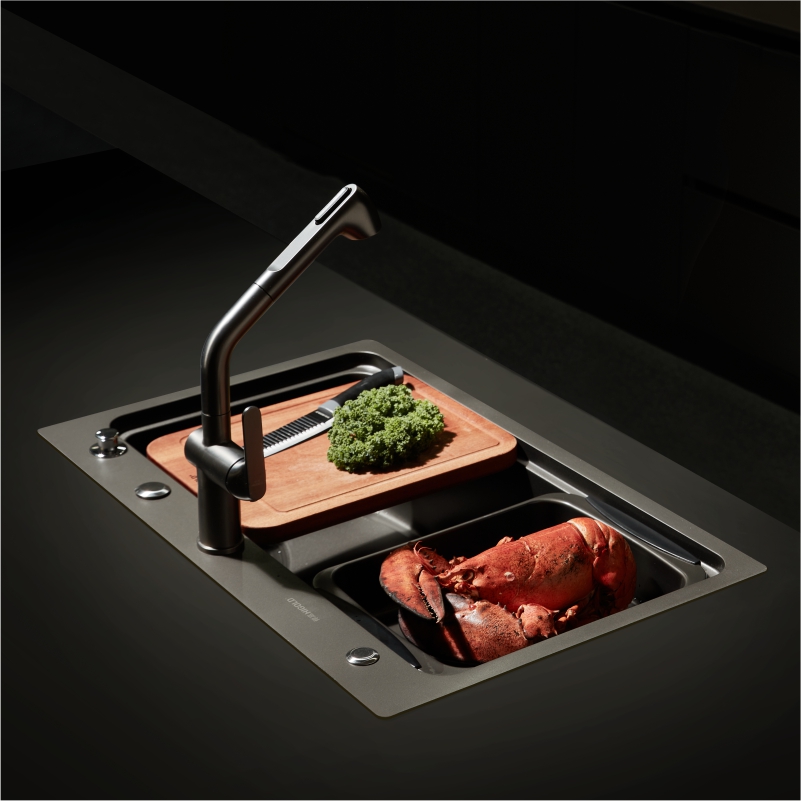
1. Understanding the Sink Deck and Its Mounting Holes
Every kitchen faucet company starts with the sink deck—the flat rim area surrounding the sink bowl(s) where the kitchen faucet and other fixtures are mounted. Most sinks come with pre‑drilled holes in standard configurations: single‑hole, three‑hole (4‑inch spread), or three‑hole (8‑inch spread). The first decision a kitchen faucet buyer must make is which hole configuration matches their chosen kitchen faucet. Reputable kitchen faucet suppliers always ask for a photo or measurement of your sink deck before recommending a model.
However, beyond the hole count, the position of those holes on the deck is equally critical. A kitchen faucet installed too far forward (toward the user) may crowd the washing area; too far back (toward the backsplash) may make it difficult to reach. And for double‑bowl sinks, the kitchen faucet must be centered between the two bowls to serve both equally. Experienced kitchen faucet suppliers will tell you that the golden rule is: the kitchen faucet must be aligned with the centerline of the sink drain, unless you have a specific reason to offset it.
2. Single‑Bowl Sinks: The Kitchen Faucet Belongs Dead Center
For a single‑bowl sink, the placement of the kitchen faucet is unambiguous—it must be exactly centered over the bowl, both left‑to‑right and front‑to‑back. A kitchen faucet company will design its spout reach based on the assumption that the kitchen faucet base is located directly behind the center of the bowl. If you shift the kitchen faucet even an inch off‑center, water from the spout will not land in the middle of the sink. That creates splashing, inefficient rinsing, and an unbalanced look.
Professional kitchen faucet suppliers emphasize that for single‑bowl sinks, the mounting hole for the kitchen faucet should be drilled exactly on the center line of the sink, and typically about 1 to 2 inches from the back rim of the bowl. This placement ensures that the kitchen faucet’s water stream hits the drain area, allowing debris to wash down naturally. A trustworthy kitchen faucet company will always specify the required mounting hole location in its installation manual.
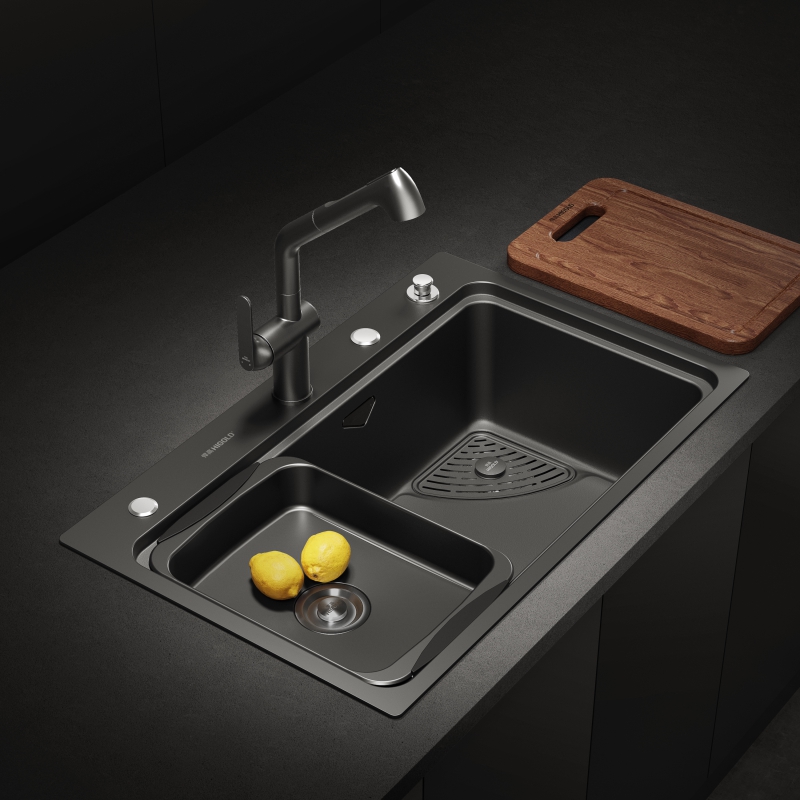
3. Double‑Bowl Sinks: Centering the Kitchen Faucet Between the Two Bowls
Double‑bowl sinks present a more complex challenge. Where should the kitchen faucet be placed? The industry standard, repeated by every major kitchen faucet company, is to center the kitchen faucet exactly between the two bowls—on the dividing wall of the sink. This allows the kitchen faucet to swivel or rotate so that water can be directed into either bowl as needed.
However, some kitchen faucet suppliers offer offset designs where the kitchen faucet is positioned slightly to one side, especially if one bowl is larger (e.g., a 60/40 split). In that case, the kitchen faucet should be centered over the larger bowl, because that bowl will see the most use. But if the bowls are equal size, a reliable kitchen faucet company will always recommend dead‑center placement between them.
Another nuance: the front‑to‑back position. For double‑bowl sinks, the kitchen faucet mounting hole is usually placed on the rear deck, about 1.5 to 2 inches from the back edge. This leaves ample room in front for washing. Kitchen faucet suppliers warn that placing the kitchen faucet too far forward reduces the usable bowl depth, and placing it too far back makes it hard to reach the handles.
4. When Other Accessories Share the Deck: How to Position the Kitchen Faucet Among Them
Many sinks have additional holes for a side sprayer, soap dispenser, or filtered water tap. When these accessories compete for space, the kitchen faucet must still occupy the prime central location. A wise kitchen faucet company will advise you to install the kitchen faucet in the center hole (or the center pair of holes) and place secondary accessories on the sides.
For a three‑hole 8‑inch spread configuration, the kitchen faucet handles are on the outer holes and the spout is in the center. That means the kitchen faucet itself is still centered over the sink. If you have a separate hole for a soap dispenser, it should go to the far left or right, never in place of the kitchen faucet. Professional kitchen faucet suppliers often provide deck plates that cover unused holes, but they stress that the kitchen faucet must always occupy the geometrically central position relative to the bowl.
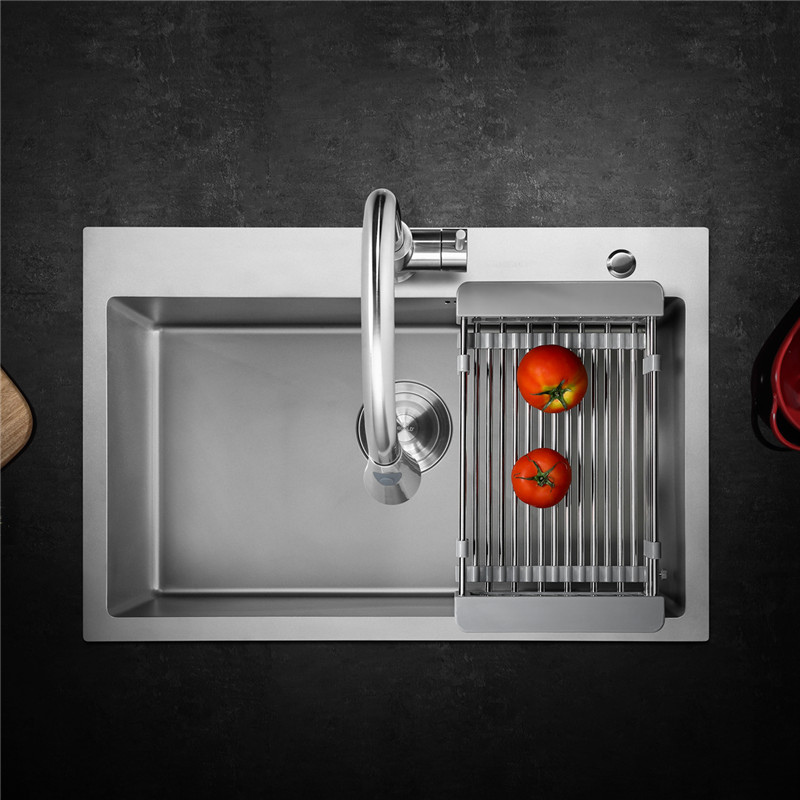
5.The Impact of Sink Depth and Rim Width on Kitchen Faucet Placement
Though this article focuses on horizontal positioning, the front‑to‑back placement of the kitchen faucet is also influenced by sink depth and rim width. A deep farmhouse sink may require the kitchen faucet to be positioned slightly farther back to allow the spout to clear the bowl edge. Conversely, a shallow sink allows the kitchen faucet to sit closer to the front.
A knowledgeable kitchen faucet company will provide a dimension called “mounting hole offset” – the distance from the back edge of the sink to the center of the mounting hole. Typical values range from 1.5 to 3 inches. Kitchen faucet suppliers recommend measuring your sink’s rear deck width before drilling. If the deck is narrow, you may need a kitchen faucet with a smaller base. If the deck is wide, you have more flexibility.
6. Common Mistakes in Positioning the Kitchen Faucet on the Sink
Based on feedback from hundreds of kitchen faucet suppliers, here are the most frequent positioning errors:
Mistake 1 – Off‑centering for no reason. Installing the kitchen faucet to one side of a single bowl because of a soap dispenser hole. The kitchen faucet should always take priority.
Mistake 2 – Ignoring the swivel range. For double‑bowl sinks, if the kitchen faucet is placed too close to one side, the spout may not reach the far bowl. Always verify the spout reach and rotation angle with your kitchen faucet company.
Mistake 3 – Placing the kitchen faucet too far back. When the mounting hole is drilled flush against the backsplash, the handles become hard to operate and cleaning behind the kitchen faucet becomes impossible.
Mistake 4 – Not accounting for oversized bowls. For sinks with extra‑deep or extra‑wide bowls, a standard centered kitchen faucet may not provide sufficient coverage. In such cases, kitchen faucet suppliers recommend a pull‑down kitchen faucet with a longer reach, but the base position remains centered.
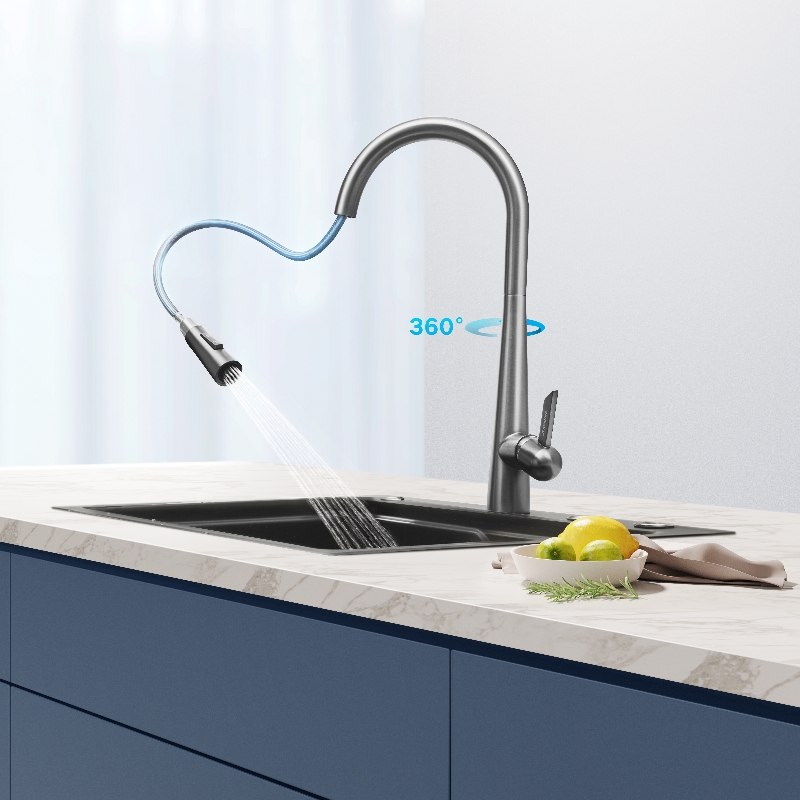
7. How Kitchen Faucet Suppliers Determine the Optimal Position for Your Sink
Professional kitchen faucet suppliers do not guess. They follow a simple protocol:
Measure the sink’s total width and locate the center point.
Measure the distance from the sink’s back rim to the front edge.
Decide whether the kitchen faucet will be a single‑hole or three‑hole type.
Mark the center hole exactly on the sink’s centerline, usually 1.5–2 inches from the back rim.
For double bowls, mark the centerline between the two bowls, then drill the kitchen faucet hole there.
A reputable kitchen faucet company will even offer a cardboard template to help you visualize the placement before drilling. This is the kind of service that distinguishes top‑tier kitchen faucet suppliers from ordinary retailers.
8. Conclusion: The Center Is Your Friend
To summarize, the kitchen faucet should almost always be installed at the center of the sink bowl (or between the two bowls) , aligned with the drain, and positioned about 1.5 to 2 inches from the back rim. This placement ensures optimal water coverage, easy handle access, and a balanced aesthetic. If you have multiple accessories, keep the kitchen faucet in the prime central position and move others to the periphery.
Remember: before you buy any kitchen faucet, consult your kitchen faucet company or kitchen faucet suppliers for precise measurements. They will help you avoid the common pitfall of a misplaced kitchen faucet—a mistake that is expensive to fix after the countertop is drilled.
The next time you look at your sink, ask yourself: is my kitchen faucet exactly where it should be? If the answer is not a confident “yes,” it might be time to reconsider your layout—or to call a professional kitchen faucet supplier for a second opinion.

