

In kitchen renovations, undermount kitchen sinks are increasingly becoming a mainstream choice for modern families due to their visual simplicity, seamless countertop design, and ease of cleaning. However, many users are confused about the installation order of the sink and countertop: Should the undermount kitchen sink be installed before the countertop?
This seemingly simple question is actually a crucial step in the renovation process, affecting structural stability, waterproofing, and lifespan. An incorrect order can lead to sink detachment, countertop cracking, water seepage and mold, and even the need for rework. Therefore, understanding the correct installation order of undermount sinks is essential.
This article will analyze this from multiple perspectives, including structural principles, installation steps, professional requirements, and the logical sequence, to help you clarify the precise timing for installing an undermount kitchen sink and the professional practices for the entire construction process.
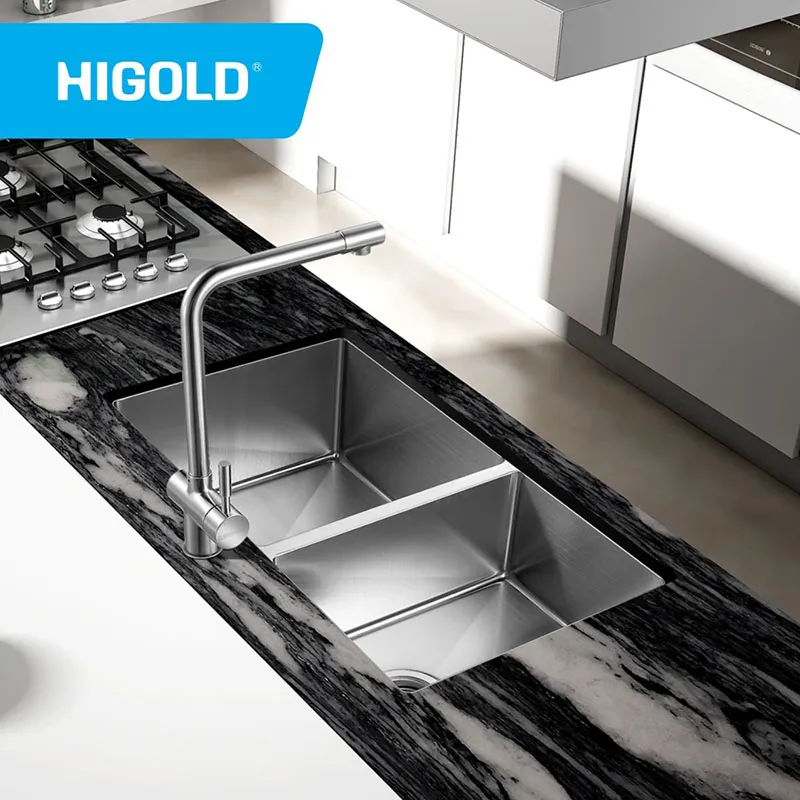
Why are many people confused about the installation order when installing an undermount sink?
The question of whether to install the countertop or the sink first stems from three main reasons:
• Undermount sinks are not separate from the countertop; they are tightly bonded together.
• Undermount sinks require structural adhesive and brackets underneath the countertop for secure installation.
• The size of the opening in the countertop determines whether the sink will fit properly.
Therefore, unlike top-mount sinks which can be simply placed on top, the installation sequence of undermount kitchen sinks involves more technical details.
Must the undermount sink be installed before the countertop?
This is the core question of this article, and the answer is very clear:
Yes, the standard procedure requires the undermount kitchen sink to be installed before the countertop.
The undermount sink needs to be secured under the countertop first, and then the countertop is placed and installed.
The reasons are quite clear:
• Undermount kitchen sinks need to be firmly bonded to the bottom of the countertop beforehand.
• They need to be positioned and secured while the countertop is flipped up.
• Structural adhesive must cure while the surface is horizontal.
• Professional brackets must also be installed under the countertop beforehand.
• The countertop can only be moved and secured to the cabinet after complete installation.
This is the standard installation procedure for cabinet manufacturers, countertop manufacturers, and plumbers.
The reasons will be explained in detail below.
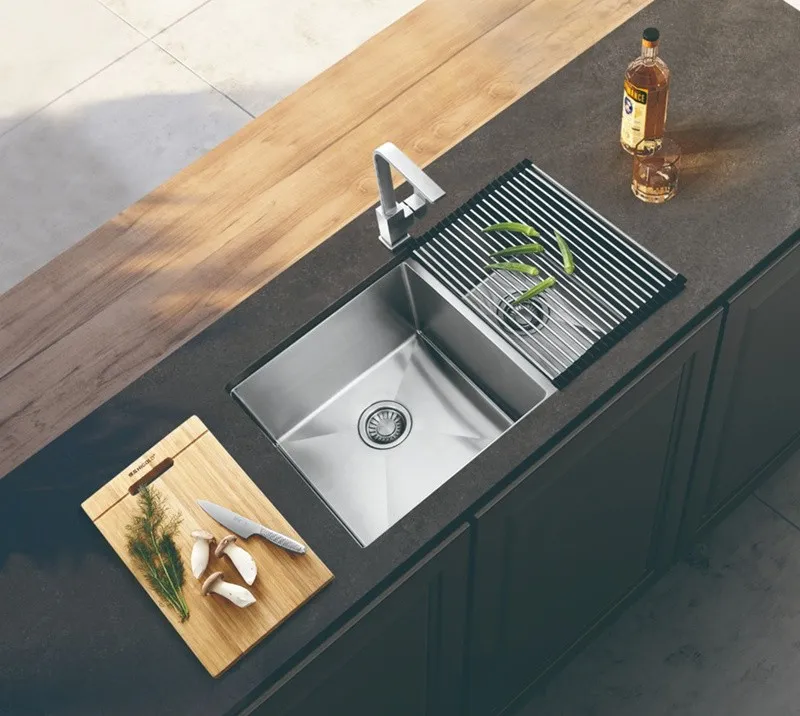
Why must undermount sinks be secured before the countertop is installed?
To fully understand the installation sequence, we must start with the structural characteristics of undermount kitchen sinks.
1. Undermount sinks rely on the bottom of the countertop for adhesive bonding
Undermount sinks are secured using the following methods:
• Applying a large amount of structural adhesive around the edges.
• Sealing with silicone sealant.
• Using metal brackets to tighten and adhere the sink.
These steps must be performed while the countertop is placed "horizontally upwards."
If the countertop is already installed on the cabinet:
• Countertop cannot be rotated
• Adhesive cannot be applied evenly
• Sink cannot fit snugly
• Structural adhesive cannot be kept perfectly level during curing
• Insufficient working space
Therefore, the countertop must be placed flat on the work surface, the sink must be secured to the bottom first, and then the countertop installed as a whole.
2. Mounting brackets must be installed under the countertop
Many undermount sinks require mounting brackets, including:
• Metal hangers
• Triangular support brackets
• Tension spring brackets
These brackets are installed under the countertop, not on the cabinet.
If the countertop is already installed:
• Workers cannot apply even pressure from below
• Tools are difficult to access
• Brackets are not securely installed
• There is not even space to apply adhesive
Therefore, the sink installation must be completed before the countertop is installed.
3. Undermount sinks cannot be inserted upwards through countertop openings
Most undermount kitchen sinks have an outer edge larger than the countertop opening, therefore they cannot be inserted through the countertop opening.
This also means:
• It's impossible to place the sink on top after the countertop is installed.
• The countertop must be flipped over first, with the sink placed underneath.
This inherently dictates the order.
4. The adhesive and curing process requires the countertop to be in a stable state
Structural adhesive takes several hours to reach initial curing, and full curing may take up to 24 hours.
If the countertop is already installed:
• Human movement or vibration can cause the sink to detach.
• Uneven bonding cannot be guaranteed.
• Gaps are easily formed, leading to leaks and stains.
Therefore, the sink must be secured first, and the countertop should only be moved and installed after the adhesive has cured.
What is the detailed standard procedure for installing an undermount sink and countertop?
To better understand the installation sequence, a complete analysis is provided here based on the procedures of professional factories and construction teams.
The following procedure covers all key steps.
What preparations are needed before installing an undermount sink?
Before starting construction, the following steps are required:
1. Measure the sink dimensions.
2. Check the countertop opening.
3. Align the sink opening position.
4. Check the load-bearing structure of the undermount cabinet.
5. Prepare tools such as special adhesive, sink brackets, and clamps.
These preparations must be done before the countertop is installed.

What are the steps for fixing an undermount sink?
The standard steps are as follows:
1. Turn the countertop up so the bottom is facing upwards
This is a necessary preparation before installing the undermount kitchen sink.
2. Test-place the sink to confirm edge fit
Ensure the sink fits completely against the bottom of the countertop without gaps.
3. Apply structural adhesive to the sink edges
Common adhesives include:
• Marble structural adhesive
• Epoxy resin adhesive
• Engineering sealant
Their functions are:
• Bonding
• Waterproofing
• Reinforcement
4. Attach the sink to the bottom of the countertop
Align the countertop opening position.
5. Secure the undermount sink using clamps
Clamps ensure a tight fit between the sink and countertop, preventing movement before the adhesive cures.
6. Install brackets or hangers
Brackets enhance long-term load-bearing capacity.
7. Allow the adhesive to cure
Curing time varies from 6 to 24 hours depending on the type of adhesive.
What checks must be performed before fixing the countertop to the cabinet?
After curing, check the following:
• Sink edges are flush with the countertop.
• No adhesive leaks.
• Brackets are secure.
• Sink is not misaligned.
• Cutouts fit perfectly.
Only after all checks are passed can the countertop be moved to the site for installation.
What is the countertop installation process after the undermount sink is installed?
Countertop installation generally includes:
• Lifting the entire countertop onto the cabinet.
• Aligning the position with the wall.
• Sealing the edges with professional structural adhesive.
• Installing the faucet and drain assembly.
• Final sealing and inspection.
Throughout the process, the undermount kitchen sink is firmly fixed to the bottom of the countertop and requires no further adjustment.
Can an undermount sink be installed if the countertop is already installed?
This is one of the most frequently asked questions.
The answer is:
Theoretically, it's possible, but extremely difficult and not recommended.
The reasons are as follows:
• The countertop cannot be flipped over, making it difficult to apply structural adhesive.
• It's impossible to use clamps to maintain a proper fit.
• The bracket is difficult to install.
• The sink is prone to falling off.
Even if forced to install, serious risks may arise, such as:
• Insufficient sink load-bearing capacity.
• Easy delamination.
• Long-term water leakage.
• Tensile stress causing cracking of the countertop.
Therefore, even professional installers recommend strictly following the installation sequence.
If the countertop is already installed, it's usually replaced with a top-mount sink or the countertop is completely removed.
What are some common misconceptions about installing an undermount sink?
How can they be avoided?
There are several typical misconceptions to avoid during the installation process:
Misconception 1: Believing the sink can be installed later.
In reality, undermount kitchen sinks rely on structural adhesive and supports; they cannot be installed after the countertop is in place.
Misconception 2: Ignoring the compatibility between the sink and countertop materials.
Different countertop materials have different requirements for the adhesive; otherwise, it may detach.
Misconception 3: Believing the sink is lightweight and doesn't need a support.
In reality, prolonged weight-bearing can cause adhesive fatigue.
Misconception 4: Ignoring curing time.
Moving the countertop before it is fully cured can cause the sink to shift or detach.
What adhesives are needed when installing an undermount sink?
What is the order of application?
Commonly used adhesives include:
• Structural adhesive (primarily for load-bearing and bonding)
• Anti-mold silicone sealant (primarily for sealing)
• Epoxy adhesive (for enhancing structural strength)
The correct installation sequence is usually:
1. Use structural adhesive to bond the sink edges.
2. Reinforce with structural adhesive after installing the brackets.
3. After completing all installations, seal the perimeter with silicone sealant.
4. Finally, check the uniformity and sealing of the adhesive.
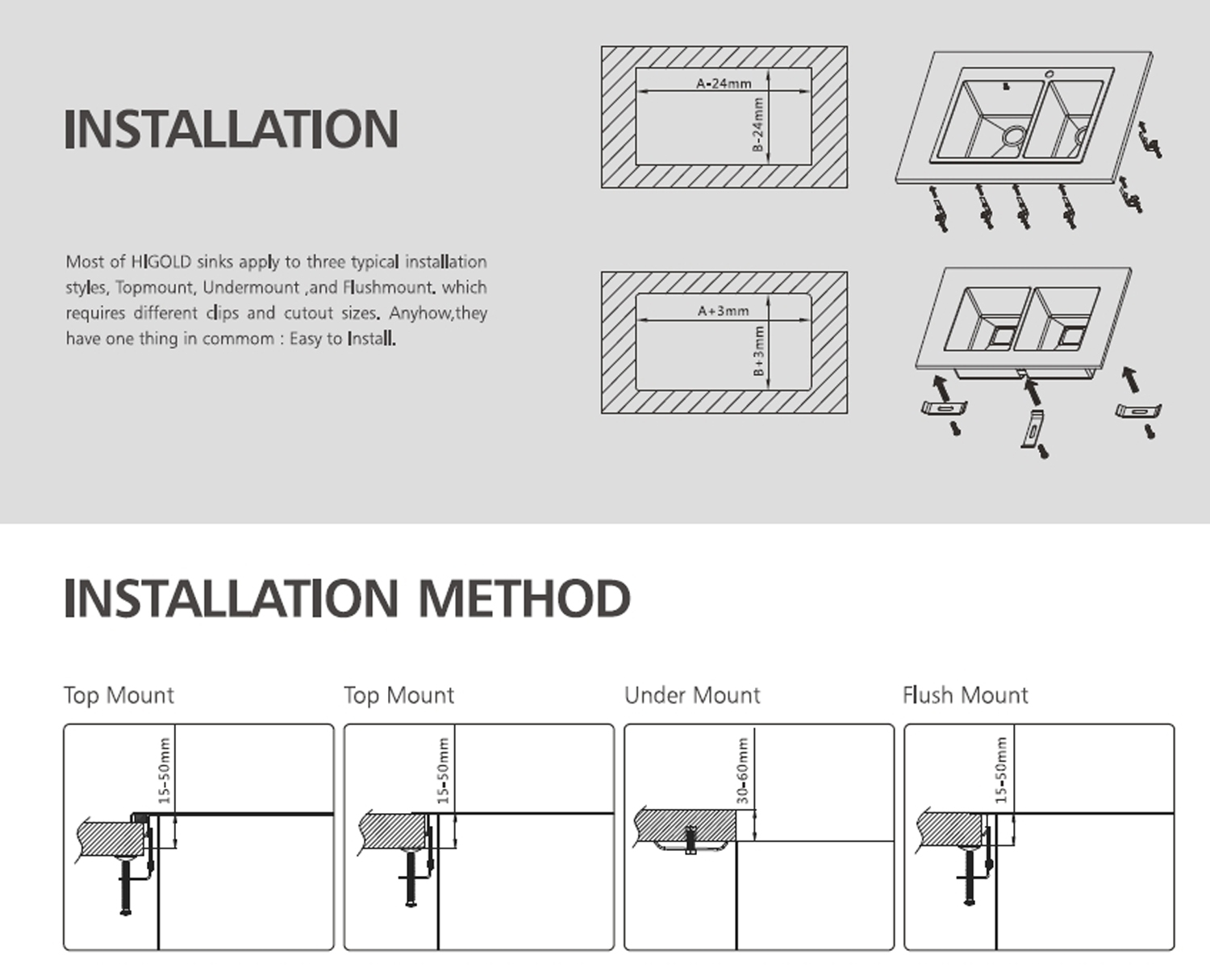
What are the consequences of installing an undermount sink in the wrong order?
If the installation is not done correctly, it can lead to:
• The sink detaching from the countertop.
• Long-term water seepage causing mold growth in the cabinet.
• Countertop cracking.
• Sink wobbling.
• Drain fittings misalignment.
More serious situations:
• The countertop must be removed and redone.
• A new countertop may even be needed.
Therefore, the correct installation sequence is crucial.
How Does Higold Support New Brands or Startups?
Higold helps new brands with model selection, custom design, packaging development, and complete branding support. Our team offers market insights to assist buyers in choosing popular stainless steel sinks and faucet combinations. We also provide competitive wholesale prices, product photos, and promotional materials—making Higold a valuable supplier for launching or expanding kitchen hardware brands.

