
News

  • Does the quartz kitchen sink need to be sealed?
    The sealing treatment of the connection between the quartz kitchen sink and the countertop is crucial. When installing the sink, sealant or silicone is usually used to fill the gap between the sink and the countertop to prevent water from leaking into the cabinet or other places.
    2025-04-22
    Learn More
  • What is the purpose of a double bowl sink in the kitchen?
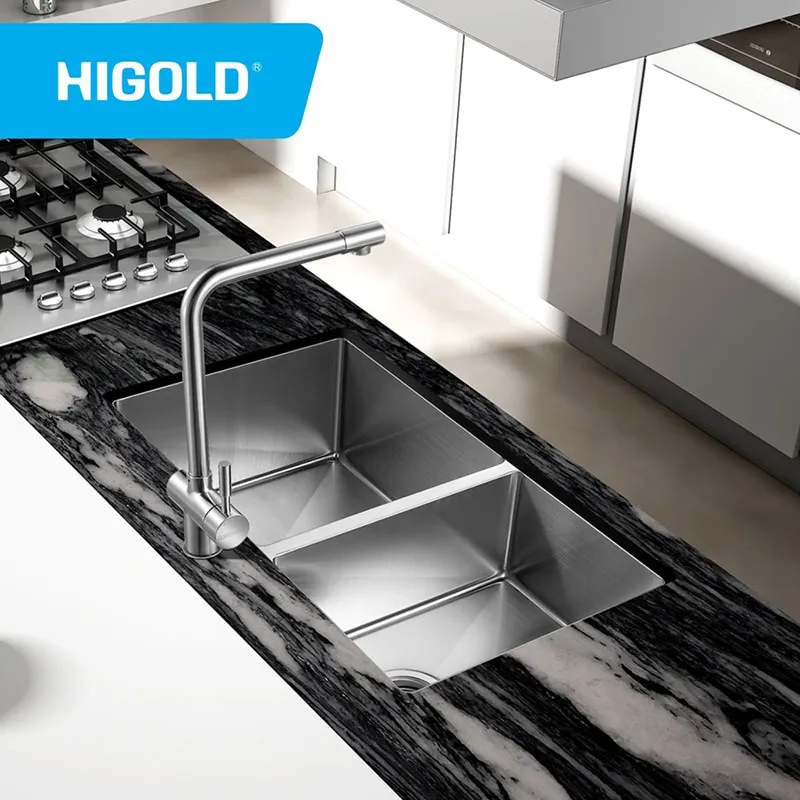
    The purpose of the kitchen double bowl sink: 1. Separate food washing and tableware washing 2. Separate soaking and rinsing 3. Wash vegetables and wash pots separately 4. Convenient temporary storage function of the sink 5. Perform two cleaning tasks at the same time 6. Handle food waste and cleaning supplies
    2025-04-21
    Learn More
  • Which kitchen sink is better, stainless steel or granite?
    If you have a limited budget and pay attention to the durability, easy cleaning and functionality of the sink, a stainless steel sink is undoubtedly a more suitable choice. It is suitable for most ordinary families, especially for those who need to clean frequently and use frequently.
    2025-04-18
    Learn More
  • Is the kitchen composite sink better than the ceramic sink?
    Kitchen composite sinks are usually made of harder materials than ceramic sinks, especially quartz kitchen composite sinks. The addition of quartz components makes their surfaces hard and can effectively resist common scratches, collisions, wear, and other problems in daily life.
    2025-04-17
    Learn More
  • How often do I need to re-caulk my kitchen composite sink?
    The lifespan of caulking varies depending on a number of factors, but generally speaking, caulking around sinks needs to be re-caulked approximately every 1 to 3 years. The exact time depends on several factors: ● Frequency and intensity of use ● Quality of caulking material ● Environmental factors ● Frequency of cleaning and maintenance ● Quality of installation
    2025-04-16
    Learn More
  • Why is the single bowl kitchen sink so popular?
    An important feature of single bowl kitchen sinks is its "openness" and "flexibility". Since there is only one sink, users can put larger items (such as baking trays, pots, etc.) in it and wash and clean them more conveniently.
    2025-04-15
    Learn More
  • How much weight can undermount kitchen sinks bear?
    Generally, the thicker the sink, the stronger its load-bearing capacity. For example, the thickness of stainless steel sinks is usually 0.6 mm to 1.2 mm. Thicker stainless steel sinks can withstand greater weight, especially stainless steel sinks with a thickness of more than 1 mm, which can withstand strong pressure.
    2025-04-14
    Learn More
  • What are the advantages and disadvantages of granite kitchen sink?
    Advantages of granite kitchen sink: 1. Strong durability 2. Beautiful and generous 3. Strong anti-fouling 4. High temperature and corrosion resistance 5. Good sound insulation Disadvantages of granite kitchen sink: 1. Higher price 2. Difficult to install 3. Difficult to clean and maintain 4. Easy to crack or break 5. Not suitable for all kitchen styles
    2025-04-11
    Learn More
  • Which grade of kitchen stainless steel sink is the best?
    Most common high-quality stainless steel sinks use 304 stainless steel, and the main difference between sinks of different grades lies in the model, thickness, and anti-oxidation and anti-corrosion capabilities of their stainless steel. Common grades include 201, 304 and 316 stainless steel, etc. These different types of stainless steel vary in price, durability and performance.
    2025-04-10
    Learn More
  • What are the sizes of undermount kitchen sinks?
    Single-bowl undermount sinks are one of the most common types in the kitchen. They usually have a wide, moderately deep trough body suitable for daily washing and cleaning work. The size of a single-bowl sink is usually between 15 inches and 30 inches (about 38-76 cm).
    2025-04-09
    Learn More

Get the latest price? We will reply as soon as possible (within 12 hours)