
News

  • How do I know what size holes are in my kitchen sink faucets?
    It is worth noting that the standard diameter of the kitchen sink hole is generally between 35 mm and 45 mm, and the specific size will vary depending on the design of the faucet. For example, some modern faucets (especially those with complex designs such as multiple water modes and stretch functions) may require a larger hole diameter.
    2025-06-19
    Learn More
  • Why is the kitchen sink faucet so expensive?
    The material and manufacturing process of kitchen sink faucet directly affect its price. High-end faucets usually use high-quality materials such as stainless steel, copper alloy, and titanium alloy, which are expensive and have strict requirements on the process during the production process.
    2025-06-12
    Learn More
  • How long is the service life of a kitchen sink faucet?
    Common materials for kitchen sink faucet on the market include stainless steel, copper, aluminum alloy, plastic, etc. The durability and lifespan of faucets made of different materials are very different. Generally speaking, the service life of stainless steel faucets is between 15 and 20 years, which is suitable for long-term use.
    2025-06-11
    Learn More
  • What is the best height for the faucet on the kitchen sink?
    It is generally recommended that the installation height of the kitchen sink faucet should be kept between 15 and 20 cm above the edge of the sink. This height range not only ensures smooth water flow, but also avoids splashing, making operations such as washing vegetables and dishes more convenient.
    2025-06-05
    Learn More
  • Where do I need to drill holes for kitchen sink faucets?
    For most standard kitchen sinks, a hole is usually drilled on the sink surface for the main sink faucet. This hole is usually located at the back or directly above the sink, and there are usually one or two holes for the faucet to be installed.
    2025-06-04
    Learn More
  • Should the kitchen faucet be matched with the sink?
    The material of the kitchen sink and the material of the faucet need to consider compatibility in some cases. For example, a stainless steel kitchen sink is usually matched with a stainless steel faucet, which can avoid chemical reactions between different materials and maintain a consistent appearance.
    2025-06-03
    Learn More
  • What are the types of kitchen sink faucets?
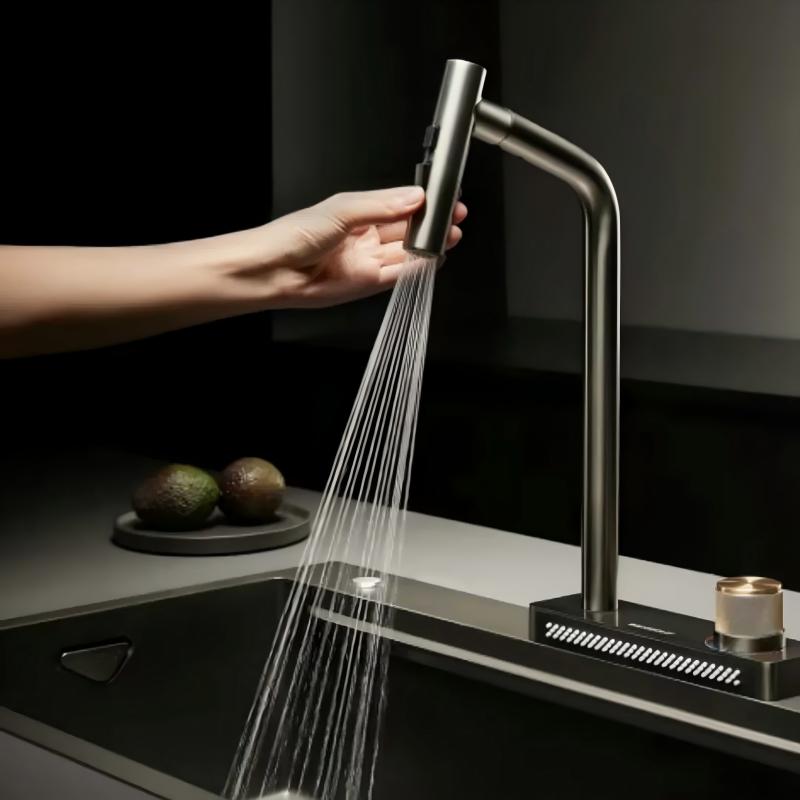
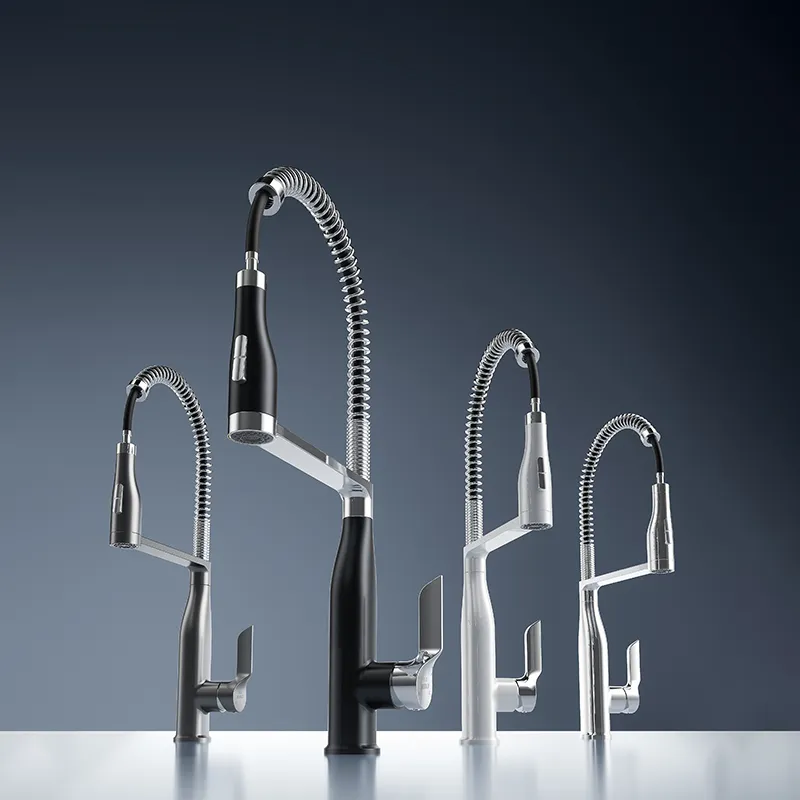
    Common types of kitchen sink faucets are: 1. Single handle faucet 2. Double handle faucet 3. Pull-out faucet 4. Induction faucet 5. Rotary faucet 6. Slide faucet
    2025-03-26
    Learn More
  • How to remove scale from kitchen waterfall faucets?
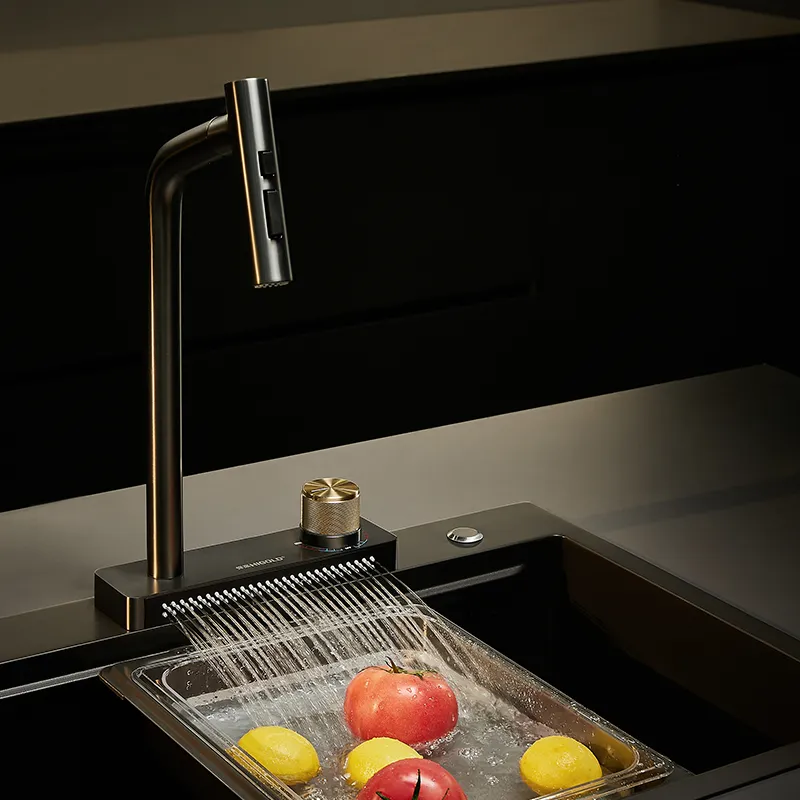
    Mix warm water and white vinegar in a 1:1 ratio and pour it into a spray bottle. Spray on the surface of the kitchen waterfall faucet, especially at the water outlet. If the scale is thick, the soaking time can be extended to 15 to 20 minutes. After the acetic acid reacts with the scale, the scale begins to gradually dissolve.
    2025-03-25
    Learn More
  • Where should the faucet be installed in the kitchen sink?
    The faucet is installed in the center of the kitchen sink: This installation method is the most common, especially for standard rectangular or square kitchen sinks. The kitchen faucet is located in the center of the sink, neither leaning to the left or right, and ensuring that the water flow covers the entire sink, which is suitable for the use needs of most families.
    2025-02-27
    Learn More
  • Will the waterfall faucet accumulate scale?
    Most waterfall faucets are made of stainless steel, copper, aluminum alloy and other materials. These metal materials have strong corrosion resistance, but they are also easy to absorb minerals in the water. Over time, a thick layer of scale may accumulate on the surface of the faucet, especially in places where the water flow is in contact for a long time.
    2025-02-21
    Learn More

Get the latest price? We will reply as soon as possible (within 12 hours)