
News

  • Kitchen sink faucet: should it be installed on the left or right?
    The kitchen sink faucet should be installed on the left or right side, but should be determined according to the usage habits of family members, the kitchen space layout, and specific equipment requirements. For right-handed family members, the left side of the faucet is usually more convenient; for left-handed family members, the right side of the faucet is more suitable.
    2025-07-18
    Learn More
  • What is a waterfall faucet?
    The waterfall faucet, its shape and water flow effect imitate the natural scene of a waterfall. Unlike traditional faucets, waterfall faucet is designed to make the water flow present a wide and smooth "waterfall-like" effect. The water flows out vertically or obliquely from the water outlet of the faucet, and the shape is like a waterfall.
    2025-07-17
    Learn More
  • 2-hole and 3-hole kitchen faucets: What's the difference?
    A 2-hole kitchen faucet refers to a faucet that requires two holes to fix and connect during installation. A 3-hole faucet requires three holes to install, one of which is used to install the faucet itself, and the other two holes are used to control the water inlet pipes of hot and cold water respectively.
    2025-07-16
    Learn More
  • Why does my black kitchen sink always look dirty?
    Water stains are one of the most common stains on kitchen sinks, especially in environments where water is frequently used. Water stains are usually more obvious on the surface of black sinks, especially when the water droplets evaporate and leave white marks.
    2025-07-15
    Learn More
  • How far should the kitchen faucet extend to the sink?
    For standard-sized single-bowl sinks (usually about 50-80 cm long and 30-40 cm wide), the extension distance of the faucet should be 10-15 cm from the edge of the sink. This distance ensures that the water flows smoothly into the sink without causing splashes.
    2025-07-14
    Learn More
  • How to choose a kitchen faucet?
    Stainless steel sink faucet has become a common choice for kitchen faucets due to its durability and corrosion resistance. It can withstand the test of minerals, acid and alkali substances in water and high temperature water, and is very suitable for long-term use.
    2025-07-11
    Learn More
  • Do all stainless steel sinks have water stains?
    Not all stainless steel sinks will have water stains. The occurrence of water stains is affected by multiple factors. In addition to water quality, the surface treatment process, usage and cleaning habits of stainless steel sinks will also affect the formation of water stains to a certain extent.
    2025-07-10
    Learn More
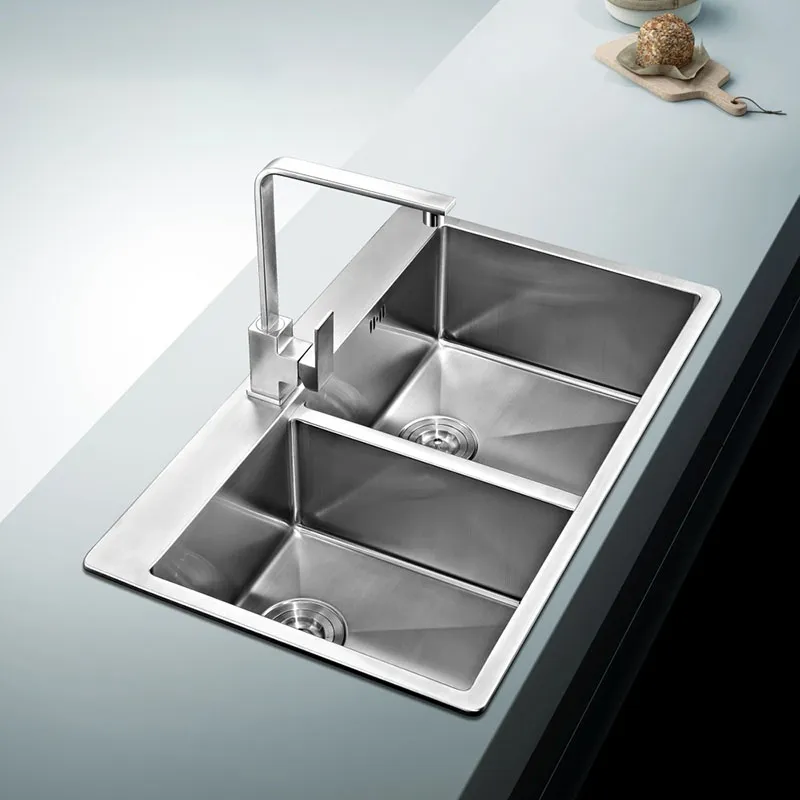
  • Is a single-bowl sink better or a double-bowl sink?
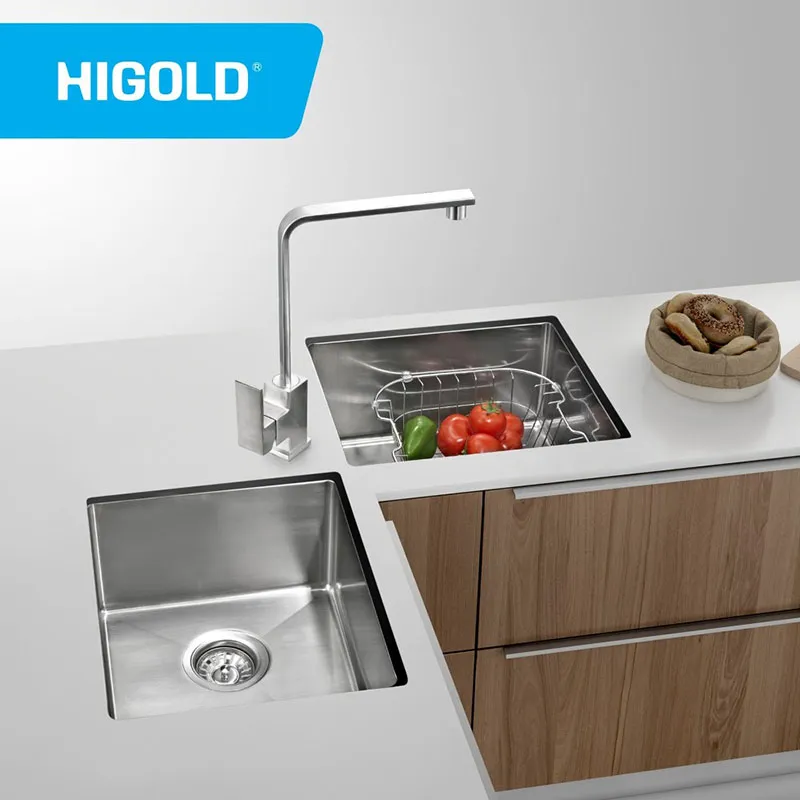
    Advantages of a single-trough sink: 1. Space saving 2. Large washing area 3. Easy to clean 4. Beautiful and simple Advantages of a double-trough sink: 1. Flexible operation 2. Better garbage disposal 3. Stronger classification function 4. Suitable for most kitchens
    2025-07-09
    Learn More
  • What is the role of the P-trap in the kitchen sink?
    Prevent sewer odor backflow This is the core function of the P-trap. The kitchen sink is connected to the indoor drainage pipe, which is ultimately connected to the municipal sewage treatment system or septic tank. These pipes are filled with various gases, including hydrogen sulfide, methane and ammonia, which have a pungent smell.
    2025-07-08
    Learn More
  • Do you need to seal the kitchen sink faucet?
    The most intuitive way to judge is to check whether the kitchen sink faucet is leaking. The manifestation of water leakage may be water seepage from the faucet interface, valve or outlet. Especially when the faucet is closed, there is still water dripping out, indicating that there is a problem with the sealing.
    2025-07-07
    Learn More

Get the latest price? We will reply as soon as possible (within 12 hours)