
News

  • Are undermount kitchen sinks difficult to clean?
    Won't! One of the biggest advantages of an undermount kitchen sink is its rim design. Because the rim is located below the countertop, there is no rim or seam like in traditional top-mounted sinks. This design allows water to flow directly from the countertop into the sink, eliminating the accumulation of stains between the sink and the countertop.
    2025-08-06
    Learn More
  • What is a recessed kitchen sink?
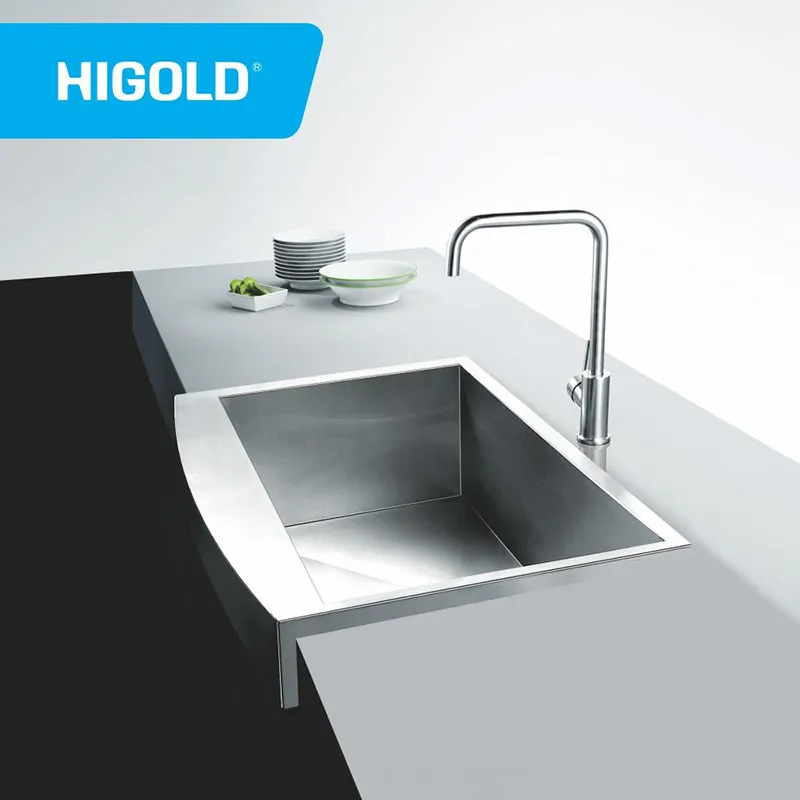
    A recessed kitchen sink, also known as an above-mount sink, is a sink that is recessed into the kitchen countertop. Unlike traditional sink installations, the rim of a recessed kitchen sink is flush with or slightly raised from the countertop, so it is not hidden beneath the countertop like an undermount sink.
    2025-08-04
    Learn More
  • How to clean a stainless steel kitchen sink?
    Pour the cleaner on the surface of the stainless steel kitchen sink and gently wipe the sink with a soft cloth or sponge. Pay special attention to cleaning all corners of the sink, including the bottom and edge of the sink. For stubborn stains, you can spray the cleaner on the stains and let it sit for a few minutes before wiping, which will help soften and remove the stains.
    2025-07-28
    Learn More
  • Why do people have two sinks in the kitchen?
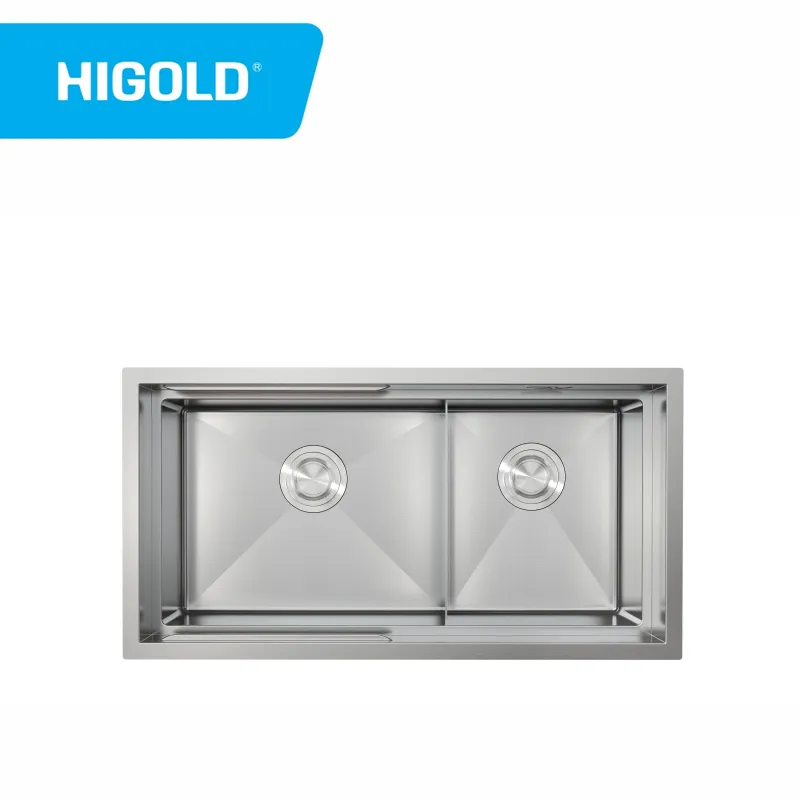
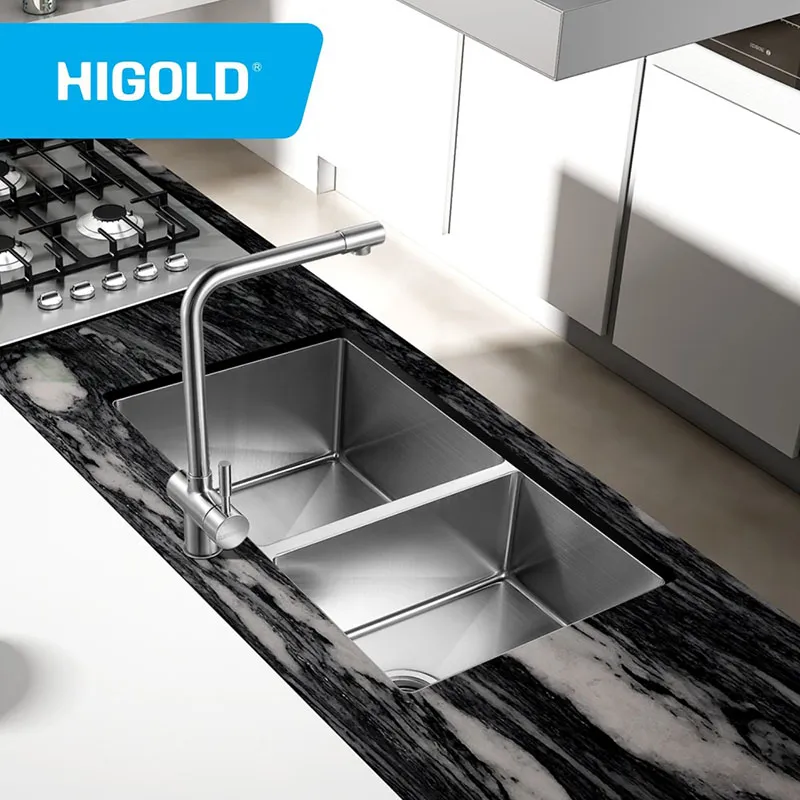
    A double bowl kitchen sink consists of two sinks of the same or different sizes, which are usually placed side by side on a sink countertop. This design is sometimes also called a "separated sink". Compared with a single-bowl sink, its advantage is that it can perform different types of operations without interfering with each other.
    2025-07-25
    Learn More
  • What is the best grade of stainless steel for kitchen sinks?
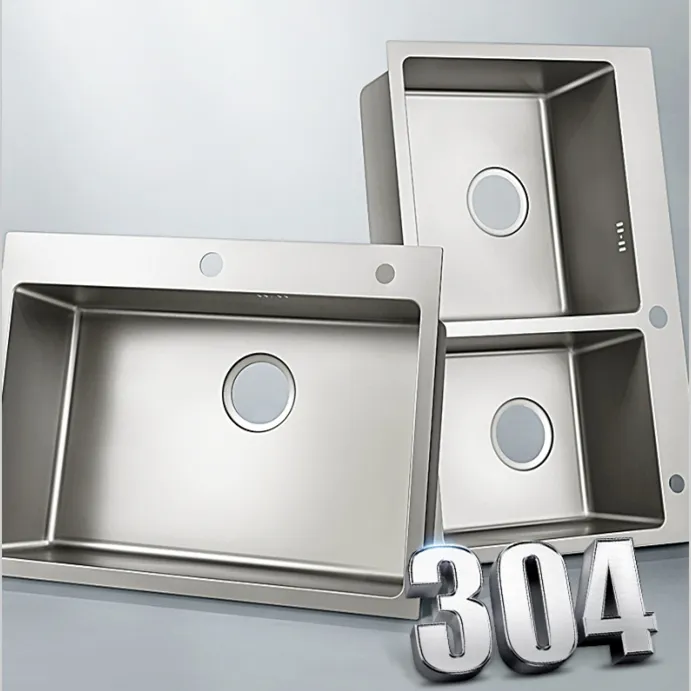
    The grade of stainless steel usually refers to the classification standards of its chemical composition and physical properties. Common classification methods include ASTM standards in the United States, European standards, and Japanese standards. In the field of kitchen sinks, the most widely used is austenitic stainless steel, mainly including grades 304 and 316.
    2025-07-24
    Learn More
  • How far should the stainless steel sink be from the backsplash?
    Generally speaking, the distance between the stainless steel kitchen sink and the backsplash is recommended to be kept at about 3 cm to 5 cm. This range is set based on the following considerations: · Waterproof function · Operation space · Aesthetics
    2025-07-23
    Learn More
  • What is the standard size of an undermount kitchen sink?
    Standard single-bowl sinks are usually 30 cm to 50 cm wide, 60 cm to 80 cm long, and 20 cm to 25 cm deep; double-bowl sinks are 20 cm to 30 cm wide per bowl, usually 80 cm to 100 cm long, and 20 cm to 25 cm deep.
    2025-07-22
    Learn More
  • Kitchen sink faucet: should it be installed on the left or right?
    The kitchen sink faucet should be installed on the left or right side, but should be determined according to the usage habits of family members, the kitchen space layout, and specific equipment requirements. For right-handed family members, the left side of the faucet is usually more convenient; for left-handed family members, the right side of the faucet is more suitable.
    2025-07-18
    Learn More
  • Why does my black kitchen sink always look dirty?
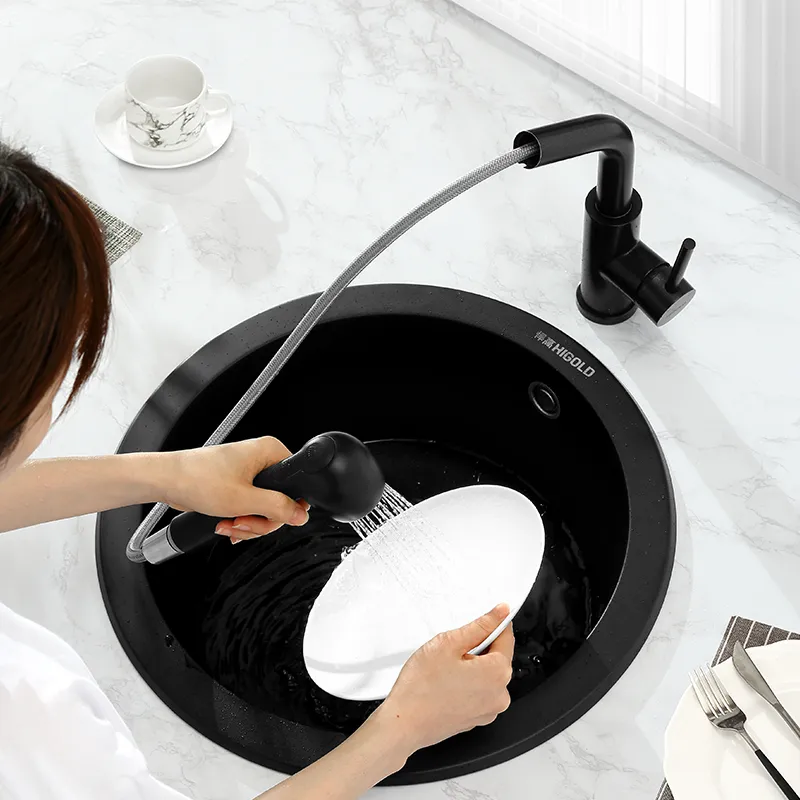
    Water stains are one of the most common stains on kitchen sinks, especially in environments where water is frequently used. Water stains are usually more obvious on the surface of black sinks, especially when the water droplets evaporate and leave white marks.
    2025-07-15
    Learn More
  • How far should the kitchen faucet extend to the sink?
    For standard-sized single-bowl sinks (usually about 50-80 cm long and 30-40 cm wide), the extension distance of the faucet should be 10-15 cm from the edge of the sink. This distance ensures that the water flows smoothly into the sink without causing splashes.
    2025-07-14
    Learn More

Get the latest price? We will reply as soon as possible (within 12 hours)