
2026-05-30
Learn MoreNews
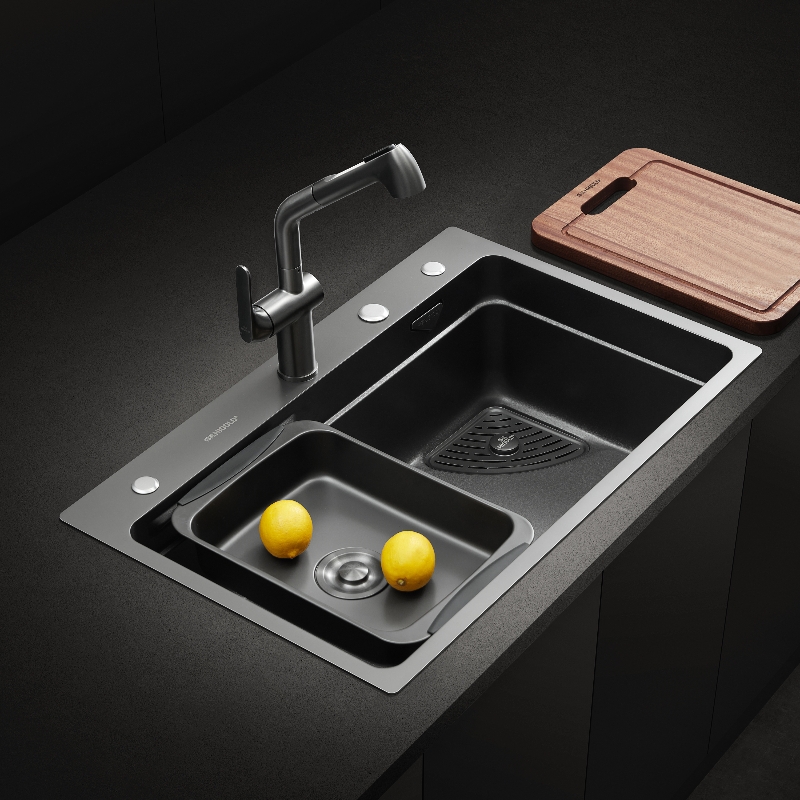
- The biggest difference between three-hole and single-hole faucets lies in their hole design. Three-hole faucets require three mounting holes, while single-hole faucets only require one. Therefore, if you want to replace a three-hole faucet with a single-hole faucet, you must address the issue of extra holes, which is the core difficulty in the replacement process.2025-08-21Learn More
- Standard single-bowl sinks are usually 30 cm to 50 cm wide, 60 cm to 80 cm long, and 20 cm to 25 cm deep; double-bowl sinks are 20 cm to 30 cm wide per bowl, usually 80 cm to 100 cm long, and 20 cm to 25 cm deep.2025-07-22Learn More
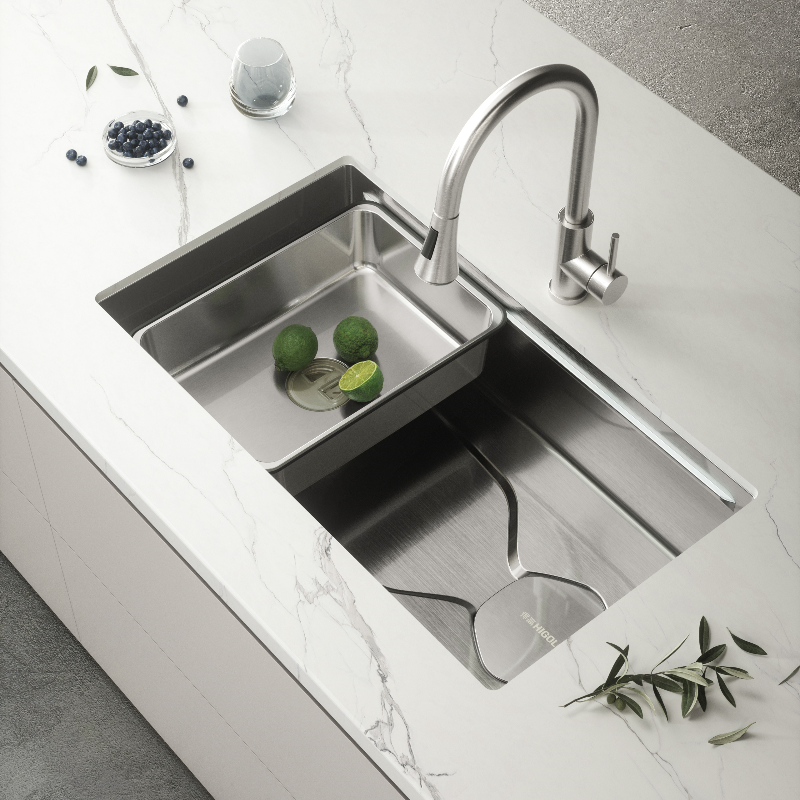
- The hole position of the sink is an important factor affecting the feasibility of faucet replacement. If your sink originally has only one hole for installing a single-hole faucet, then when replacing it with a two-hole faucet, first check whether the sink has the conditions for installing two holes.2025-07-21Learn More
- Advantages of a single-trough sink: 1. Space saving 2. Large washing area 3. Easy to clean 4. Beautiful and simple Advantages of a double-trough sink: 1. Flexible operation 2. Better garbage disposal 3. Stronger classification function 4. Suitable for most kitchens2025-07-09Learn More
- Common specifications and sizes of commercial stainless steel sinks: 1. Single-bowl sink · Length: between 45 cm and 60 cm · Width: 45 cm to 55 cm · Depth: 25 cm to 40 cm 2. Double-bowl sink · Length: between 80 cm and 100 cm · Width: 40 cm to 50 cm · Depth: between 30 cm and 40 cm 3. Triple-bowl sink · Length: between 100 cm and 150 cm · Width: 45 cm to 50 cm · Depth: 35 cm to 45 cm 4. Sink with drainboard · Length: 150 cm or longer · Depth: 35 cm to 40 cm 5. Custom size2025-07-03Learn More