
News

  • Why You Should Choose a 304 Stainless Steel Kitchen Sink?
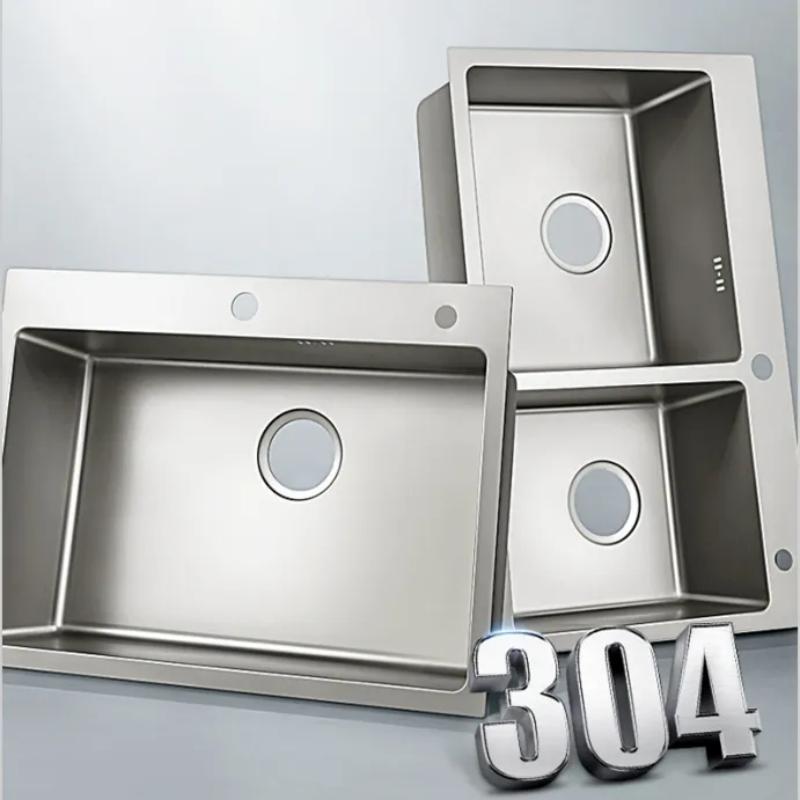
    Many people, upon hearing "316 is better than 304," mistakenly believe that a higher-grade material must be more suitable for the kitchen. This is a common misconception. 304 can easily resist common kitchen irritants such as water, salt, alkali, and grease. The "extra corrosion resistance" of 316 is almost meaningless in a typical home environment.
    2025-11-13
    Learn More
  • Do Handmade Stainless Steel Kitchen Sinks Have Welds?
    Stamped sinks are formed from a single sheet of stainless steel using a large stamping machine, with the body and corners naturally shaped without welding. The manufacturing process for handmade sinks is completely different. Therefore, welds are an inevitable part of the structure of handmade stainless steel kitchen sinks.
    2025-11-12
    Learn More
  • How to Remove Rust from Stainless Steel Kitchen Sinks?
    Baking soda is a common and safe alkaline cleaner that has a neutralizing effect on rust. Instructions: • Mix baking soda with a small amount of water to form a paste. • Apply evenly to the rusted areas of the stainless steel kitchen sink. • Let it sit for 10-15 minutes, then gently wipe with a soft sponge. • Rinse thoroughly and dry.
    2025-11-11
    Learn More
  • How often should a stainless steel kitchen sink be polished?
    —The answer is not fixed; it depends on the usage environment, cleaning habits, and material. Generally speaking, a light polish every three to six months is suitable for most households. Frequent use or harsh environments may require a shorter period, while regular maintenance can extend the period.
    2025-10-24
    Learn More
  • Why is my brand new stainless steel kitchen sink rusting?
    The chromium oxide passivation film on the surface of stainless steel is key to preventing rust. Once this protective film is damaged by mechanical scratches, improper cleaning, or chemical corrosion, the exposed metal substrate reacts with moisture and oxygen in the air, resulting in rust spots.
    2025-10-20
    Learn More
  • Why is my stainless steel kitchen sink so dull?
    When a stainless steel kitchen sink appears dull, it doesn't necessarily mean the metal has rusted. In fact, dullness often indicates a loss of gloss due to damage to the surface's protective film or the accumulation of contaminants. Once the passive film is damaged, water stains, dirt, and chemicals can more easily adhere, making the surface appear gray or dull.
    2025-10-13
    Learn More
  • Press-Formed Stainless Steel Kitchen Sinks: What Are the Advantages?
    Advantages of press-formed stainless steel kitchen sinks: 1. High strength 2. Complex geometries 3. Reduced springback and defects 4. Customizable material properties 5. Improved corrosion resistance 6. Easy cleaning and maintenance 7. Energy-saving and environmentally friendly
    2025-09-16
    Learn More
  • Is a 10-inch stainless steel kitchen sink too deep?
    If you cook large meals or frequently handle fruits and vegetables, a 10-inch deep stainless steel sink provides more space. When washing ingredients, especially those that need to be soaked, the deep sink design allows them to better contain the food without spilling outside the sink.
    2025-09-02
    Learn More
  • Can you pour boiling water into a stainless steel sink?
    Although 304 stainless steel is highly heat-resistant, prolonged exposure to high temperatures can still cause surface oxidation. Especially when boiling water comes into contact with the surface of a stainless steel kitchen sink, the high temperatures can damage the protective coating on the sink's surface, accelerating the oxidation process.
    2025-08-29
    Learn More
  • Are all stainless steel sinks easily scratched?
    304 stainless steel (18% chromium and 8% nickel) is a common, high-quality stainless steel material on the market, offering strong corrosion resistance and relatively good scratch resistance. However, some lower-quality stainless steel sinks may use 201 stainless steel or other lower-grade materials, which have lower hardness and scratch resistance and are therefore susceptible to scratches from hard objects.
    2025-08-22
    Learn More

Get the latest price? We will reply as soon as possible (within 12 hours)