

In modern kitchen renovations, sus304 stainless steel sinks have become a mainstream choice. They are widely popular in both residential and commercial kitchens due to their excellent corrosion resistance, high hardness, and easy-to-clean, aesthetically pleasing appearance. However, many users encounter a question during actual use:
"Isn't 304 stainless steel a stainless steel sink? Why do rust-like spots still appear after a period of use?"
This leads to a more fundamental question:
Are sus304 stainless steel sinks actually prone to rust?
If so, why do they rust?
If not, why do rust-like substances appear?
This article will explain from multiple perspectives, including metal materials science, kitchen environment characteristics, corrosion principles, and cleaning mechanisms, why "304 stainless steel sinks are not rust-free," what factors cause rust spots to appear on the surface, how to distinguish between real rust and stains, and how to properly maintain them to keep them shiny for a long time.
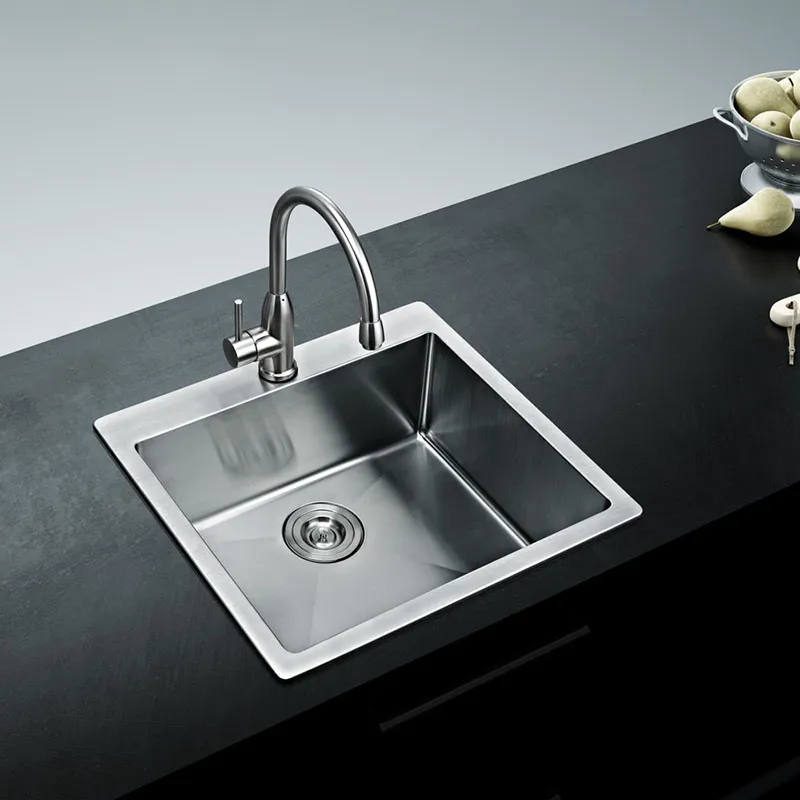
Why are 304 stainless steel sinks considered corrosion-resistant?
To answer the core question, "Does a 304 stainless steel sink rust easily?", we must first understand the metallic structure and corrosion-resistant properties of 304 stainless steel itself.
The main chemical components of 304 stainless steel are:
• 18% Chromium (Cr)
• 8% Nickel (Ni)
• Trace amounts of carbon
• Iron (Fe) as the matrix
It is the combination of ≥18% chromium and ≥8% nickel that creates a strong self-healing passivation film on its surface.
Why is 304 stainless steel not prone to rusting?
—The key lies in the passivation film.
When the surface of 304 stainless steel is exposed to an oxygen environment, a very thin but dense chromium oxide film immediately forms. This film:
• Prevents oxygen from further oxidizing the internal iron
• Prevents the penetration of moisture, salt, acids, and alkalis
• Allows for self-repair even if scratched (chromium oxide reforms)
Therefore, 304 stainless steel sinks are inherently not prone to rusting in normal kitchen use environments.
However, "not prone" does not mean "absolutely not." Stainless steel is not an indestructible material, but rather a relatively more corrosion-resistant one.
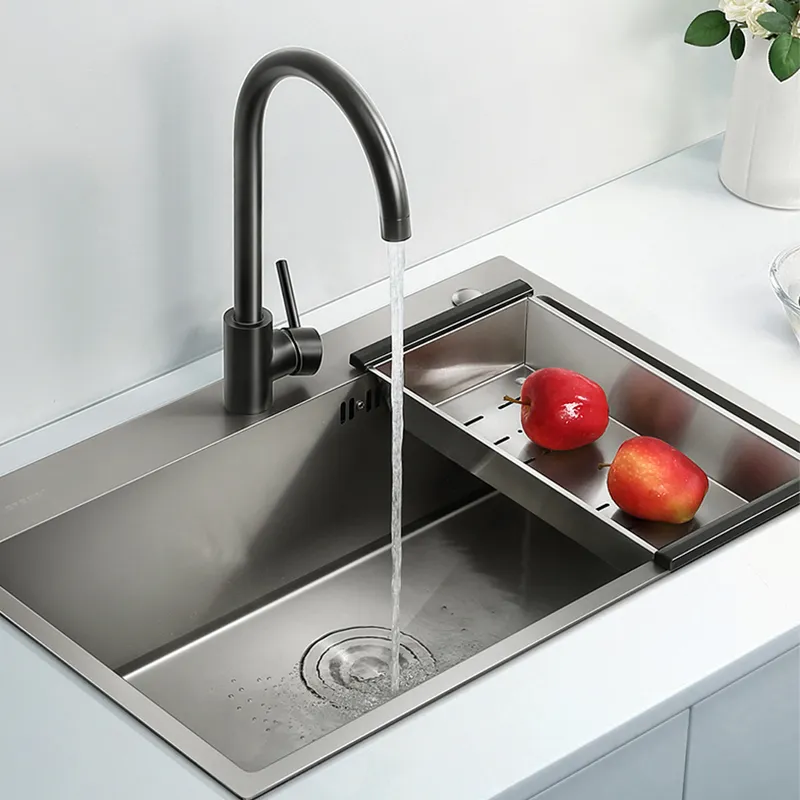
Will SUS304 stainless steel sinks really rust?
The answer is: Under certain conditions, rust spots may appear, but in most cases, it's not the material itself that rusts.
Two things must be clarified:
1. Genuine 304 stainless steel sinks are not prone to rust
If the material is qualified, the composition meets standards, and there are no destructive chemicals in the environment, a sus304 stainless steel sink can maintain its shine for many years.
2. However, the surface of 304 stainless steel sinks "is prone to rust-like stains."
These stains are often mistaken for rust, but they usually come from:
• Iron particles
• Deposits in tap water
• Iron filings left from washing pots and pans
• Oxides from seasonings or food residue
• Surface corrosion spots caused by improper cleaning
This is why many people think their "304 stainless steel sink is rusty," but it's actually external rust adhesion, not corrosion of the stainless steel itself.
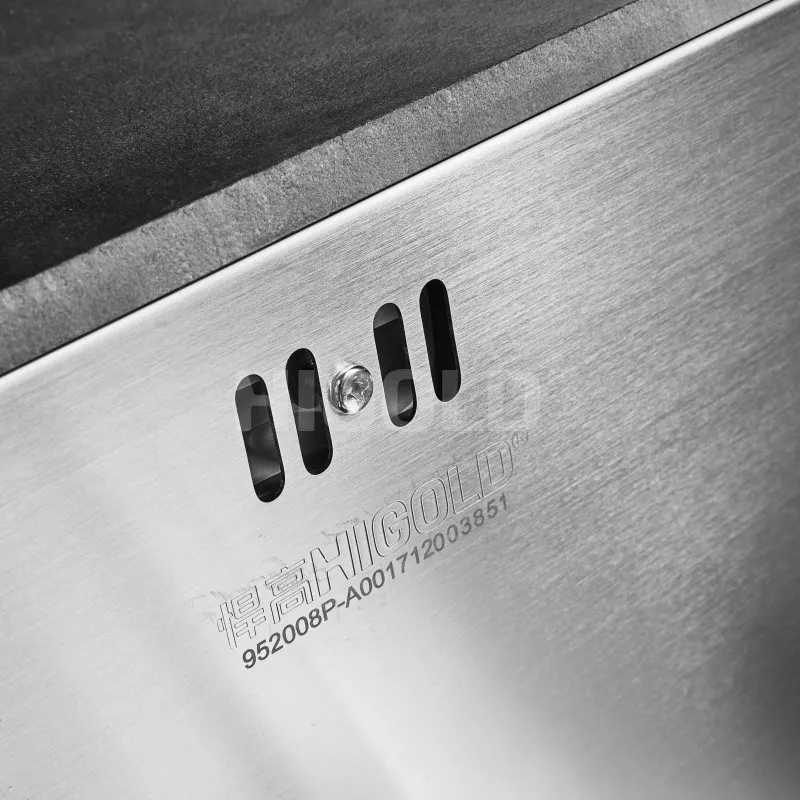
Why do rust spots appear on 304 stainless steel sinks?
To fully answer the question "Are sus304 stainless steel sinks prone to rust?", it's essential to understand the application environment and which external factors affect the passivation film.
The following are the main causes of surface rust:
1. Has the passivation film on the surface of the 304 stainless steel sink been damaged?
If the passivation film is damaged, the stainless steel will temporarily lose its corrosion resistance, leading to pitting or localized oxidation, which manifests as "rust."
Causes of passivation film damage include:
• Strong acid and alkali cleaners
• Chlorides (commonly found in bleach and chlorine-based cleaners)
• Long-term accumulation of salt
• Damage to the surface from strong abrasive brushes
Chloride ions (Cl⁻), in particular, are the "number one enemy" of the stainless steel passivation film.
If the kitchen frequently uses chlorine-based products, 84 disinfectant, bleach, etc., the 304 stainless steel sink may indeed experience pitting corrosion.
2. Iron powder and metal shavings from cookware remaining on the surface of a 304 stainless steel sink
This is the most common cause of "rust," but it's often mistaken for genuine rust on the sink itself.
For example:
• Iron shavings scraped from an iron pot
• Micro-iron particles from wear and tear on the bottom of a pot
• Iron powder from cleaning screws, knives, etc.
These iron particles rust upon contact with air and water, but the rust is from the iron shavings, not from the stainless steel sink itself.
Therefore, this is "external rust," unrelated to the sus304 stainless steel sink itself.
Hard water and limescale buildup cause rust-like appearances
Calcium and magnesium ions in hard water deposit to form limescale, which can accumulate and attract:
• Iron ions
• Chloride ions
• Other metal particles
These particles oxidize on the limescale, appearing as rust, but are unrelated to the stainless steel substrate.
Improper cleaning allows corrosion to remain for extended periods
If a 304 stainless steel sink is only rinsed daily without scrubbing, food residue, salt, and seasonings can remain for a long time, slowly causing corrosion spots.
For example:
• Soy sauce (contains salt and is weakly acidic)
• Vinegar (acidic)
• Salt water
• Lemon juice
These can all slowly oxidize without cleaning.
Water film corrosion forms under damp and poorly ventilated conditions
If the kitchen has high humidity, poor drainage, and water accumulates in the sink for a long time, the constantly damp surface will accelerate:
• Impurities adhere
• Oxidation reaction
• Residue decay
Ultimately forming stains or rust deposits.
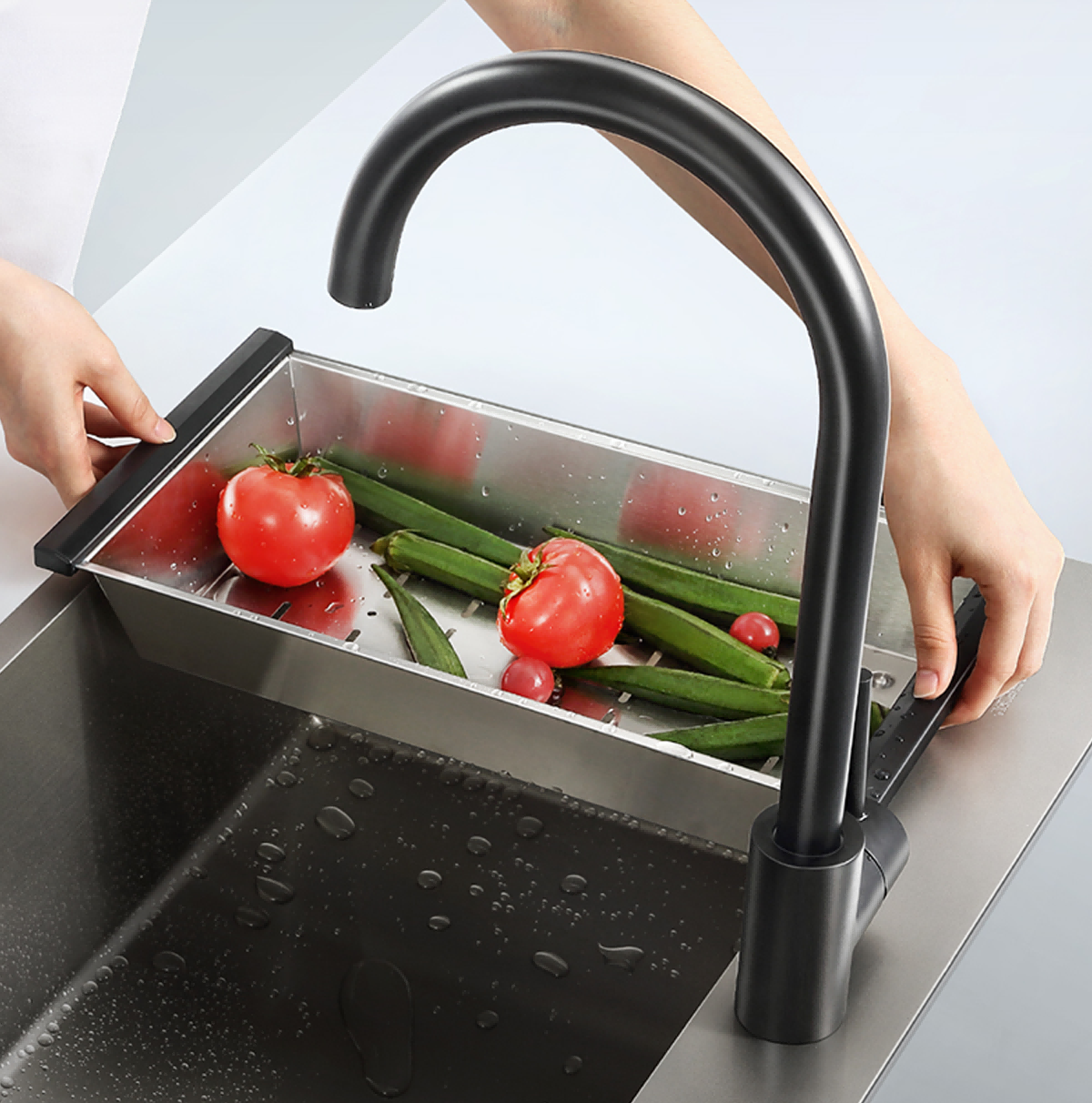
Is the rust on a 304 stainless steel sink "fake rust" or "real rust"?
Many people see brown spots on the surface and assume it's rust, but it's important to distinguish:
1. "Fake rust" (90% of cases) – External rust
Characteristics:
• Wipes off easily
• Appears as scattered spots
• Often found on iron filings on the bottom of pots and pans
• Often appears in the fixed washing area of the sink
• Easily removed with detergent or stainless steel cleaning paste
This type of rust is not rust from the sus304 stainless steel sink, but rather the adhesion of other iron oxides.
2. "True Rust" (Surface Pitting) – A Rare Case
Characteristics:
• Difficult to wipe off
• Contains tiny pits
• Often appears in areas with prolonged contact with salt
• Appears after the passivation film is damaged
This type of rust indicates pitting corrosion on the surface of the sink, but it is still only surface corrosion and will not immediately affect the structural strength.
What household habits most easily make 304 stainless steel sinks "look rusty"?
Below are the most common kitchen mistakes:
1. Placing wet sponges or steel wool in the sink for extended periods
Metal particles combined with a humid environment create a "factory" for rust.
2. Soaking iron pots, cast iron pots, and knives in the sink for long periods
The oxidation of iron produces rust water, which adheres to the sink surface and makes it appear as if the stainless steel sink is rusty.
3. Using strong acid/alkali/chlorine-containing cleaners
For example:
• 84 disinfectant
• Chlorine bleach
• Strong acid detergents
• Industrial cleaners
These will damage the passivation film.
4. Leaving water standing for extended periods
Hard water deposits + iron particles + oxidation → rust.
5. Frequently scrubbing the inside of the sink with steel wool
Will:
• Scratch the surface texture
• Damage the passivation layer
• Make it easier for corrosion to adhere
How to keep a 304 stainless steel sink from rusting?
Even though sus304 stainless steel sinks are inherently corrosion-resistant, proper maintenance is still necessary to maintain their shine.
1. Rinse and dry after each use
Avoid:
• Scale
• Iron particle adhesion
• Salt residue
Keeping the sink dry reduces the chance of rusting to near zero.
2. Gentle cleaning once a week
Suitable for use:
• Neutral detergent
• Baking soda
• Stainless steel cleaning paste
• Soft-sided scouring pad
Avoid using:
• Steel wool
• Strong acid cleaners
• Chlorine-containing products
3. Keep the sink area well-ventilated
A dry environment slows down the oxidation process.
4. Avoid storing iron pots and knives for extended periods
Short-term cleaning is fine, but do not soak overnight.
5. Use a stainless steel protectant (professional grade) if necessary
This can further enhance the passivation film and reduce corrosion adhesion.
Does the rust resistance of a 304 stainless steel sink depend on its thickness and manufacturing process?
The answer is: It has an influence, but it is not the determining factor.
Here are the key points:
Thicker stainless steel sinks offer greater resistance to deformation but do not affect their inherent corrosion resistance.
0.8mm, 1.0mm, and 1.2mm thick 304 stainless steel sinks have essentially the same corrosion resistance, but:
• Thicker sinks are less prone to scratches → the passivation film is less likely to be damaged.
• Thinner sinks are more prone to scratches → rust is more likely to adhere.
Brushed vs. Sandblasted vs. Stamped Finish: Texture Affects "Rust Appearance"
The rougher the texture, the easier it is for dirt to accumulate, making it look more like "rust."
Overall hand-welded process → Welded areas are more prone to pitting corrosion
The metal structure in the welded area is altered, the passivation film is weaker, therefore requiring more cleaning.
So, how easily do 304 stainless steel sinks rust?
From a materials science perspective:
✔ 304 stainless steel sinks are inherently rust-resistant (under proper use)
However, from a kitchen environment perspective:
✔ They are prone to developing rust-like deposits (external rust)
What truly causes sus304 stainless steel sinks to rust are:
• Chlorides
• Strong acids
• Lack of regular cleaning
• Prolonged water accumulation
• Metal particle adhesion
• Damage to the passivation film
In other words:
SUS304 stainless steel sinks are not rust-proof, but rather, they "do not rust under proper use, but rust spots will appear under improper use."
What Benefits Do Long-Term Buyers Gain from Higold?
Long-term Higold partners receive stable pricing, priority scheduling, early access to new kitchen sink designs, and continuous R&D support. Retailers and distributors benefit from fast response times, consistent product improvements, and powerful supply capabilities. Higold aims to create sustainable, long-term purchasing relationships based on trust and mutual growth.

