

In modern kitchen design, 304 stainless steel sinks are the most common and popular material due to their advantages such as corrosion resistance, oxidation resistance, and ease of cleaning. However, a common question arises:
Will bacteria grow on the surface of a 304 stainless steel kitchen sink?
Many people believe that as long as they choose a high-quality 304 stainless steel kitchen sink, bacteria will not grow. Is this understanding accurate?
This article will delve into this question from the perspectives of material properties, bacterial survival environments, and kitchen usage scenarios, and share how to keep your 304 stainless steel sink hygienic and reduce bacterial adhesion.
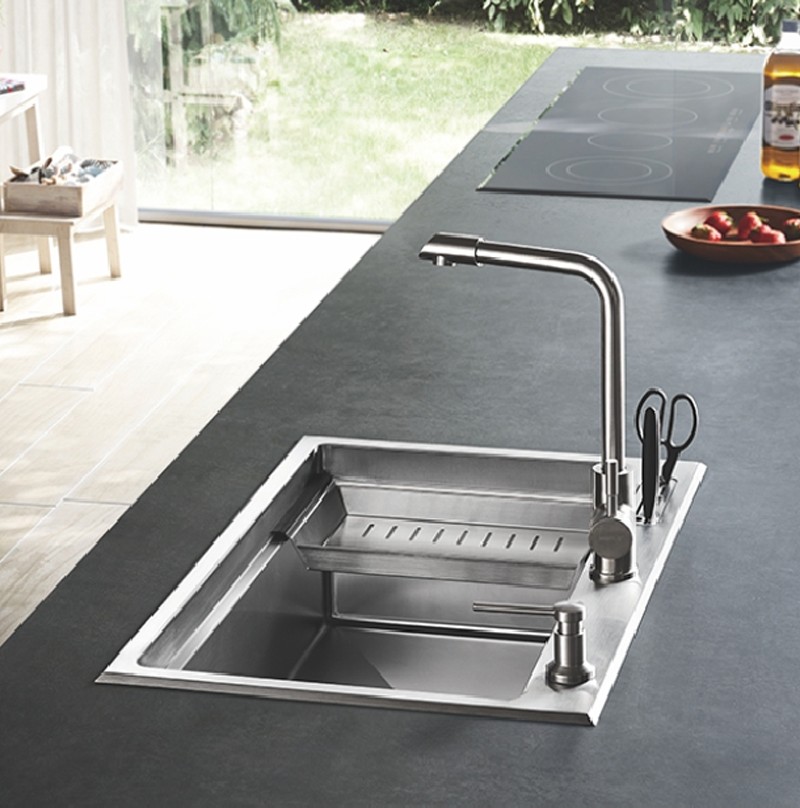
What is a 304 stainless steel sink, and what is its relationship with bacterial growth?
304 stainless steel is an austenitic stainless steel containing 18% chromium and 8% nickel, with the following characteristics:
• Strong corrosion resistance: The chromium oxide layer forms a protective film, preventing corrosion caused by water and oxygen.
• Dense and smooth surface: It is not easily penetrated or adsorbed by contaminants.
• Moderate hardness and wear resistance: It is not easily damaged even after prolonged contact with water and oil.
• Easy to clean: Grease and dirt are difficult to adhere to firmly.
These characteristics are all related to whether bacteria can easily grow in it.
Stainless steel is not a "sterilizing material"
Although 304 stainless steel has a smooth surface, is not easily corroded, and makes it difficult to provide a suitable environment for bacteria, it does not have an active sterilization function.
In other words—
304 stainless steel kitchen sinks can reduce bacterial adhesion, but cannot completely prevent bacteria from appearing.
As long as there is moisture, grease, and food residue, bacteria have the opportunity to multiply.
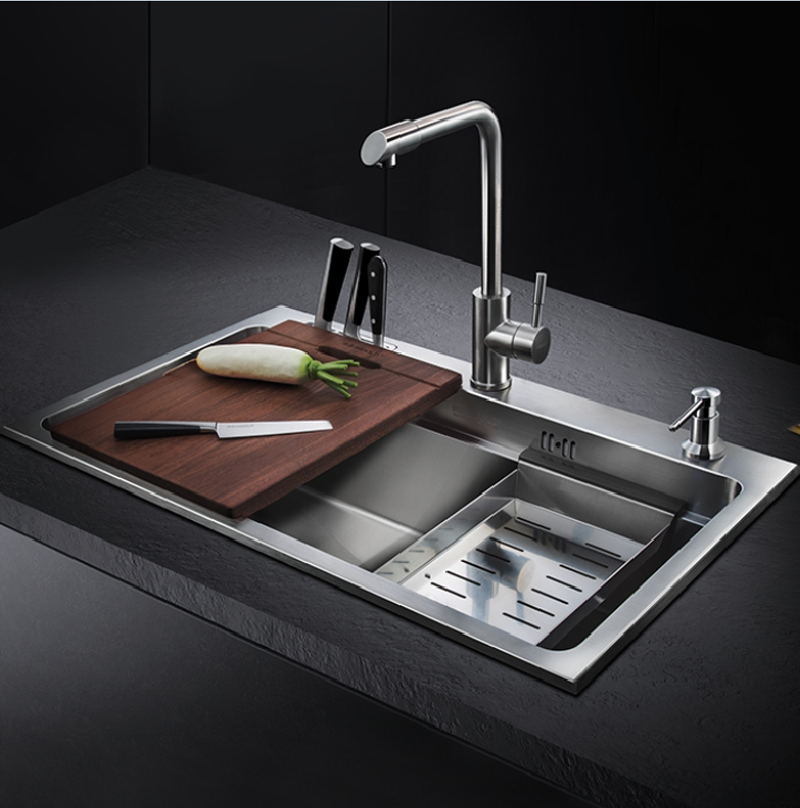
Do bacteria really grow on the surface of a 304 stainless steel sink?
The answer is: Yes, but the probability and extent depend on usage and cleaning habits.
Why can bacteria survive in 304 stainless steel sinks?
Despite the advantages of 304 stainless steel sinks, such as their smoothness, impermeability, and corrosion resistance, bacteria can still survive on their surface. The main reasons include:
1. Sufficient and prolonged moisture
Bacteria rely heavily on humidity for growth, and kitchen sinks are frequently used and constantly exposed to a humid environment, providing basic conditions for survival, even with the superior material.
2. Food residue provides a nutrient source
Raw meat juices, vegetable scraps, and grease are readily available nutrients for bacteria. Once they adhere to the surface of a 304 stainless steel sink, they become the basis for bacterial reproduction.
3. Stainless steel lacks "active antibacterial capabilities"
While 304 stainless steel kitchen sinks are "corrosion-resistant" and "easy to clean," they lack the ability to kill bacteria. Therefore, bacteria can still survive in suitable environments.
4. Cleaning tools themselves carry bacteria
Dishcloths and cleaning sponges are among the items with the highest bacterial density in the kitchen. If these tools are used to wipe the sink, bacteria can adhere to the stainless steel surface.
Therefore, while 304 stainless steel sinks reduce the chance of bacterial adhesion, bacteria can still survive and even multiply if proper cleaning methods are not used.
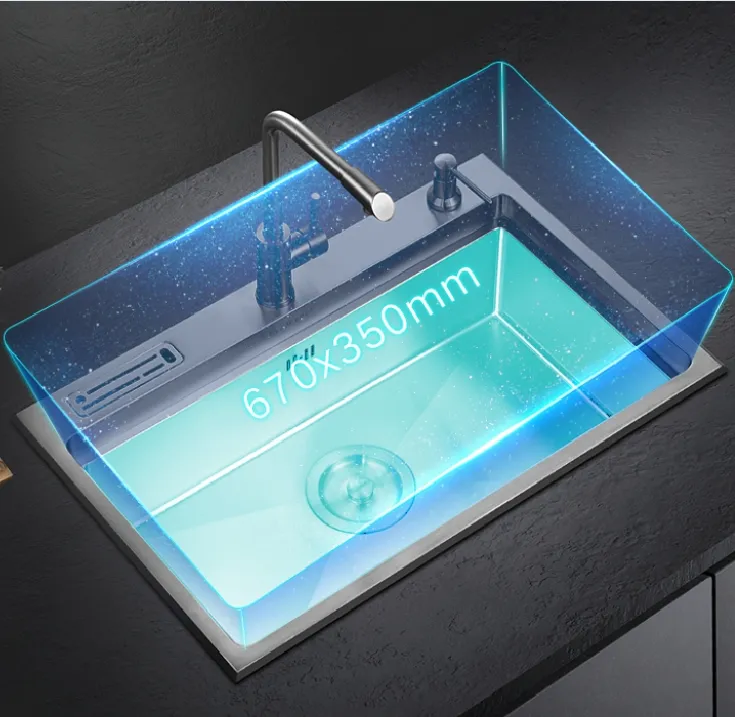
Is 304 stainless steel sink really more antibacterial than other materials?
The answer is: Yes, 304 stainless steel has a clear advantage in hygiene.
Why is 304 stainless steel more hygienic?
From the perspective of the material's inherent properties, 304 stainless steel sinks are less prone to bacterial growth than many other common sink materials. However, this "antibacterial" property is an advantage derived from physical characteristics, not an active antibacterial function.
Advantages of 304 stainless steel sinks:
1. Smooth, non-porous surface
Porous materials (such as ceramics, resins, and artificial stone) may have tiny pores that easily trap dirt and grime; while the dense surface of 304 stainless steel does not provide hiding places for bacteria.
2. Non-absorbent and non-permeable
Water cannot penetrate the material's interior, thus preventing the formation of a hidden breeding environment and reducing contamination.
3. Easy to Clean
Grease, protein, and stains are not firmly attached and can be removed with normal washing, reducing the probability of bacterial growth.
However, please note:
"Antibacterial" does not mean "bacteria-free."
If used improperly or not cleaned promptly, 304 stainless steel kitchen sinks can still harbor bacteria. Therefore, proper maintenance is key.
In which situations are 304 stainless steel sinks more prone to bacterial growth?
Despite the superior material, improper use can lead to rapid bacterial growth. The following scenarios are worth noting:
1. Prolonged accumulation of food scraps
Protein, grease, and starch are the favorite breeding grounds for bacteria. If left for more than one or two hours, they may begin to multiply.
2. Rinsing with water only, without regular disinfection
Stainless steel is easy to clean, but this does not mean that simply rinsing with water is truly hygienic.
3. Using moldy or damp cloths to clean the sink
Cloths often have a higher bacterial content than toilet bowls. Wiping the sink directly can easily "wipe" bacteria in.
4. Drain filter screen not cleaned
Long-term accumulation of food scraps in the filter screen can lead to high-density bacterial growth in localized areas, potentially spreading to the sink surface.
5. Failure to clean promptly after cutting raw food
Raw meat and fish easily carry bacteria such as Salmonella and Listeria. If not cleaned promptly, they can easily contaminate the sink.
Therefore, while 304 stainless steel kitchen sinks are inherently less prone to bacterial growth, improper use can cause bacteria to multiply rapidly.
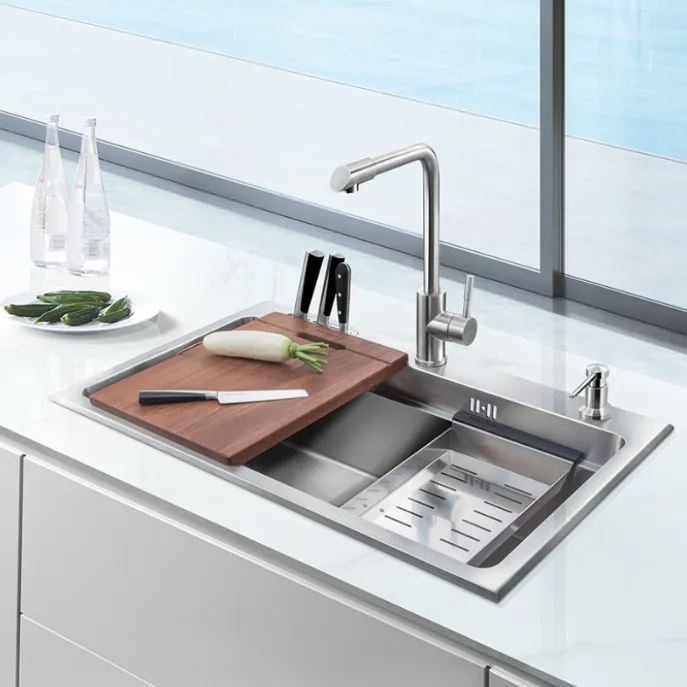
How to prevent bacterial growth in a 304 stainless steel sink?
To achieve the best hygienic performance of a 304 stainless steel kitchen sink, good cleaning habits are necessary. The following methods can effectively reduce the risk of bacterial growth:
1. Rinse and dry thoroughly after each use
Do the following:
• Rinse the sink thoroughly with warm water
• Wipe the surface dry with a clean cloth
• Do not allow water droplets to remain for extended periods
Keeping it dry is one of the most effective ways to inhibit bacterial growth.
2. Clean regularly with a neutral detergent
Neutral detergents effectively remove grease and grime, preventing bacterial growth.
Avoid:
• Long-term cleaning with chlorine bleach (may damage the stainless steel oxide layer)
• Using a steel wool scrubber on the bottom (may scratch the surface, providing a breeding ground for bacteria)
3. Perform a light disinfection weekly
Options include:
• Diluted white vinegar
• Diluted alcohol
• Baking soda + hot water
These methods are gentle, safe, and will not damage the 304 stainless steel surface.
4. Clean the drain filter regularly
Drains are one of the most bacteria-prone areas and must be cleaned regularly to prevent the spread of bacteria.
Why does my 304 stainless steel sink sometimes still have an odor after cleaning?
Many users wonder: Why does my 304 stainless steel sink still have an odor even after cleaning?
Common causes include:
• Odor originating from the drain, not the sink
• Residual grease on the sink strainer
• Water pooling around the sink rim leading to bacterial growth
• Smell-laden dishcloths adhering to the sink
Therefore, even with a superior sink material, poor usage habits can still lead to bacterial growth and unpleasant odors.
Is a 304 stainless steel sink healthier and more hygienic than other kitchen materials?
Comparing several common sink materials from a hygiene perspective:
• 304 Stainless Steel Sink: Corrosion-resistant, smooth, easy to clean, non-absorbent, offering the best hygiene performance
• Artificial Stone Sink: Aesthetically pleasing but prone to staining; surface pores may harbor bacteria
• Ceramic Sink: High hardness but prone to surface micro-cracks
• Granite Composite Sink: Durable but easily absorbs grease
After comparison, 304 stainless steel kitchen sinks have the most consistent advantage in terms of hygiene, which is why they are the common choice for professional and commercial kitchens.
Why Are Higold Kitchen Hardware Products Strong Performers in Retail?
Higold stainless steel sinks and faucets combine modern design, premium SUS304 materials, and practical user features. Award-winning aesthetics and competitive factory pricing make them ideal for both online and offline retail channels. Buyers appreciate the strong consumer appeal, packaging options, and the brand reputation behind Higold—one of China’s most innovative kitchen hardware manufacturers.

