

When choosing a large stainless steel sink for your kitchen, you will quickly encounter two main manufacturing methods: machine-pressed (drawn) sinks and handmade sinks. As a stainless steel sink company or commercial sink suppliers would tell you, the term handmade sink refers to sinks that are cut, welded, and polished manually by skilled craftsmen, rather than being stamped from a single sheet of steel in a press. This article explores the pros and cons of handmade sinks from the perspectives of production technology and daily usage, while also comparing them with drawn sinks.
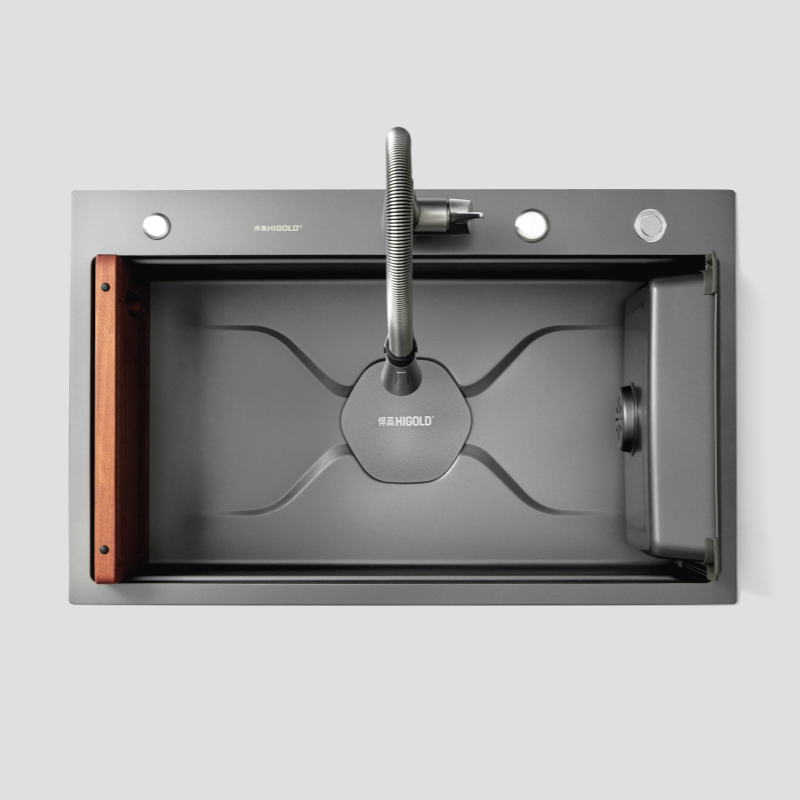
1. How Handmade Sinks Are Made – Production Technology
A handmade sink begins with high-quality stainless steel sheets, typically 14 to 16 gauge (1.5–2.0 mm thick), which is significantly thicker than the 18–20 gauge (0.9–1.2 mm) commonly used in drawn sinks. The process involves:
Cutting – Sheets are precisely laser-cut to the required dimensions.
Bending and welding – The four sides are bent up and welded at the corners, either with a visible seam or a seamless corner finish.
Grinding and polishing – Weld seams are ground smooth and polished to match the surrounding finish (brushed, satin, or mirror).
Undercoating and soundproofing – A heavy-duty undercoating and sound pads are applied to reduce noise.
Because every step relies on human skill, production is slower and more expensive. However, the result is a modern kitchen sink with sharp 90° corners (or slightly radiused R10–R20 corners) and a clean, industrial aesthetic. Many commercial sink suppliers prefer handmade construction for heavy-duty use, as the thicker steel withstands abuse better than drawn sinks.
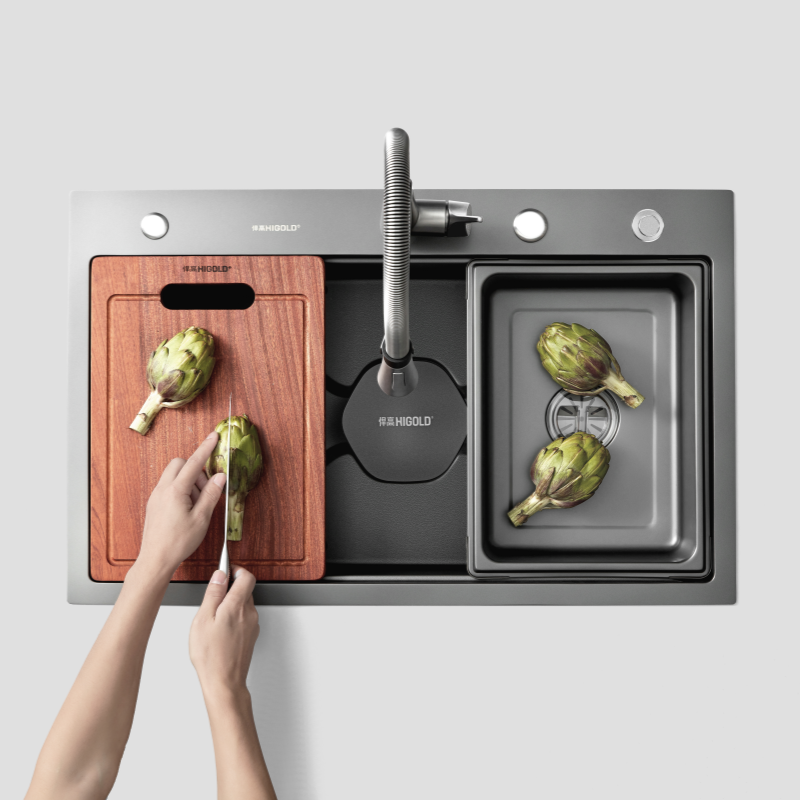
2. The Benefits of Handmade Sinks
Superior Material Thickness and Durability
The most significant advantage of a handmade sink is the use of thicker stainless steel (14 or 16 gauge). This translates to exceptional resistance to dents, impacts, and warping. If you drop a heavy cast-iron pan into a large stainless steel sink that is handmade, the sink will not deform. In contrast, a drawn sink of 20 gauge might show a permanent dent. For commercial sink suppliers, this durability is non-negotiable – a restaurant kitchen cannot afford a sink that buckles under daily abuse.
Larger and More Functional Bowls
Because handmade sinks are fabricated from flat sheets, they can be made in virtually any size and shape. A large stainless steel sink made by hand can have a single bowl as wide as 36 inches or more, allowing you to wash large baking sheets, roasting pans, or even a baby tub. Drawn sinks are limited by the size of the stamping die, so extremely large models are rare or very expensive. For a modern kitchen sink, homeowners increasingly prefer a single-basin large sink, and handmade construction makes that possible.
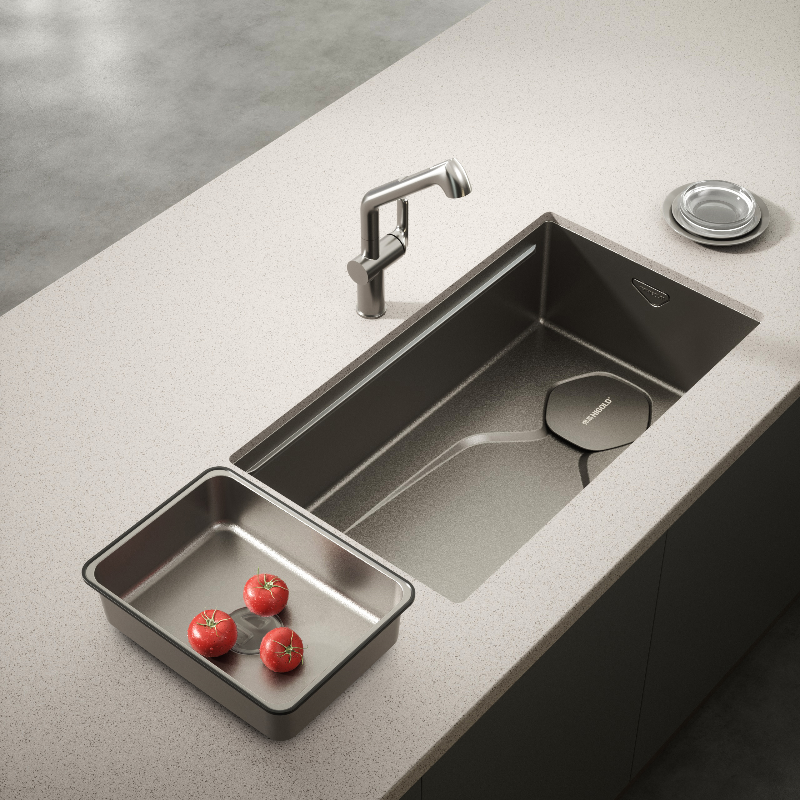
Aesthetic and Modern Design
The hallmark of a handmade sink is its sharp, precise corners. Most handmade sinks feature either a perfect 90° inside corner or a small radius (R10–R12) that looks nearly square. This creates a sleek, architectural look that complements contemporary kitchens. Additionally, the flush-mounted or under-mount installation options are seamlessly integrated with stone countertops. A stainless steel sink company that specializes in handmade products often offers a thinner rim (only 1–2 mm thick) for a barely-there edge, unlike drawn sinks which have a rolled or thicker rim.
Better Drainage and Hygiene
With straight walls and a flat bottom (or a slight slope toward the drain), handmade sinks allow water and debris to flow directly to the drain without pooling in rounded corners. Drawn sinks inevitably have large-radius corners where food particles can get trapped. The sharp interior angles of a handmade sink are easier to wipe clean – a single swipe with a sponge clears the entire bottom. Many commercial sink suppliers recommend handmade models for commercial kitchens precisely because of this hygienic advantage.
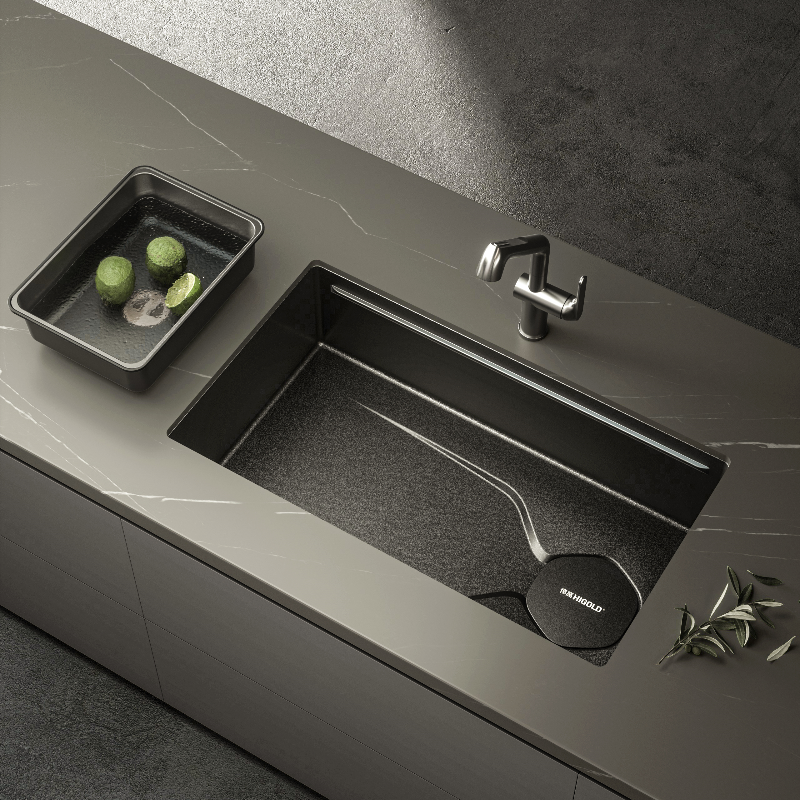
3. The Drawbacks of Handmade Sinks
Visible Weld Seams (Depending on Quality)
Even the best handmade sink will have subtle evidence of welding at the corners. High-end manufacturers grind and polish the seams so well that they are nearly invisible to the naked eye, but budget handmade sinks often show visible lines or slight discoloration. Some users love the industrial “welded” look as part of the aesthetic, but others find it less seamless than a drawn sink. If perfection in uniformity is your goal, a drawn sink (which has no welded corners) might be preferable.
Edge Case: Sharp Corners Can Be a Safety Issue
While the sharp 90° corners of a handmade sink look modern and are easy to clean, they can be uncomfortable when you scrape food from a pot’s rim against them. Some users also report that the bottom interior corners (where the side meets the floor of the sink) can accumulate stubborn grime if not scrubbed regularly, because a perfect 90° corner is hard for a sponge to reach. Manufacturers often apply a slight radius (R10–R12) to mitigate this, but true sharp corners remain a minor annoyance in daily use.
Conclusion
Ultimately, the handmade sink represents the pinnacle of stainless steel sink craftsmanship. It delivers unmatched strength, a signature modern look, and a level of hygiene that commercial kitchens demand. While the higher price and potential weld visibility give some buyers pause, those who invest in a genuine handmade sink from a reputable stainless steel sink company rarely regret it. As both commercial sink suppliers and home chefs will agree – when it comes to the heart of the kitchen, a well-made handmade sink is a joy to use every single day.

