

Why is choosing the right kitchen sink faucet so important? Because the kitchen sink faucet directly affects the convenience of daily cooking and cleaning, the user experience, and the overall aesthetics of the kitchen.
Especially when choosing a faucet style, the choice between high-curvature and low-curvature faucets has become one of the most common dilemmas for many consumers when renovating their kitchens.
Different faucet curvatures not only affect the comfort of use but also involve factors such as space utilization, splash control, installation compatibility, and cleaning and maintenance.
So, which is better, a high-curvature or low-curvature kitchen sink faucet? This article will explore this from multiple perspectives to help you make a professional judgment based on your actual needs.
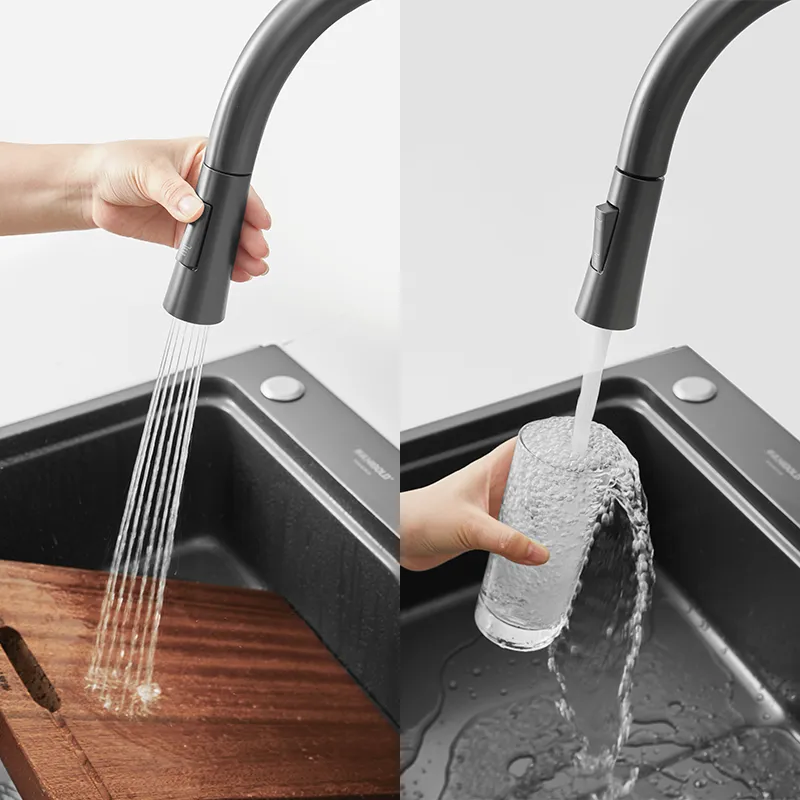
What are high-curvature and low-curvature kitchen sink faucets?
Before understanding "which is better," we need to understand their basic definitions and design differences.
1. Characteristics of High-Curve Kitchen Sink Faucets
High-curve kitchen sink faucets have a higher spout position, typically featuring a curved, arched design. The faucet body forms an elegant curve, rising 25-45 cm from the countertop.
The biggest advantage of this design is its high ceiling and wide operating range, making it particularly suitable for washing large pots, long-handled utensils, or large quantities of fruits and vegetables.
Typical advantages:
• Suitable for deep sinks or double sink designs;
• Easier to wash large utensils;
• Strong aesthetic appeal and smooth lines;
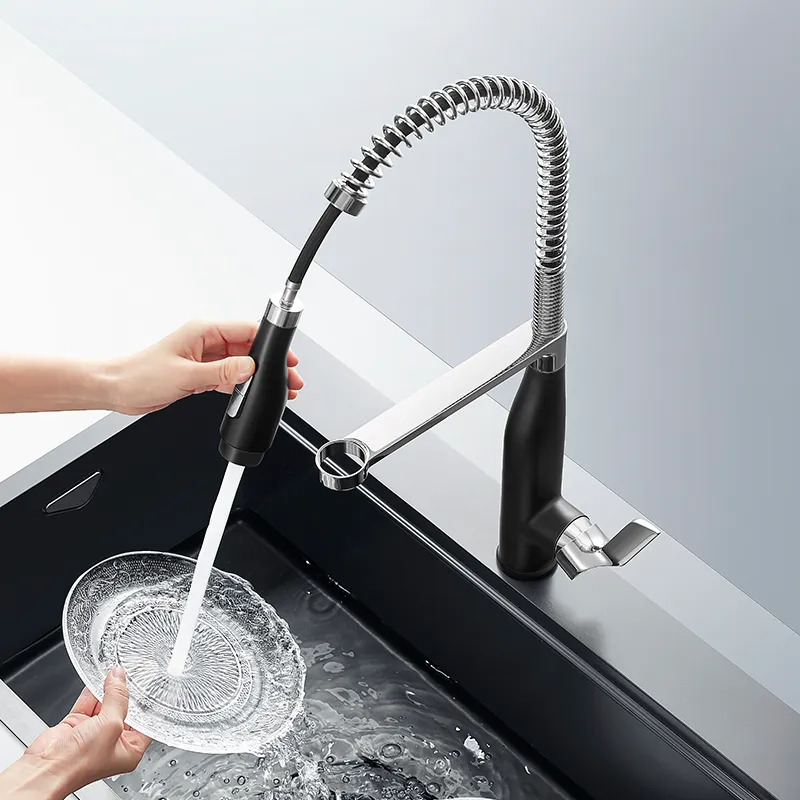
• Usually compatible with pull-out showerheads for more comprehensive functionality.
2. Characteristics of Low-Curve Kitchen Sink Faucets
In contrast, low-curve kitchen sink faucets have a lower spout position, generally between 15-25 cm high. They have a more compact and simple appearance and are often used in small kitchens or areas with low wall cabinets.
Key Advantages:
• Less splashing;
• Easier installation;
• Better stability;
• Suitable for small sinks or single-bowl use.
While the two structures may seem like just a difference in appearance, they actually conceal different functional logics and user experiences. Below, we'll analyze them one by one through several core questions.
Is a high-curvature kitchen sink faucet easier to clean?
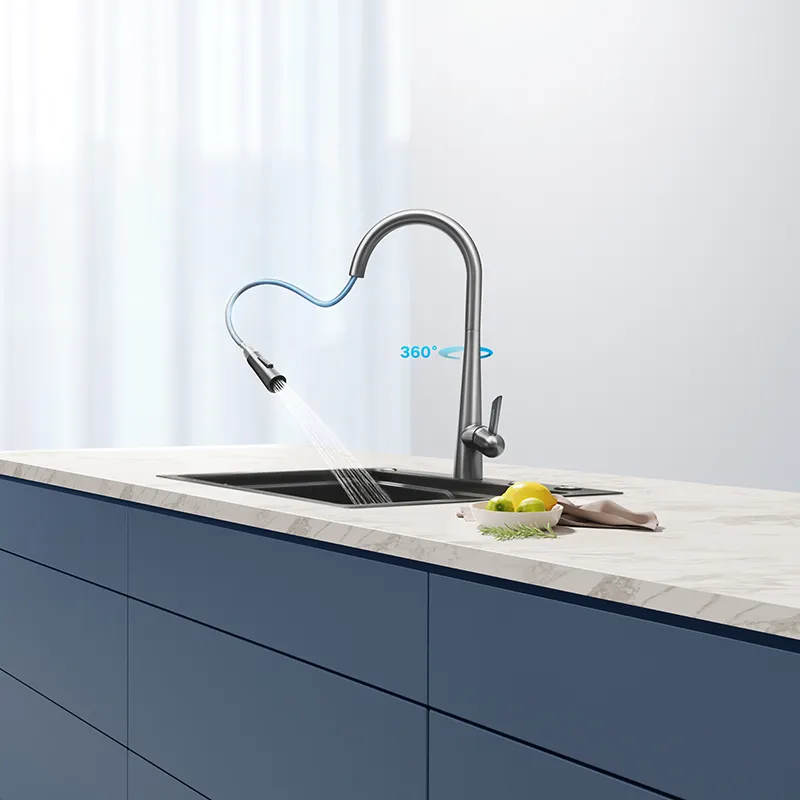
From a usability perspective, high-curvature kitchen sink faucets offer a clear advantage in most households. Their high-position water outlet design provides users with more operating space, especially when washing pots or rinsing large kitchen utensils, preventing the awkwardness of bumping into the faucet.
Reasons:
• More operating space: The high-curvature structure allows water to fall at a higher position, leaving more vertical space;
• Compatible with deep sinks: The combination of a deep sink and a high-curvature faucet makes cleaning more efficient;
• Can be used with rotating or pull-out spray heads: More flexible multi-angle rinsing improves cleaning efficiency.
However, it's important to note that a high-curve design, when paired with a shallow sink, may cause splashing. Therefore, a balance needs to be struck between ease of use and splash control.
Are low-curve kitchen sink faucets more splash-proof?
A common question is: Are high-curve faucets more prone to splashing? The answer is—under the same water pressure conditions, yes.
Low-curve kitchen sink faucets have the spout closer to the bottom of the sink, resulting in a shorter water drop distance and less water bounce. Especially in shallow sinks, single sinks, or smaller kitchen spaces, low-curve faucets effectively control the splash area.
Advantages of low-curve design for splash prevention:
• Shorter water drop height, more even water impact;
• Easier to control the spout angle;
• Suitable for undermount sinks or shallow sinks;
• Smaller splash area, keeping countertops clean.
If your kitchen is often bothered by splashing water when washing vegetables or dishes, choosing a low-curve kitchen sink faucet might be a sensible solution.
Are high-curvature kitchen sink faucets more stylish?
In modern home design, kitchen sink faucets are not only functional appliances but also a visual element.
High-curvature designs often have a stronger aesthetic appeal, especially suitable for open kitchens or modern minimalist styles.
Visual and Decorative Value:
• Arched lines add depth to the kitchen;
• High-curvature structures create a better visual contrast with countertops and cabinets;
• Commonly seen in various surface finishes such as brushed stainless steel, matte black, and chrome plating;
• Serves as a focal point in a stylish sink area.
Conversely, low-curvature kitchen sink faucets emphasize "invisible aesthetics," being understated, compact, and practical, suitable for minimalist or functional kitchens.
Therefore, from an aesthetic perspective, if you're looking for a visually extended and modern kitchen space, a high-curvature design is indeed more advantageous.
Which type of kitchen sink faucet is more suitable for a small kitchen?
Space size directly affects faucet selection. For small apartments or narrow kitchens, which curvature is more appropriate?
Space advantages of low-curvature kitchen sink faucets:
• Lower height, avoiding interference with wall cabinets;
• Flexible installation location, saving space;
• Suitable for shallow or single-bowl sinks;
• Visually neater and more compact.
For kitchens with ample space and double or medium-deep sinks, high-curvature kitchen sink faucets offer a more comfortable washing experience and greater functional expandability.
In other words:
Small kitchen → Low curvature; Large kitchen → High curvature.
From an ergonomic perspective, which kitchen sink faucet is more comfortable?
The curvature height of a kitchen sink faucet is closely related to human posture.
Prolonged bending over to wash dishes can easily cause neck and shoulder fatigue, while a high-curvature faucet allows for a more natural posture, reducing physical strain.
Ergonomic advantages of a high-curvature design:
• Water outlet is closer to eye level;
• Wider range of motion for washing;
• Reduced bending frequency;
• Improved overall operating comfort.
However, it's important to note that if the sink is too shallow or the installation position is too high, it may cause splashing and awkward posture. Therefore, the sink depth, faucet curvature, and countertop height must be properly coordinated.
Which kitchen sink faucet is easier to clean and maintain?
Over time, kitchen sink faucets inevitably accumulate limescale, grease, and stains.
There are also some differences in cleaning and maintenance between the two curvature structures.
Cleaning characteristics of high-curvature faucets:
• Larger surface area, requiring more frequent wiping;
• Curved structure is prone to dust accumulation;
• However, the higher position makes wiping easier and avoids excessive bending.
Low-curvature faucet cleaning characteristics:
• Smaller surface area, faster wiping;
• Lower installation position, easily creating hard-to-reach corners around the sink edge;
• More suitable for regular light cleaning rather than deep cleaning.
Therefore, if you prioritize easy cleaning and quick upkeep, a low-curvature faucet may be more convenient; however, if you prefer a clean and spacious appearance, a high-curvature faucet is perfectly acceptable.
What are the differences between high-curvature and low-curvature kitchen sink faucets during installation?
The installation process is often overlooked, but it is actually a crucial factor to consider before choosing.
Key points for installing high-curvature kitchen sink faucets:
• Requires sufficient overhead space;
• Maintain a distance of at least 20 cm from the wall cabinet;
• It is recommended to use a sturdy base to prevent wobbling;
• Suitable for countertop or recessed designs.
Key points for installing low-curvature kitchen sink faucets:
• Suitable for spaces with limited capacity;
• Easier installation, requiring less countertop thickness;
• Good stability, less prone to wobbling;
• Suitable for small sink areas or installation near windows.
If there are overhead cabinets or windowsills restricting the kitchen space, a low-curvature design is more practical; if space is ample, a high-curvature faucet offers advantages in both functionality and aesthetics.
Does the curvature of a kitchen sink faucet affect the water flow pattern?
The water flow pattern is related to the faucet's internal structure and nozzle design, but the curvature does indirectly affect the user experience.
Common characteristics of high-curvature faucets:
• Often use a pull-out nozzle design;
• Supports multiple water flow settings (direct flow, shower, mist);
• Suitable for multi-directional rinsing;
• Allows for flexible switching between washing dishes, rinsing vegetables, cleaning the sink, etc.
Common characteristics of low-curvature faucets:
• Usually has a fixed water flow;
• Concentrated and stable water flow;
• Simple structure and high durability.
Therefore, if you value a multi-functional user experience, a high-curvature kitchen sink faucet is more advantageous; however, if you prefer a simple, durable, and low-maintenance device, a low-curvature faucet better suits your needs.
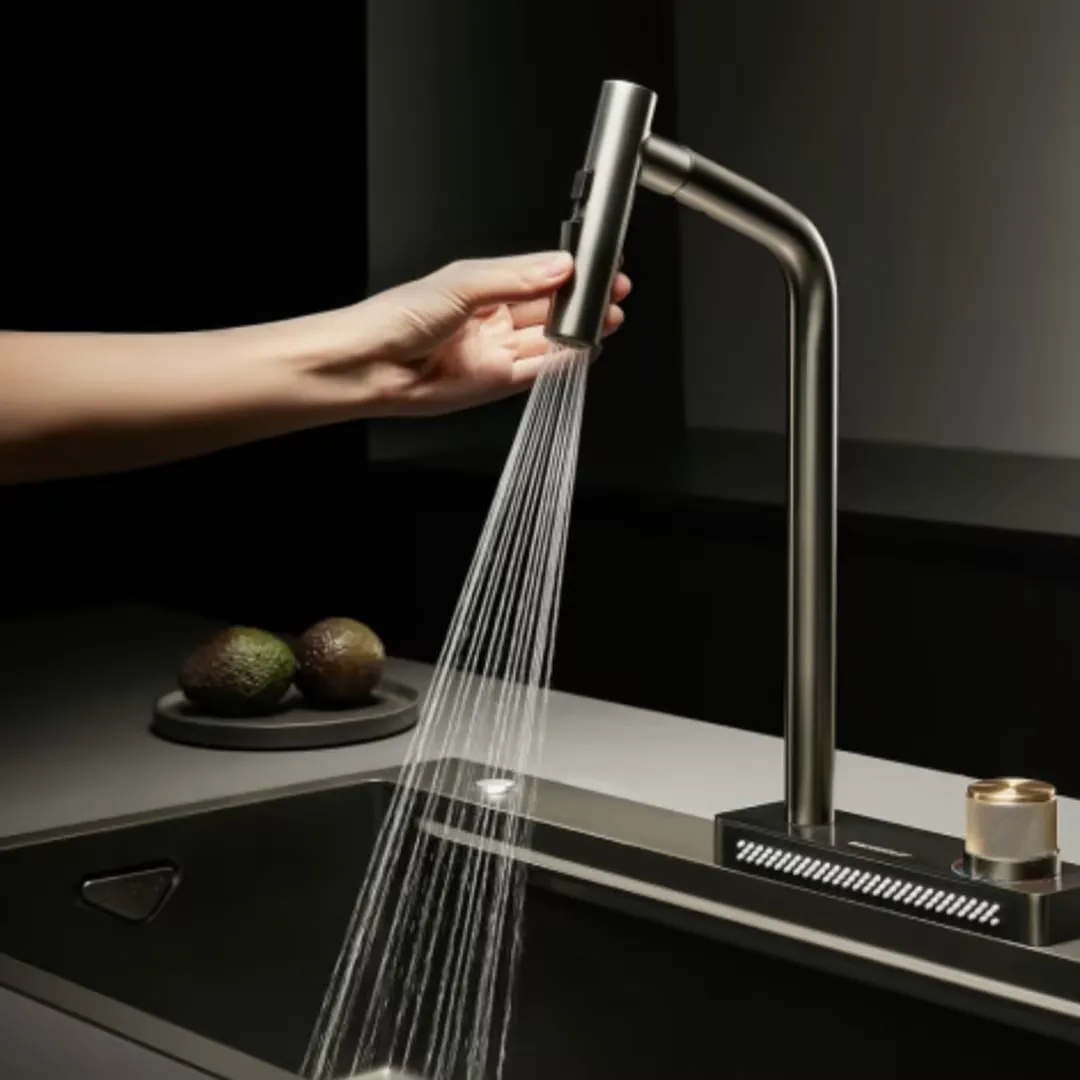
In terms of lifespan and stability, which is more durable?
The curvature itself does not directly determine lifespan, but differences in design structure affect long-term stability.
High-curvature faucets, due to their higher center of gravity, may wobble slightly if not installed or secured properly, requiring high-quality materials and reinforced support.
Low-curvature faucets, on the other hand, have a compact structure and a low center of gravity, resulting in more even stress distribution and greater stability over long-term use.
Conclusion comparison:
• High curvature: Requires high-quality materials for structural support;
• Low curvature: Stable center of gravity, strong resistance to wobbling;
• Lifespan depends primarily on the valve core and material, not the curvature.
From a cost-performance perspective, which kitchen sink faucet is the best buy?
Prices are generally related to design complexity, features, and brand positioning.
High-curvature kitchen sink faucets are relatively more expensive due to their more complex designs and additional features (such as pull-out spray heads and rotating mechanisms); while low-curvature models are mostly basic functions and offer better value for money.
Recommendations:
• Limited budget and emphasis on practicality → Low-curvature;
• Seeking a balance between experience and aesthetics → High-curvature;
• If the budget allows, consider high-curvature models with pull-out designs and multi-mode water flow.
Are Higold Sinks and Faucets Certified for International Markets?
Many of Higold’s kitchen stainless steel sinks and stainless steel faucets carry global certifications, including cUPC, CSA, and CE. These certifications ensure compliance with safety and performance standards required by major markets. Buyers benefit from certified products that are ready for import, retail, and construction projects. Higold supports all necessary documentation to facilitate smooth purchasing.

