

In modern kitchen renovations, undermount kitchen sinks, with their simple, clean, and seamless appearance, have become an increasingly popular choice for families and designers.
However, the question of "How long does it take for an undermount kitchen sink to fully cure?" is often overlooked during installation. Curing time directly affects installation quality, load-bearing safety, sealing effect, and longevity, making it a crucial step that must be taken seriously.
This article will provide a systematic, professional, and in-depth analysis of "curing time," helping you fully understand the curing cycles of different materials, influencing factors, and how to scientifically determine the completion status of your kitchen undermount sink's curing process.
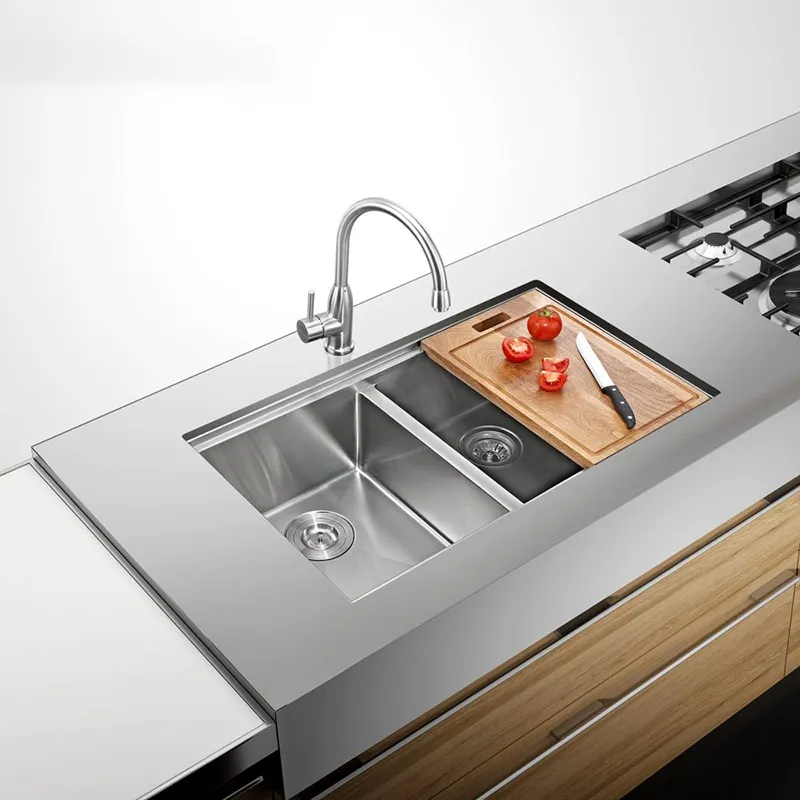
What are the curing materials used in undermount kitchen sinks?
Two main types of bonding materials are used during the installation of kitchen undermount sinks:
• Structural adhesive (Epoxy/PU/MS Polymer/Construction adhesive) – used for load-bearing and fixing
• Sealant (Silicone Sealant) – used for waterproofing and sealing gaps
Different materials have different chemical properties, and their curing times vary significantly.
1. Structural Adhesive Curing Time
Structural adhesive is a key material for securing undermount kitchen sinks. Its main functions are load-bearing, sink stability, and connection strength. Common types of structural adhesives and their curing times are as follows:
Structural Adhesive Types | Initial settling time | Complete curing time |
| Two-component epoxy structural adhesives | 3–6 hours | 24–48 hours |
| MS polymer structural adhesives | 4–8 hours | 24–72 hours |
Architectural grade polyurethane structural adhesives | 8–12 hours | 48–72 hours |
| Quick-drying structural adhesives | 1–2 hours | 12–24 hours |
"Complete cure" of structural adhesive means that its load-bearing capacity has reached its design value, capable of supporting the water-filled undermount kitchen sink without shifting or detaching.
2. Sealant Curing Time
The sealant used for the edges of kitchen undermount sinks is a single-component silicone sealant, primarily used for waterproofing.
Sealant Types | Drying time | Full curing time |
| Neutral Silicone | 20–60 minutes | 24 hours (3mm thickness) |
| Silicone Acetate | 10–30 minutes | 12–24 hours |
| Kitchen & Bathroom Specific Silicone | 20–40 minutes | 24–36 hours |
The complete cure time of silicone sealant depends on its thickness; for every 1mm increase, an additional 12–24 hours of curing time is generally required.
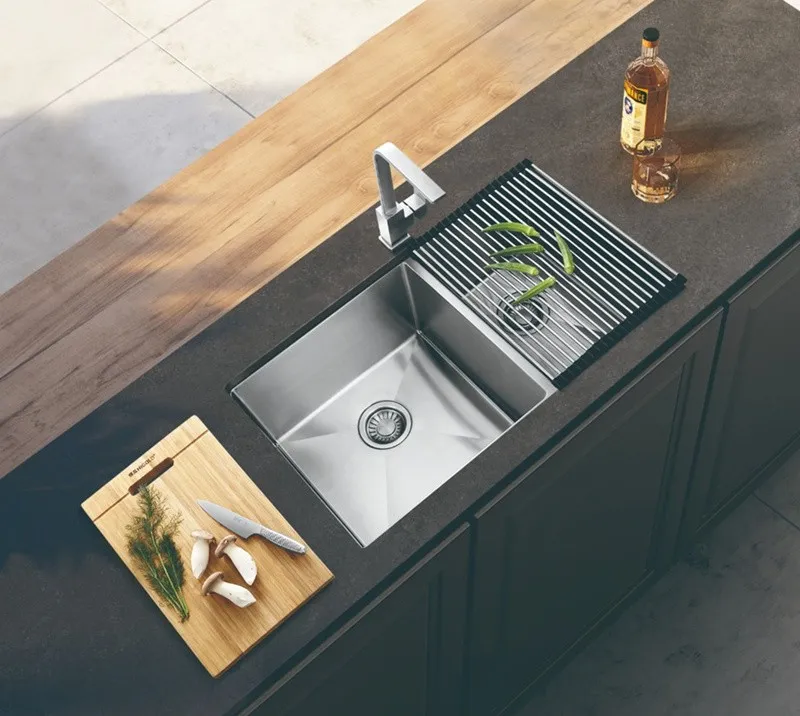
What is the complete cure time for an undermount kitchen sink?
Are fixing and sealing completed simultaneously?
In short: Under standard conditions, undermount kitchen sinks require 24–72 hours to fully cure and reach a safe usable state.
However, please note the following:
• The curing of the structural adhesive determines whether the sink can bear weight.
• The curing of the sealant determines whether the kitchen undermount sink is waterproof.
• Neither can replace the other, and neither step can be ignored.
In most cases, professional installers will recommend:
• Wait at least 24 hours before touching the sink.
• It is best to wait at least 48 hours before starting a large-volume water test or using it with water.
• For large, heavy-duty stainless steel sinks, slab countertops, etc., a conservative waiting time of 72 hours is recommended.
What factors affect the curing speed of an undermount kitchen sink?
The main factors affecting the curing time of an undermount kitchen sink include:
1. Indoor temperature
The optimal curing temperature for most adhesives is 20–25°C.
At lower temperatures, the curing speed slows down significantly.
For example:
• 10°C environment → Curing time may be extended by 1.5–2 times
• Below 5°C → Some adhesives may not cure or may not cure completely
2. Humidity
Humidity has a significant impact on silicone:
• Higher humidity means faster silicone cures
• Too high humidity (>80%) can negatively affect the curing strength of structural adhesives
3. Adhesive layer thickness
The thicker the adhesive, the slower the curing, especially for silicone.
For example:
• 3mm thickness → 24 hours
• 6mm thickness → 48–72 hours
4. Undermount kitchen sink material
Different materials have different adhesion to adhesives:
Materials | Adhesion to adhesive | Curing performance |
| Stainless steel sink | Good | Normal speed |
| Granite/quartz countertop | Good | Stable curing |
| Sintered stone countertop | Requires specialized structural adhesive | Slower curing |
| Wooden countertop | Requires pretreatment | Curing time is more affected by temperature and humidity |
5. Adhesive brand and formulation
Professional-grade adhesives have more stable curing times, while inferior adhesives may prolong curing or even fail to reach sufficient strength.
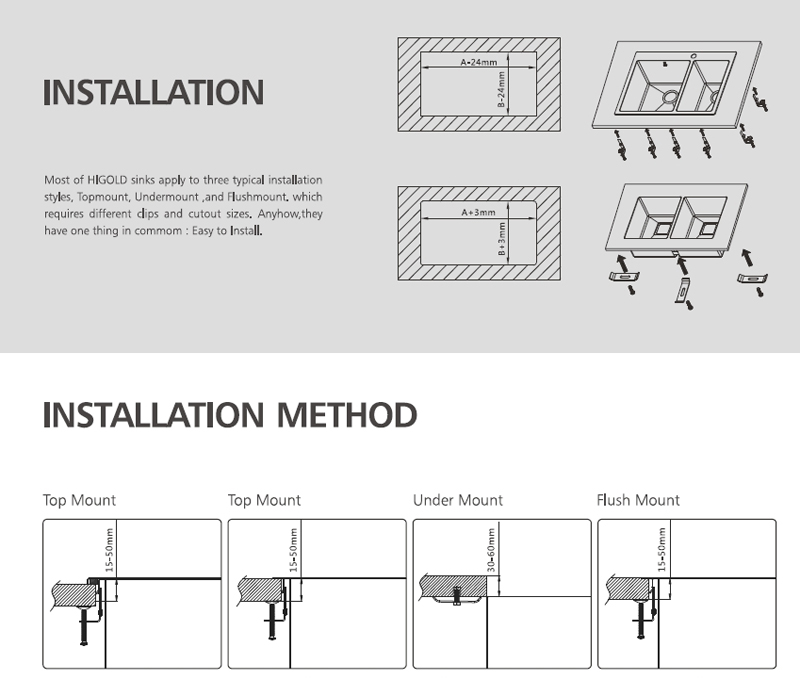
How to determine if an undermount kitchen sink is fully cured?
To determine if a kitchen undermount sink has fully cured, assess the following key points:
1. Has the structural adhesive fully hardened?
Characteristics include:
• No longer springy when pressed
• No fingerprints left
• Hard surface
No noticeable adhesive smell
2. Is the sealant surface dry?
Assessment methods:
• The surface is not sticky to the touch
• The sealant has a uniform gloss
• There is no dampness at the edges of gaps
3. Is the sink stable and does not easily shift?
After full curing, the kitchen undermount sink should not show any slight wobbling or sinking.
4. Can the bottom supports be safely removed?
Many installers use temporary supports during the curing period; these can only be removed after full curing.
What details should be paid attention to during the curing period of a kitchen undermount sink?
Detailed management during the curing period remains crucial. Even slight disturbance during the curing process can damage the adhesive layer structure, ultimately leading to serious consequences such as peeling, water seepage, and widening gaps.
Therefore, the following details should be paid special attention to during the curing stage:
1. Maintain a stable countertop environment
Undermount kitchen sinks are fixed to the bottom of the countertop. If the countertop material itself warps, vibrates, or moves, it will directly affect the final curing quality of the adhesive layer. This is especially true for quartz, granite, or slab countertops. If other construction work continues on the same day as installation (e.g., cutting, drilling), vibration will cause the adhesive to shift, ultimately affecting the sink's stability.
2. Do not subject the countertop to pressure during curing
During the curing stage, heavy objects should not be placed on the kitchen countertop, as the pressure will be transmitted to the fixed points of the undermount kitchen sink. Marble countertops, in particular, are relatively brittle; improper load-bearing can cause micro-cracks in the adhesive area.
3. Avoid activities that may generate moisture in the kitchen
Activities such as boiling large amounts of water or steaming food will cause sudden fluctuations in air humidity. While humidity helps silicone cure, drastic changes in humidity can affect the stability of the chemical reaction of structural adhesives. Therefore, the kitchen should be well-ventilated during curing, and activities that generate large amounts of steam should be avoided as much as possible. 4. Do not touch the bottom of the sink.
Any form of contact pressure, such as lifting, squeezing, or trying to check for stability, will disrupt the curing process of the adhesive. Especially for kitchen undermount sinks before they have reached the designed strength of the structural adhesive, even slight contact can cause irreversible micro-displacement, significantly reducing the final curing effect.
What actions during the curing period can cause undermount kitchen sinks to fail to cure?
The following actions will prolong curing time or even cause failure and should be avoided:
Do not allow the sink to come into contact with large amounts of water within 24 hours.
Water will seep into the adhesive layer, reducing the final curing strength.
Do not place heavy objects in the sink during curing.
For example:
• Cutting board
• Cookware
• Disinfectants
• Dishwasher accessories
Weight will cause displacement of the adhesive layer, affecting its stability.
Do not remove supports without authorization.
Removing supports before complete curing may cause the sink to detach.
Do not apply in low temperature and humid environments.
This may result in incomplete curing or whitening of the adhesive surface.
Do different types of undermount kitchen sinks have different curing times?
Yes, different types of kitchen undermount sinks have different curing times. This is closely related to the sink's weight, material, and adhesive adhesion.
1. Stainless Steel Undermount Kitchen Sinks
• Lightweight
• Good adhesion
• Normal curing speed
Typically, it takes 24–48 hours to fully cure.
2. Granite Undermount Kitchen Sinks
• Heavier
• Requires stronger structural adhesive
Typically, 48–72 hours is considered safe.
3. Ceramic Undermount Kitchen Sinks
• Very heavy
• High strength requirements for curing
It is recommended to wait at least 72 hours.
4. Duplex Undermount Kitchen Sinks
Due to increased weight, the curing period is usually longer:
• 48–72 hours
Can the curing process of kitchen undermount sinks be accelerated?
How to shorten the curing time?
Curing is a chemical reaction and cannot be completely accelerated, but the time can be shortened within a reasonable range.
The following are safe and feasible methods:
✔ Control room temperature at 20–25°C
Curing is fastest at this temperature.
✔ Moderately increase humidity (effective for silicone).
You can place a bowl of water around the device to increase humidity, but do not spray water.
✔ Use a professional fast-drying structural adhesive.
However, the quality must be reliable to avoid insufficient strength.
✔ Maintain good ventilation.
Prevent the accumulation of adhesive gases, which can affect curing.
How long does it take for an undermount sink to fully cure?
The final conclusions are as follows:
1. Standard Curing Time
• 24–72 hours
2. Fast Curing (Specific Adhesives)
• 12–24 hours
3. Heavy-Duty, Twin-Bowl Sinks
• 48–72 hours or longer
4. Safest Recommendation
If you are unsure about the type of adhesive or whether the ambient temperature is suitable, please wait at least 48 hours.
What are some common misconceptions about the curing process of undermount sinks?
Many people believe that curing an undermount kitchen sink is a simple process of "applying adhesive – waiting – done," but there are actually many common misconceptions.
Misconception 1: Believing that "surface dryness" means complete curing
Many adhesives have a surface drying time of only a few minutes to tens of minutes, but this only forms a thin film on the surface. Complete internal curing can take tens of hours or even days. Judging the curing status of an undermount kitchen sink solely by touch can lead to the accidental removal of supports, forcing the structural adhesive to bear weight before it has reached tensile strength, causing hollowing or loosening.
Misconception 2: Room temperature is unimportant
Temperature is one of the most crucial factors affecting adhesive curing speed. Many users renovate in winter but still estimate curing time based on summer, resulting in insufficient curing of the structural adhesive. At low temperatures, the curing speed slows significantly, and it may even fail to reach the required strength.
Misconception 3: Using the wrong type of sealant
Some people mistakenly use glass glue, general silicone, or cheap decorative adhesive as sealant for undermount kitchen sinks. In reality, only kitchen and bathroom-grade silicone has anti-mold, water-resistant, and oil-resistant properties. Incorrect adhesive types can cause mold, discoloration, and cracking at the edges after curing.
Misconception 4: Removing supports too early during curing
The purpose of supports is to prevent the sink from sinking under gravity during curing. Removing them too early means the structural adhesive has not fully provided support. This is one of the main reasons why kitchen undermount sinks fall off.
Does Higold Export Sinks and Faucets Worldwide?
Yes. Higold exports stainless steel sinks, SUS304 faucets, and kitchen hardware to more than 80 countries. Our logistics team handles documentation, packing, and shipping coordination to support international purchasing. Global buyers choose Higold for reliability, competitive China prices, and premium-quality kitchen sink solutions.

