

Stainless steel kitchen faucets are a popular choice for modern kitchens due to their corrosion resistance, ease of cleaning, and modern aesthetics. However, many families encounter a common problem: water stains easily appear on kitchen stainless steel faucets.
Water stains not only affect the faucet's appearance but can also cause slight oxidation over time, diminishing the faucet's shine.
This article will comprehensively analyze how to effectively prevent water stains on stainless steel kitchen faucets, covering the causes of water stain formation, material properties, cleaning methods, protection techniques, and daily maintenance.
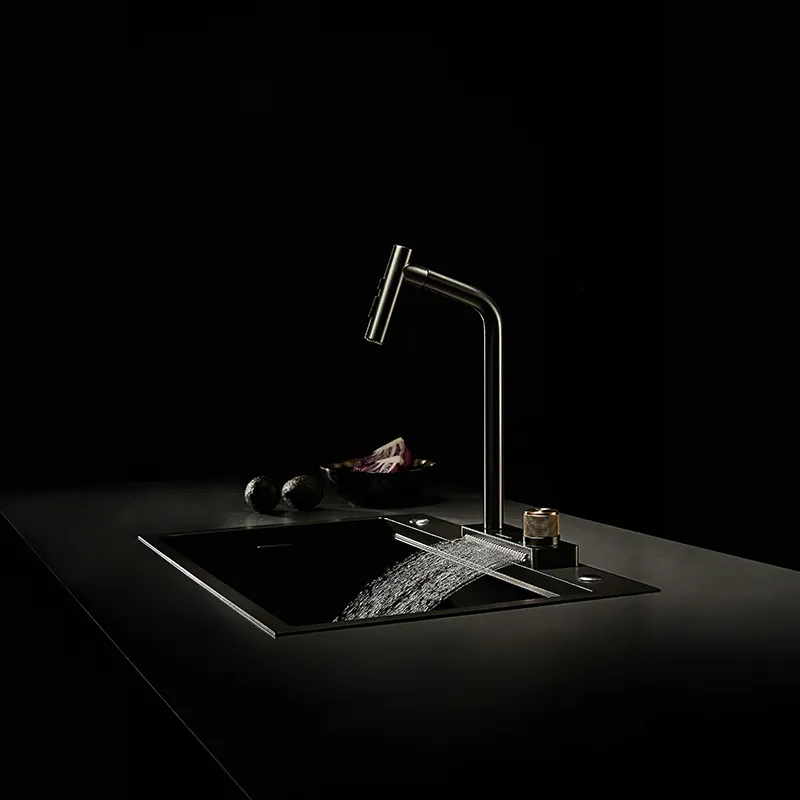
How are water stains formed on faucets?
1. Hard Water and Mineral Deposition
The primary reason for water stains on kitchen stainless steel faucets is the high mineral content of the water. Hard water contains large amounts of minerals such as calcium and magnesium. When the water evaporates, these minerals leave white or grayish-white water stains on the stainless steel surface. These stains visually affect the faucet's shine and, in severe cases, can completely obscure its original metallic luster.
2. Residual Water After Daily Use
After using the faucet, if water droplets remain on the stainless steel surface and evaporate naturally, water stains will form. These stains often appear on the faucet's bend, base, and handle, and are an unavoidable phenomenon in daily use. Especially in kitchen faucets with complex shapes or many seams, residual water is more likely to accumulate, increasing the probability of water stain formation.
3. Improper Cleaning Methods
Many households use strong alkaline or acidic cleaners when cleaning kitchen stainless steel faucets, or fail to thoroughly dry the faucet surface, which accelerates water stain formation. This is because some cleaners can alter the integrity of the passivation film on the faucet surface, making the metal surface more susceptible to absorbing minerals from the water.
Stainless Steel Kitchen Faucets: Material Characteristics
1. Advantages of Stainless Steel Material
Stainless steel kitchen faucets are typically made of 304 or 316 stainless steel, which has high corrosion resistance, wear resistance, and oxidation resistance. 304 stainless steel can resist water stains and cleaning agent corrosion in daily life, while 316 stainless steel has even stronger corrosion resistance and is suitable for areas with high water hardness. Stainless steel kitchen faucets with brushed or mirror finishes are not only aesthetically pleasing but also reduce fingerprints and minor water stains.
2. The Importance of the Passivation Film
Stainless steel naturally possesses a thin passivation film, which prevents metal oxidation and corrosion and inhibits water stain formation. However, this passivation film can be damaged by prolonged contact with hard water or strong detergents, increasing the risk of water stains on kitchen stainless steel faucets. Therefore, protecting the passivation film is crucial for preventing water stains.
3. The Impact of Surface Treatment on Water Stain Protection
The surface treatment of stainless steel kitchen faucets directly affects water stain formation. Brushed faucets have a more textured surface, making it easier for water droplets to remain and form stains; mirror-finish faucets have a smooth surface, allowing water droplets to slide off easily, but improper cleaning can still leave stains. Therefore, choosing a suitable surface treatment for the kitchen environment and combining it with proper cleaning methods is essential for preventing water stains.
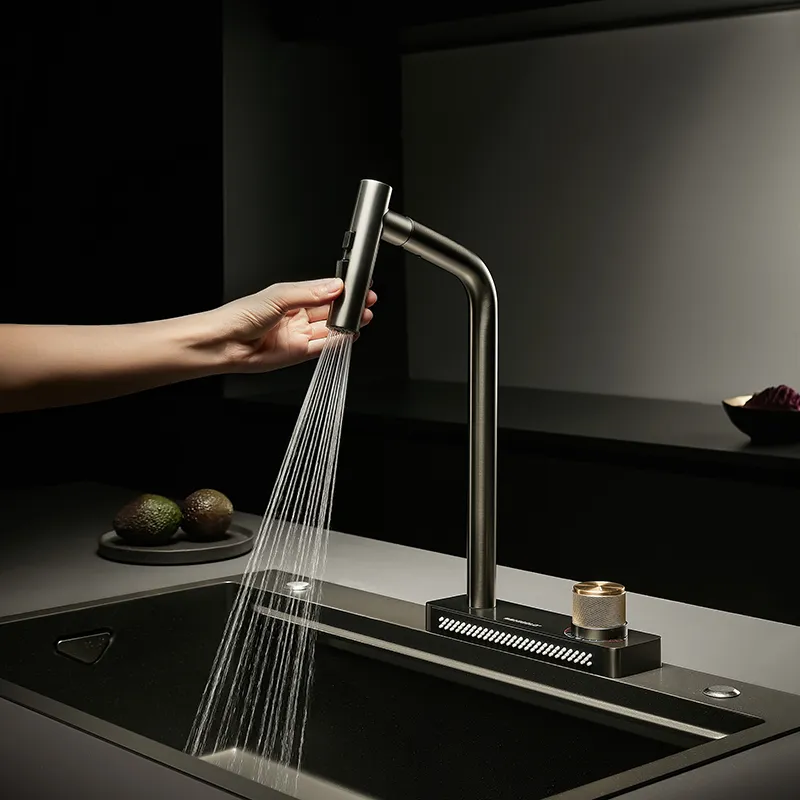
How to Clean a Stainless Steel Kitchen Faucet?
1. Daily Wiping
To prevent water stains from accumulating on the surface of kitchen stainless steel faucets, wipe the faucet surface dry immediately with a clean, soft cloth after each use, especially areas prone to water residue such as the faucet bends, base, and spout. Using a microfiber cloth effectively removes water droplets and fingerprints without scratching the faucet surface.
2. Using Mild Cleaners
Choose a neutral detergent or a specialized stainless steel cleaner for cleaning stainless steel kitchen faucets. Avoid using cleaners containing chlorine, strong acids, strong alkalis, or abrasive particles, as these can damage the passivation film and surface shine. When cleaning, spray the cleaner onto a cloth and then wipe the faucet surface, rather than spraying directly onto the faucet, to prevent cleaner residue from forming water stains in the seams or bends.
3. Regular Deep Cleaning
Even with proper daily wiping, kitchen stainless steel faucets may accumulate minor water stains. It is recommended to perform a deep cleaning once a month. Clean the faucet surface with warm water and a small amount of vinegar or lemon juice, then rinse thoroughly with clean water and dry with a cloth. The mild acidity of vinegar and lemon juice can dissolve water stains and mineral deposits without damaging stainless steel.
4. Use of Specialized Cleaning Tools
Use a soft sponge or non-abrasive brush to clean the crevices and bends of stainless steel kitchen faucets for a more thorough removal of water and stains. Avoid using steel wool or abrasive brushes, as these can scratch the faucet surface and make it easier for water stains to adhere.
Stainless Steel Kitchen Faucets: Protective Measures and Usage Tips
1. Install a Water Softener
Hard water has a high mineral content, which is a major cause of water stains. Installing a household water softener can reduce water hardness, decrease calcium and magnesium deposits, and prevent water stains from forming on stainless steel kitchen faucets at the source.
2. Control Residual Water After Use
After using a stainless steel kitchen faucet, gently shake the faucet to drain any remaining water and wipe the faucet surface dry with a cloth. This effectively reduces water stain formation. For faucets with high bends, pay special attention to removing residual water from the spout and base.
3. Use a Waterproof Polishing Agent
Waterproof polishing agents for stainless steel are available on the market. These form a thin film on the surface of kitchen stainless steel faucets, reducing water droplet adhesion and making it easier for water droplets to slide off, thus reducing water stains. Regular use of a waterproof polishing agent can maintain the faucet's surface shine and extend the cleaning cycle.
4. Avoid Contact with Strong Acids and Alkalis
Prolonged contact with strong acids, strong alkalis, or chlorine-containing cleaners can damage the passivation film on the surface of kitchen stainless steel faucets, increasing the probability of water stains. When using cleaners, dilute them and control the contact time. After cleaning, rinse with clean water and dry the faucet surface.
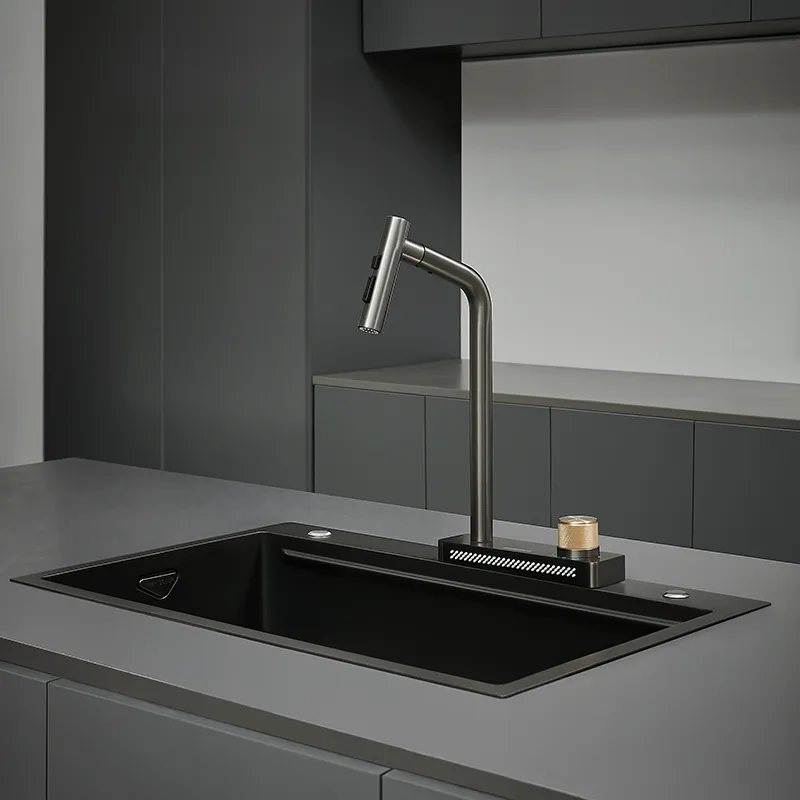
Stainless Steel Kitchen Faucets: Key Points for Daily Maintenance
1. Develop Good Cleaning Habits
The most effective way to prevent water stains on stainless steel kitchen faucets is to establish good daily maintenance habits. Dry them promptly after each use, perform regular deep cleaning, and combine this with soft water and a waterproof polishing agent for double protection against water stains from both the source and the surface.
2. Pay attention to the functional parts of the faucet
Water easily accumulates in the rotating joints, pull-out hoses, and spray nozzles of kitchen stainless steel faucets. Therefore, pay extra attention to these areas when cleaning and drying to prevent water stains from building up and forming mineral deposits.
3. Avoid surface scratches
Any scratches will damage the smoothness of the stainless steel kitchen faucet surface, making it easier for water stains to adhere. Therefore, use a soft cloth when cleaning and avoid using steel wool or other abrasive materials.
4. Regularly check the passivation film condition
Over time, observe whether the surface of the kitchen stainless steel faucet shows signs of dullness or slight rust spots. This is a sign of damage to the passivation film. Timely cleaning and using a passivation film repair agent can prolong the protective effect of the faucet surface and reduce water stain formation.
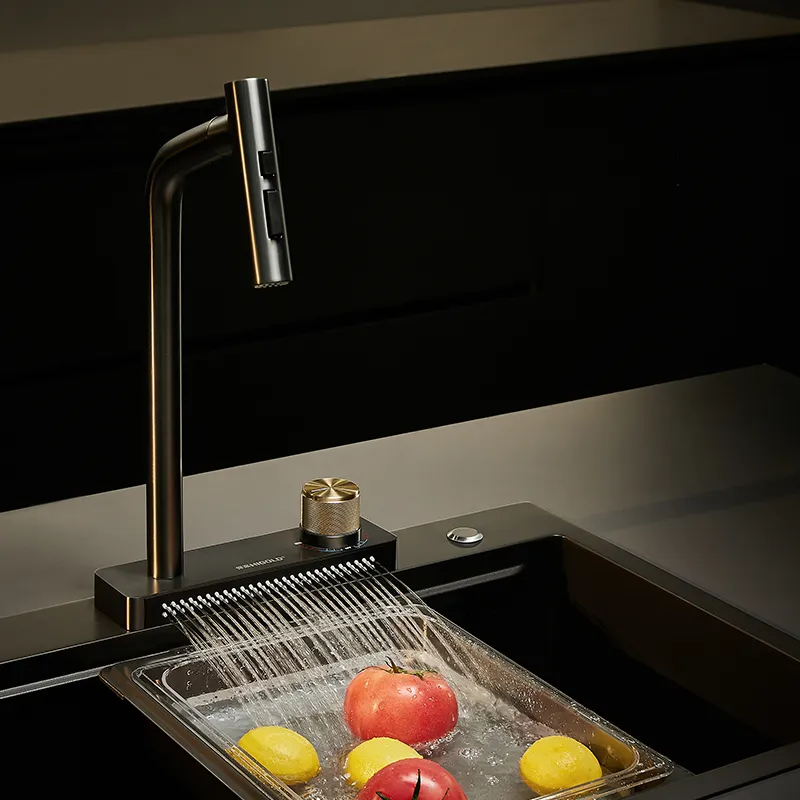
How to prevent water stains on stainless steel kitchen faucets?
Key measures:
• Wipe away water droplets promptly to prevent residual water from forming mineral deposits.
• Choose a mild detergent to avoid damaging the stainless steel passivation film.
• Perform regular deep cleaning using a mild acidic solution to remove minor water stains.
• Install a water softener to reduce water hardness and prevent water stains at the source.
• Use a water-repellent polish to form a protective film and reduce water stain adhesion.
• Pay attention to residual water in key areas such as faucet bends, bases, and nozzles.
By using the above methods, home users can effectively prevent water stains on stainless steel kitchen faucets, maintaining their appearance and lifespan, and keeping them looking brand new during daily use.
Why Choose Higold Kitchen Stainless Steel Sinks?
Higold is a leading China manufacturer specializing in high-quality kitchen stainless steel sinks and faucets. Our SUS304 and handmade sinks are produced using robotic bending, PVD technologies, and automated welding for consistent durability. Global buyers value Higold for stable supply, competitive wholesale prices, and reliable exporting services.
Whether you are purchasing OBM or ODM, Higold provides strong R&D support and flexible customization options to grow your brand with premium kitchen hardware.

