

In modern home and commercial kitchen designs, sus304 sinks are one of the most common and widely used types of sinks. Whether it's a minimalist family kitchen or a professional catering space, you can almost always find it.
Many people wonder:
Why is 304 stainless steel so highly recommended?
Is it really more suitable for kitchen sinks than other materials?
What are the unique advantages of sus304 stainless steel sinks?
This article will provide a comprehensive analysis of the performance, structural characteristics, and practical value of 304 stainless steel sinks from a professional perspective, helping you understand why it is the ideal choice for kitchen sinks.
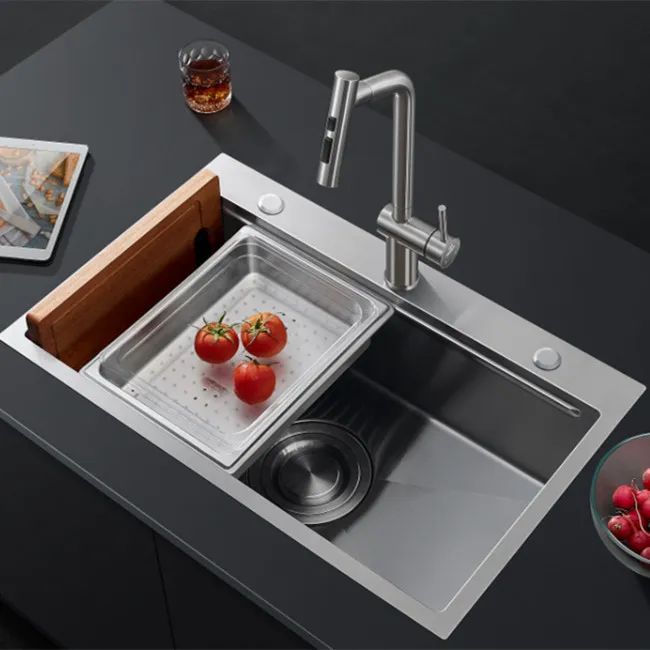
What is 304 Stainless Steel? Why is it suitable for kitchen sinks?
Before discussing the advantages of sus304 stainless steel sinks, we need to understand the essence of 304 stainless steel.
1. Definition of 304 Stainless Steel
304 stainless steel belongs to the austenitic stainless steel category and is one of the most widely used steel grades in the world.
Its main chemical composition is:
• Chromium (Cr) content: 18%
• Nickel (Ni) content: 8%
This ratio is known as "18/8 stainless steel," possessing excellent corrosion resistance, heat resistance, and formability.
2. Why is it suitable for kitchen sinks?
The kitchen environment is complex, and sinks are constantly exposed to water, oil, acids, alkalis, and extreme temperature changes. Therefore, the material must meet the following requirements:
• Corrosion resistant and rust-free
• Resistant to high temperatures and alternating hot and cold temperatures
• Impermeable and non-absorbent of dirt
• Hygienic, non-toxic, safe, and reliable
• Good machinability
304 stainless steel excels in these aspects, which is the fundamental reason why it is the preferred material for manufacturing 304 stainless steel sinks.
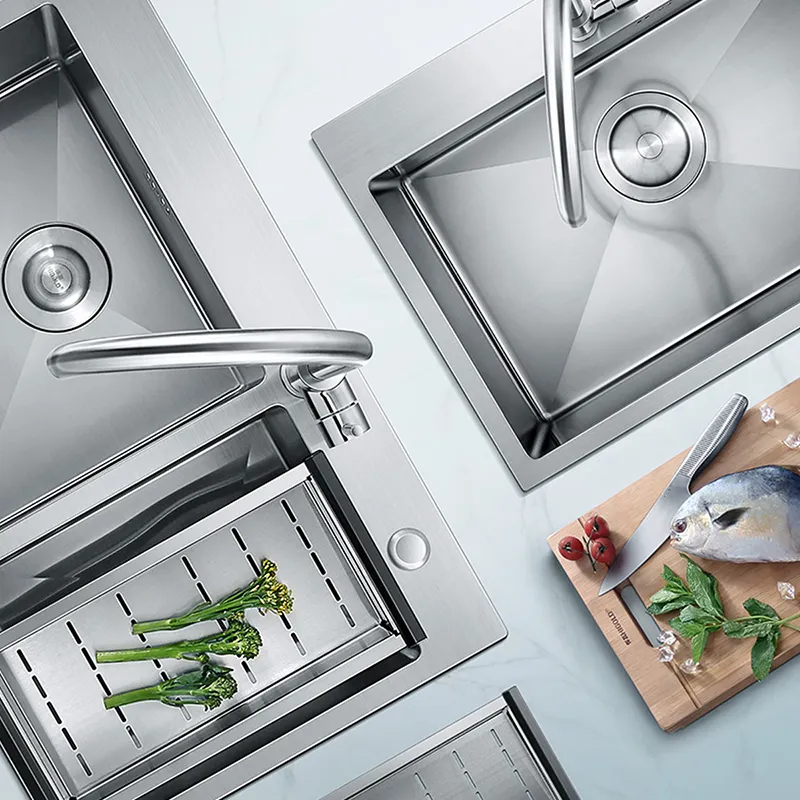
How strong is the corrosion resistance of sus304 sinks?
1. Chromium layer forms a "self-protective film"
The core advantage of 304 stainless steel lies in its high proportion of chromium (Cr) on its surface.
Chromium reacts with oxygen in the air to form a dense protective chromium oxide film (Cr₂O₃) on the surface of steel.
This protective film prevents oxygen, moisture, and corrosive agents from further penetrating the metal, thus preventing rust and oxidation.
Even if scratched or worn, this protective film can self-repair and restore its protective function.
2. Resistance to Acid, Alkali, and Salt Corrosion
Common kitchen condiments, such as salt, vinegar, and soy sauce, contain certain acids, alkalis, or chlorides.
Ordinary steel will rust quickly upon prolonged contact with these substances, but sus304 stainless steel sinks can easily cope:
• Not corroded by acids and vinegars;
• Not corroded by salts;
• Resistant to the chemical reactions of grease and detergents.
Therefore, 304 stainless steel sinks can remain stable and clean in high-humidity, high-salt, and high-acid/alkaline kitchen environments.
3. Durable Oxidation and Rust Resistance
Compared to low-nickel steels like 201 or 430, 304 stainless steel offers superior rust resistance.
Under normal use, sus304 stainless steel sinks can remain rust-free and colorfast for years, a key reason for their widespread use in both home and commercial kitchens.
Is a 304 stainless steel sink safe? Will it affect drinking water hygiene?
Many people worry that metal materials might contaminate food or drinking water. In fact, sus304 sinks perform exceptionally well in terms of hygiene and safety.
1. Food-Grade Material, Meets International Standards
304 stainless steel is an internationally recognized food-grade stainless steel material, widely used in kitchen utensils, tableware, medical equipment, and more.
Its composition is stable, contains no harmful substances, and will not leach toxic metal ions into water or food.
This means that using a 304 stainless steel sink to wash vegetables, fruits, and tableware is completely safe.
2. Less Prone to Bacterial Growth
Due to the smooth, dense surface of 304 stainless steel, lacking a microporous structure, it does not absorb stains and bacteria.
Compared to ceramics or composite materials, it maintains cleanliness and hygiene better.
Experiments show that bacteria have difficulty adhering to the surface of 304 stainless steel for extended periods, making sus304 sinks an ideal choice for a "healthy kitchen."

How durable are 304 stainless steel sinks?
1. Excellent Mechanical Strength
304 stainless steel possesses good tensile strength and ductility, making it both sturdy and resistant to deformation.
During kitchen use, even with heavy objects, taps, or impacts, it will not easily break.
2. High and Low Temperature Resistance
304 stainless steel maintains a stable structure within a temperature range of -196℃ to 800℃.
This means:
• It will not deform when boiling water is poured in;
• Frozen food will not cause the sink to crack.
3. Wear-resistant and colorfast
Unlike coated products, sus304 stainless steel sinks will not peel, fade, or crack after long-term use.
Simply clean them regularly to maintain their bright metallic luster.
Why are 304 stainless steel sinks easier to clean?
1. Dense and smooth surface
After being treated with brushing, sanding, or mirror finishing processes, 304 stainless steel has an extremely smooth surface that does not easily attract oil and limescale.
Simply wipe with a neutral detergent and a soft sponge to restore its clean shine.
2. Excellent fingerprint and oil film resistance
Modern 304 stainless steel sinks often have an anti-fingerprint coating, effectively preventing oil stains, fingerprints, and watermarks from remaining, keeping the appearance clean for a long time.
3. Odorless
Due to the material's inherent stability and non-absorbent nature, sus304 sinks do not produce odors or contaminants, making them ideal for food washing environments.
Advantages of 304 Stainless Steel Sinks in Appearance and Design
Beyond practicality, 304 stainless steel sinks are also visually appealing and design-wise attractive.
1. Modern and Versatile
Stainless steel possesses a unique metallic texture and reflective effect, seamlessly blending with various kitchen design styles:
• It appears clean and crisp in a modern minimalist style;
• It presents a cool and sophisticated feel in an industrial-style kitchen;
• It creates a high-end contrast with marble countertops in a minimalist luxury kitchen.
2. Versatile Processing Options
304 stainless steel can be crafted into various shapes through stamping, welding, and hand-stretching processes: Single-bowl, double-bowl, sinks with drainboards, or corner units can all be flexibly designed.
This provides a high degree of freedom in kitchen layout.
3. Durable and Timeless Shine
Even after years of use, 304 stainless steel sinks maintain their bright and new appearance without aging or discoloration.
What are some common misconceptions about 304 stainless steel sinks?
1. The Misconception of "Thicker is Better"
Thickness does affect durability, but thicker isn't always better.
High-quality sus304 sinks typically have a thickness between 0.8mm and 1.2mm, balancing structural stability and manufacturing flexibility.
2. Judging Quality by Gloss
Gloss is not a quality standard. A mirror-like shine does not indicate high quality. Some low-end products use electroplating to enhance gloss but lack corrosion resistance.
The key is whether the material composition is genuine 304 stainless steel.
3. Ignoring Noise Reduction and Vibration Damping Design
High-quality sus304 sinks usually have noise-reducing pads or a sound-absorbing coating on the bottom to reduce noise from water contact with metal.
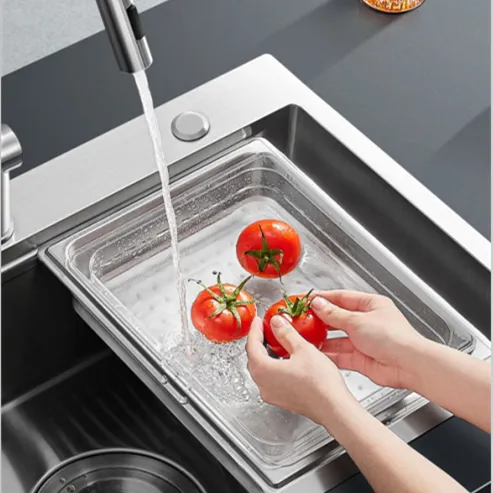
How to Properly Maintain a 304 Stainless Steel Sink?
To extend the lifespan of your sus304 sink, we recommend the following:
1. Clean and dry promptly after use
Avoid prolonged water accumulation, which can lead to mineral deposits and limescale formation.
2. Use a neutral detergent
Avoid using strong acids or chlorine-based detergents, as these may damage the passivation film.
3. Avoid prolonged contact with high concentrations of salt or bleach
These substances may form corrosion spots on the surface.
4. Regular waxing maintenance
Every 2-3 months, lightly polish with a professional stainless steel polishing wax to enhance surface shine and stain resistance.
304 Stainless Steel Sink Cost-Effectiveness Analysis
Many people consider cost-effectiveness when purchasing a sink.
304 stainless steel sinks offer excellent value for money for the following reasons:
• Long lifespan: Can be used for over 10 years without replacement.
• Low maintenance cost: No special cleaning agents required; does not rust or fade.
• Moderate price: More reasonable in cost compared to stone or ceramic sinks.
• Classic appearance: Remains modern even after many years of use and is less likely to go out of style.
In summary, sus304 stainless steel sinks represent the "best balance between high performance and economy."
Will 304 stainless steel sinks rust?
Normally, it won't. If slight rust spots appear on the surface, they are mostly due to attached iron particles and can be removed with lemon juice or stainless steel cleaning paste.
How to distinguish genuine 304 stainless steel from fake?
Genuine 304 stainless steel has a high nickel content (≥8%), which can be tested with a magnet: 304 stainless steel is non-magnetic or has very weak magnetism.
Are SUS304 stainless steel sinks susceptible to scratches?
Minor scratches are normal and do not affect use. They can be restored with a polishing compound.
Can it be installed under the countertop?
Of course. 304 stainless steel sinks are lightweight and sturdy, making them ideal for undermount installation.

Why is 304 stainless steel so suitable for kitchen sinks?
Through analysis of the structural characteristics and performance of 304 stainless steel, we can draw a clear conclusion:
304 stainless steel is ideal for kitchen sinks for the following reasons:
• Excellent corrosion resistance – Resists acids, alkalis, and oxidation, preventing rust over time;
• Hygienic, safe, and non-toxic – Meets food-grade standards, maintaining a clean and healthy kitchen;
• Durable and sturdy – Does not deform or fade, long lifespan;
• Easy to clean – Smooth surface, stain and scale resistant;
• Beautiful and practical – Modern appearance, versatile in style;
• High cost-effectiveness – Reasonable cost and easy maintenance.
✅ In short:
If you want a sink that combines durability, safety, and aesthetics, a 304 stainless steel sink is definitely the best choice.
Are Higold Stainless Steel Faucets Suitable for Global Sales?
Absolutely. Higold stainless steel faucets are made with SUS304 materials, ceramic cartridges, and precision aerators for long-term performance. They meet international quality standards and are widely exported to over 80 countries.
Importers and wholesalers buy Higold faucets because of their durability, modern design, consistent pricing, and wide compatibility with various sink models. Our strong manufacturing base ensures steady global supply.

