

When you walk into any showroom or browse online catalogs from major kitchen sink suppliers, you will quickly notice that the most popular category is the stainless steel sink. Almost every kitchen sink on display is made of stainless steel, but not all stainless steel is the same. Reputable kitchen sink suppliers often highlight two common grades – 304 and 201. For homeowners, renovators, and even professional chefs, choosing the right stainless steel sink is a critical decision that affects durability, hygiene, and long-term cost. This article compares 304 and 201 stainless steel sink materials in depth, and helps you decide which kitchen sink gives you the best advantage, while repeatedly reminding you why trusted kitchen sink suppliers always recommend checking the grade before purchase.
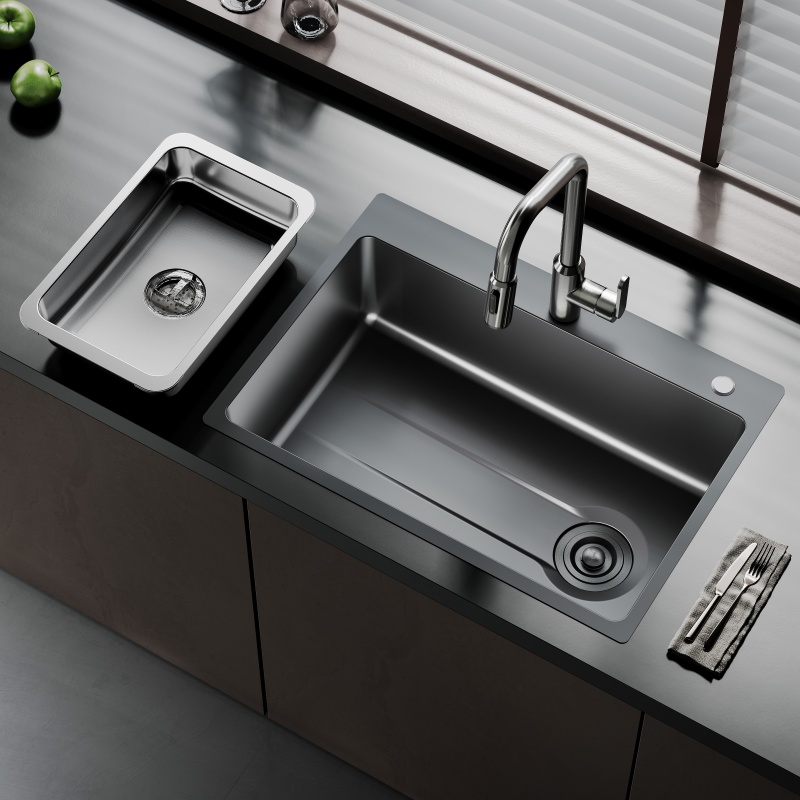
1. Chemical Composition & Basic Properties
The fundamental difference between 304 and 201 stainless steel sink materials lies in their alloy composition. A 304 stainless steel sink contains approximately 18% chromium and 8% nickel, plus low carbon content. This high nickel content gives 304 excellent formability and corrosion resistance. In contrast, a 201 stainless steel sink replaces part of the nickel with manganese and nitrogen, containing roughly 16–18% chromium, 3.5–5.5% manganese, and only 0.5–1.5% nickel. Many budget kitchen sink suppliers use 201 to lower costs, but premium kitchen sink suppliers prefer 304 for its superior stability. When you compare a 304 kitchen sink side by side with a 201 kitchen sink, the visual difference is subtle, but the performance gap is huge. Therefore, any serious kitchen sink supplier will clearly label the grade, because a stainless steel sink marked 304 commands a higher price but also delivers higher reliability.
2. Corrosion Resistance – The Decisive Factor
The single most important advantage of a 304 stainless steel sink over a 201 stainless steel sink is corrosion resistance. Daily use of a kitchen sink involves water, acidic foods (tomatoes, lemon juice, vinegar), and alkaline detergents. A 304 kitchen sink forms a stable passive chromium-oxide layer that self-repairs when scratched, thanks to sufficient nickel content. This means even after years of scrubbing, your 304 stainless steel sink remains shiny and rust-free. However, a 201 stainless steel sink has lower nickel and higher manganese, making its passive film less stable. In humid environments or with prolonged exposure to salt and acid, a 201 kitchen sink is prone to pitting, crevice corrosion, and even brown rust spots. Many kitchen sink suppliers warn that 201 is only suitable for dry or light-use scenarios. If you live in coastal areas or cook frequently, every professional kitchen sink supplier will urge you to choose 304. So when evaluating which stainless steel sink offers more advantage, 304 clearly wins in corrosion resistance – the very reason why top kitchen sink suppliers stock 304 as their flagship product.
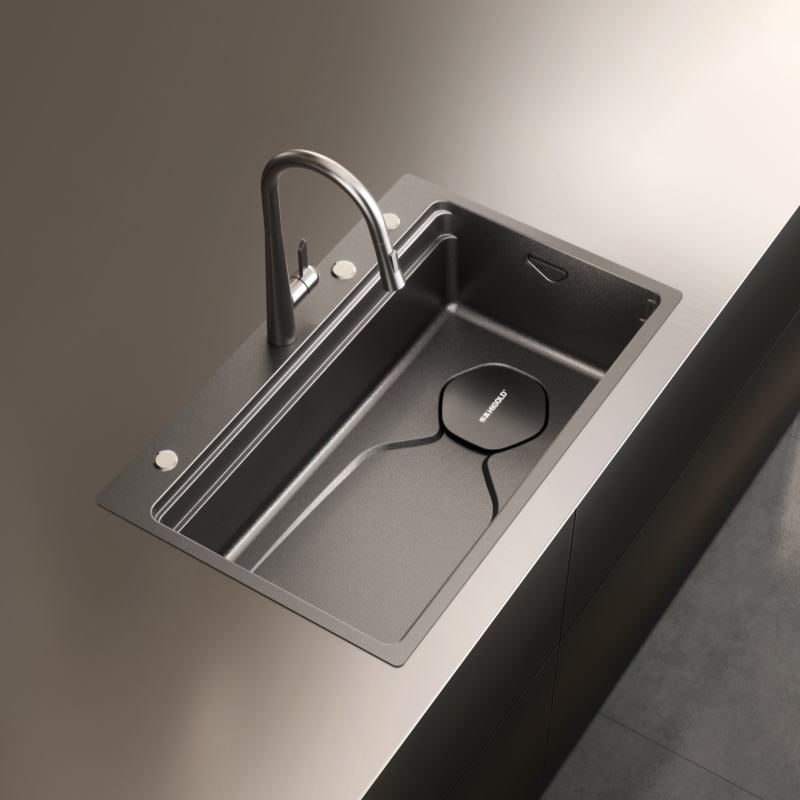
3. Hardness, Strength & Dent Resistance
Another practical aspect of a kitchen sink is its resistance to dents and scratches. The 201 stainless steel sink has higher initial hardness and tensile strength due to its higher manganese content. This means a 201 kitchen sink may feel stiffer and resist surface scratching slightly better in the short term. Some kitchen sink suppliers promote 201 as “harder” to attract cost-conscious buyers. However, higher hardness also means lower ductility. When a heavy pot accidentally drops into your stainless steel sink, a 201 kitchen sink is more likely to crack or develop stress fractures, whereas a 304 stainless steel sink – though softer – absorbs impact through slight deformation without breaking. Over the lifespan of a kitchen sink, 304’s balanced toughness proves more durable. Moreover, 304 can be deep-drawn into complex bowl shapes without thinning, which is why premium kitchen sink suppliers use 304 for undermount and farmhouse styles. So while 201 has a hardness advantage on paper, the real-world advantage for a daily kitchen sink belongs to 304 when combined with corrosion protection.
4. Price & Cost-Effectiveness
Price is where a 201 stainless steel sink seems attractive. Because nickel is expensive, 201 uses less nickel and more manganese, reducing raw material cost by 20–40%. Consequently, many budget kitchen sink suppliers offer 201 kitchen sink models at half the price of a comparable 304 stainless steel sink. For a quick renovation or rental property, a 201 kitchen sink might appear cost-effective. However, you must consider the total cost of ownership. A 304 kitchen sink lasts 15–20 years with minimal maintenance, while a 201 kitchen sink may start showing rust spots within 3–5 years, especially around the drain and welded corners. When that happens, replacing the entire kitchen sink – plus labor and countertop adjustments – costs far more than the initial saving. Reputable kitchen sink suppliers often tell customers: “Buy cheap, buy twice.” Therefore, for long-term value, 304 offers a better advantage. The slightly higher upfront investment in a 304 stainless steel sink pays back through decades of reliable service. So if you ask any experienced kitchen sink supplier, they will confirm that 304 is the smarter economic choice for a primary kitchen sink.
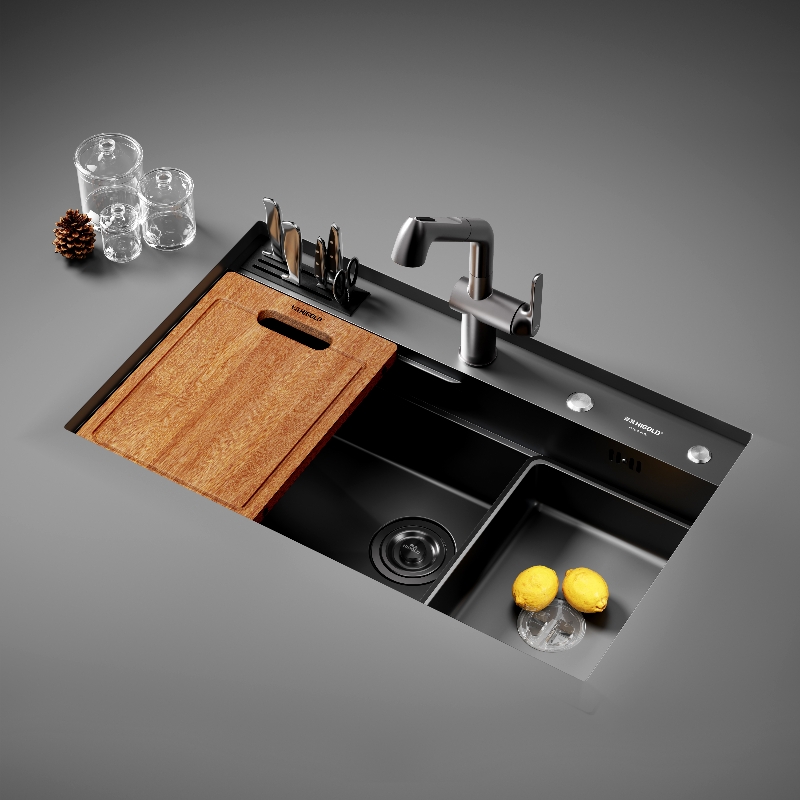
5. Aesthetic Maintenance & Hygiene
A kitchen sink is not only a workhorse but also a focal point in the kitchen. A 304 stainless steel sink maintains its brushed or polished finish longer because its corrosion resistance prevents dulling from chemical cleaners. Also, 304 is non-magnetic or weakly magnetic after proper annealing, giving a clean, uniform appearance. A 201 stainless steel sink, however, becomes more magnetic due to cold working and higher manganese, which can attract tiny metal particles and make the surface look blotchy over time. In terms of hygiene, a 304 kitchen sink has a smoother, more uniform passive layer, resisting bacterial biofilm formation. Although both grades are food-grade in theory, 304 is the standard for medical and food equipment; many kitchen sink suppliers note that 201 is not recommended for direct food contact in acidic conditions. For a family kitchen sink used daily, 304 gives you peace of mind. When choosing a stainless steel sink, always ask your kitchen sink supplier for mill test certificates to confirm 304 content – that is the hallmark of a trustworthy kitchen sink supplier.
6. Welding and Fabrication Quality
The way a stainless steel sink is fabricated affects its longevity. 304 has excellent weldability; its low carbon content (often 304L) prevents intergranular corrosion at heat-affected zones. Top kitchen sink suppliers use robotic TIG welding with 304 filler wire to produce seamless, strong joints. On the other hand, 201’s higher manganese makes welding more challenging – it can cause hot cracking and sensitization. Many lower-tier kitchen sink suppliers cut corners by using 201 with insufficient post-weld pickling, leaving welded corners vulnerable to rust. This is a common complaint among users who bought a cheap stainless steel sink online. Therefore, when comparing a 304 kitchen sink with a 201 kitchen sink, inspect the corners and seams. A high-quality 304 stainless steel sink from reputable kitchen sink suppliers will have smooth, uniform welds that match the base metal. That quality is difficult to achieve with 201. So, if you want a kitchen sink that stays beautiful at every joint, 304 is again the winner.
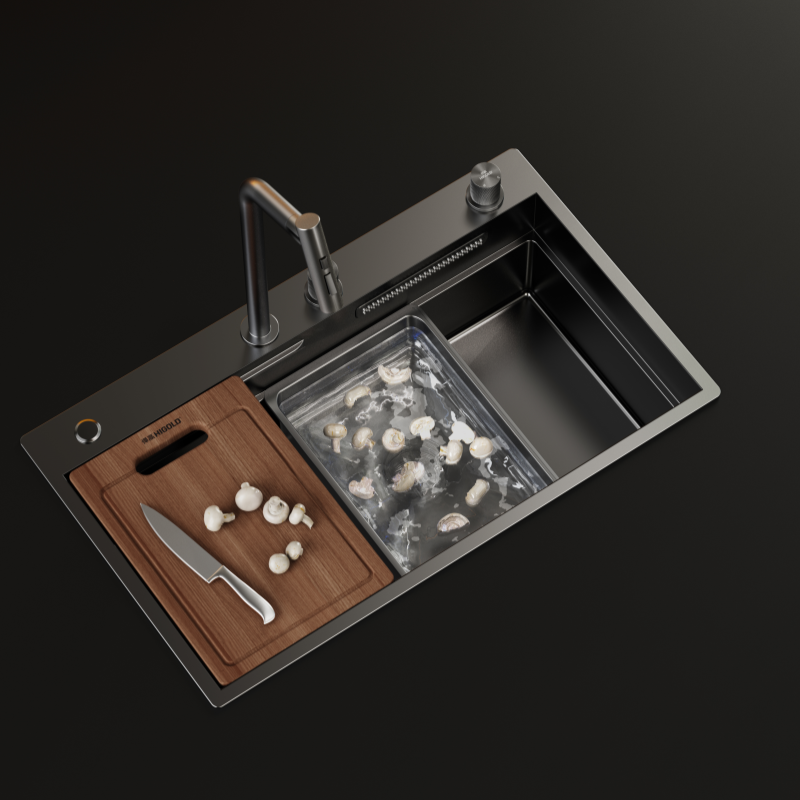
Which One Has More Advantage? Final Verdict
After examining corrosion resistance, toughness, price, hygiene, and fabrication, the clear winner for a primary kitchen sink is the 304 stainless steel sink. The 201 stainless steel sink may serve as a temporary or backup unit, but for daily heavy use, its cost savings are quickly offset by rust, staining, and potential cracking. Professional kitchen sink suppliers overwhelmingly recommend 304 for residential and commercial kitchens. The advantages of 304 – long lifespan, low maintenance, food safety, and aesthetic durability – far outweigh its higher initial price. When you shop, always verify with your kitchen sink supplier that the kitchen sink is genuine 304 (e.g., SUS304 or AISI 304). Avoid vague labels like “stainless steel” without grade. A reliable kitchen sink supplier will proudly display the 304 mark and provide warranty. So, next time you evaluate a stainless steel sink, remember: 304 gives you the best advantage in every meaningful category. Choose wisely, and your kitchen sink will serve you for decades. And always trust kitchen sink suppliers who prioritize quality over price – because a great kitchen sink starts with the right material.

