

In kitchen renovation and equipment selection, the sink is undoubtedly one of the most frequently used core facilities. With the continuous development of materials and processes, the types of sinks on the market are becoming increasingly diverse.
Among them, PVD sinks and traditional stainless steel sinks are the two categories that users pay the most attention to. Many consumers have doubts when choosing: What are the differences between the two? Which one is more suitable for their kitchen?
This article will provide an in-depth analysis from multiple dimensions, including the nature of the material, manufacturing process, performance, appearance, durability, and daily maintenance, to help you fully understand the differences between these two types of sinks.
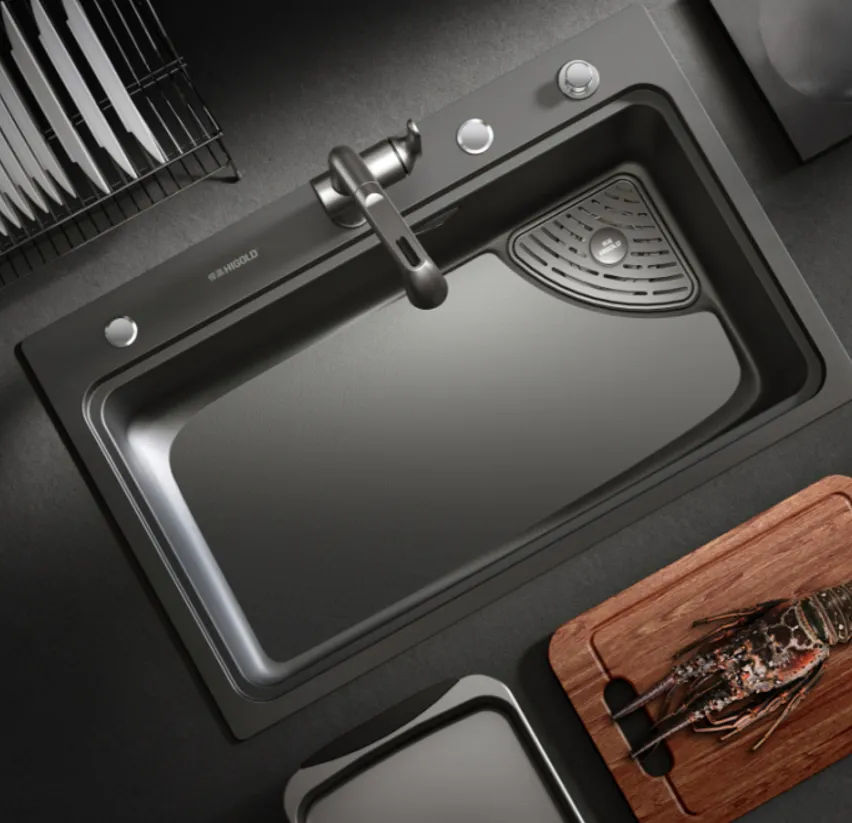
What is a PVD sink? What is its essential material?
Before discussing the differences, it's important to clarify one concept: PVD sinks are not a new sink material; they are essentially still stainless steel sinks. PVD refers to a surface coating process, short for Physical Vapor Deposition. This process deposits a layer of metal ion plating on the surface of the stainless steel sink to improve surface color, wear resistance, and corrosion resistance.
In other words:
• PVD sink = Stainless steel sink + PVD surface coating process
• Stainless steel sink = Bare stainless steel body, no additional coating
This means that the basic performance of a PVD sink still depends on the quality of its base stainless steel, such as 304 or 316 stainless steel. The PVD process adds a high-end visual effect and surface strengthening properties.
What are the material differences between PVD sinks and stainless steel sinks?
Strictly speaking, there is no difference in the essential materials; the main difference comes from the surface treatment layer:
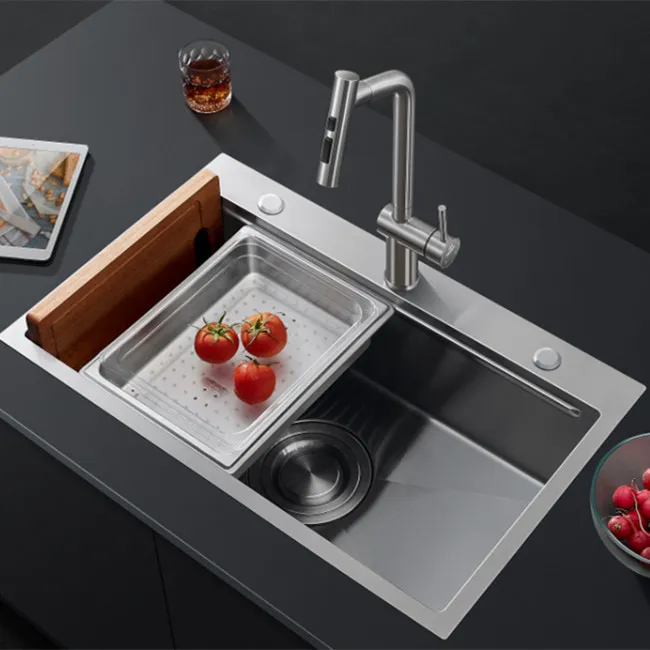
• Traditional stainless steel sinks have a natural metal surface without coating, usually presenting a silver-gray or matte metallic effect.
• PVD sinks have a thin, hard metallic coating added to the stainless steel base, which can present various colors such as black gold, champagne gold, gunmetal gray, and rose gold.
Key points:
✔ The base material of both is still stainless steel.
✔ The difference comes from the performance and appearance changes brought about by the surface treatment.
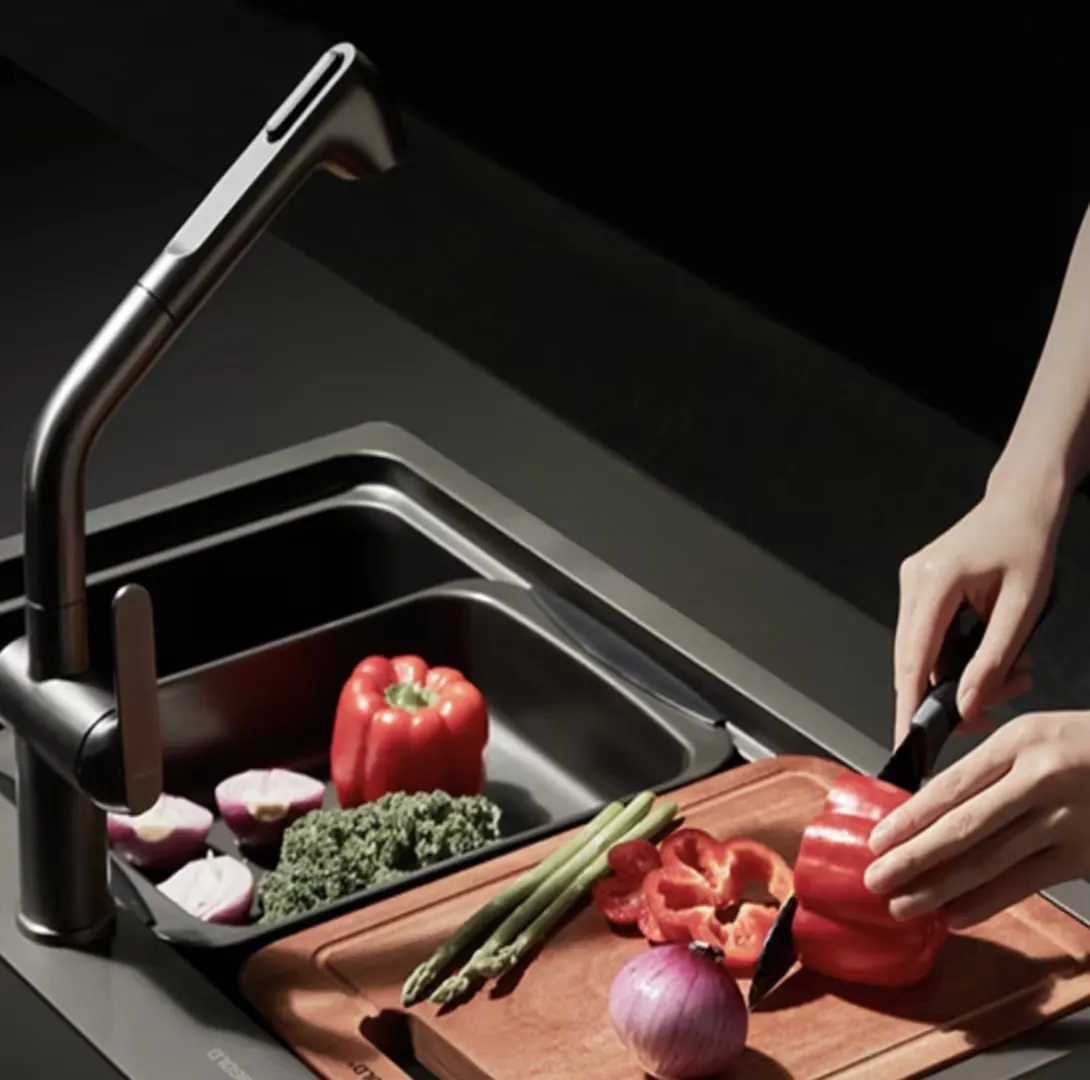
What are the differences in corrosion resistance between PVD sinks and stainless steel sinks?
Stainless steel sinks are inherently highly corrosion-resistant, especially 304 food-grade stainless steel, which is very stable and rust-resistant in home kitchens. However, PVD coating further enhances this ability:
1. Corrosion Resistance of Traditional Stainless Steel Sinks
• Relies on a passivation film formed by chromium to resist oxidation
• Performs excellently in weakly acidic or alkaline environments
• The passivation layer may be locally damaged by cleaning agents or scratches from hard objects during long-term use.
2. Corrosion Resistance of PVD Sinks
• The surface coating makes it more resistant to sweat, limescale, and grease
• The coating has higher hardness, reducing corrosion points caused by scratches
• Performs more stably in humid environments
Therefore, in terms of corrosion resistance, PVD sinks are generally slightly better than ordinary stainless steel sinks.
Are PVD sinks really more scratch-resistant than stainless steel sinks?
This is a question of great concern to consumers and deserves a separate section for discussion.
1. Stainless Steel Sink Scratch Resistance
Stainless steel itself isn't particularly scratch-resistant, especially mirror or brushed surfaces, which are prone to scratches when using knives or metal utensils.
2. PVD Sink Scratch Resistance
PVD coatings have higher hardness, improving surface scratch resistance. Therefore:
• Minor scratches are less likely to form.
• The surface maintains its appearance more easily over long-term use.
However, note that PVD coatings are not bulletproof; impacts from hard objects can still cause scratches or discoloration.
Overall, PVD sinks are more scratch-resistant than traditional stainless steel sinks, but this doesn't mean they are "scratch-free."
Why do PVD sinks offer a wider range of color choices than stainless steel sinks?
Traditional stainless steel sinks typically only come in their original metallic color, resulting in a relatively limited visual appeal. PVD (Polydioxide) technology can deposit different metal ions, resulting in a variety of colors, such as:
• Matte Black
• Gunmetal Gray
• Gold/Champagne Gold
• Rose Gold
• Dark Brown
This makes PVD stainless steel sinks a top choice for many high-end kitchen designs, as they create a stronger overall color scheme with cabinets, countertops, and faucets.
Therefore:
✔ PVD sinks offer a wider range of colors and finishes
✔ Stainless steel sinks tend towards a classic and practical style
What are the differences in cleaning and maintenance between PVD sinks and stainless steel sinks?
1. Cleaning Characteristics of Stainless Steel Sinks
Suitable for all cleaning agents, highly compatible.
Natural metallic surface, not easily stained.
Water stains and oil stains are easy to wipe off, but the brushed texture may trap dirt.
2. Cleaning Tips for PVD Sinks
Although the PVD layer is more stain-resistant, darker colors and higher smoothness can lead to:
• More visible fingerprints
• More visible water stains
• Requires gentle cleaning agents; avoid strong acids and alkalis to prevent damage to the coating.
However, daily cleaning is not complicated; usually, a soft cloth is sufficient.
—Stainless steel sinks are more durable, while PVD sinks require slightly more attention during cleaning.
Will PVD sinks fade? Why do many sellers say no?
This is another frequently asked question by users.
1. They will not easily fade under normal use
High-quality PVD coatings have high hardness and strong adhesion, and will not fade due to ordinary washing or daily use.
2. Situations that may cause discoloration
• Prolonged vigorous scrubbing with steel wool
• Use of strong acid or alkali cleaners
• Use of abrasive materials with sand or grit on the surface
• Impact from heavy objects causing coating damage
Therefore, rather than saying "never fades," it's more accurate to say: PVD stainless steel sinks, when used correctly, are not prone to discoloration, but improper handling may damage the coating.
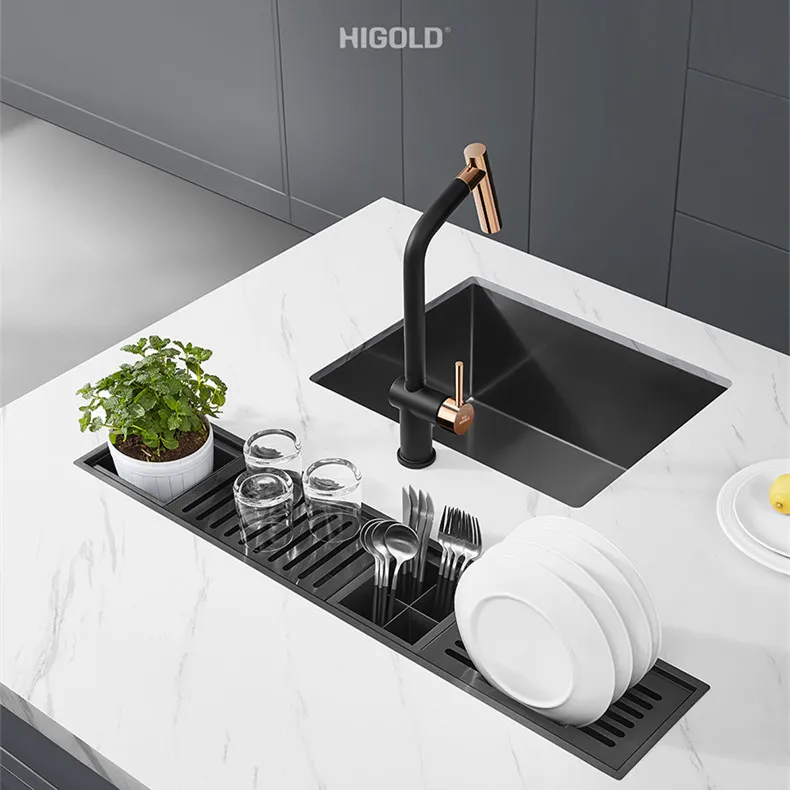
Is there a big price difference between PVD sinks and stainless steel sinks?
Generally speaking:
• Stainless steel sinks: More affordable, covering a wide range from entry-level to high-end.
• PVD sinks: Due to the added coating process, the cost is higher, and the price is correspondingly higher.
Factors affecting price also include:
• Stainless steel sheet thickness
• Processing type (handmade or stretched)
• Brand
• Accessories (drain, soap dispenser, faucet, etc.)
Generally speaking, for the same material and processing, PVD sinks are 20%-50% more expensive than ordinary stainless steel sinks.
Is there a significant difference in lifespan between PVD sinks and stainless steel sinks?
Since both are made of stainless steel, lifespan is mainly affected by the following factors:
• Stainless steel grade (e.g., 304 vs 201)
• Sheet thickness (e.g., 1.0mm vs 1.2mm)
• Surface susceptibility to damage
• Usage
• Cleaning and maintenance habits
1. Stainless Steel Sink Lifespan
As long as the material is reliable, it can last for ten years or more.
2. PVD Sink Lifespan
In addition to the lifespan of stainless steel sinks, the PVD layer, if properly maintained, usually lasts even longer. However, if the coating is damaged, the overall aesthetics will be reduced.
Therefore, the lifespan difference between the two is not significant, but the condition of the PVD surface will affect the visual effect.
Which is more suitable for a modern kitchen: a PVD sink or a stainless steel sink?
There is no absolute answer to this question; it depends on your needs:
If you are looking for:
• A visually appealing kitchen
• Personalized color schemes
• A more premium feel
Then a PVD sink is more suitable for you.
If you prioritize:
• Practicality
• Durability
• Ease of cleaning
• Cost-effectiveness
Then a traditional stainless steel sink is a safer choice.
What should you pay attention to when buying a PVD sink?
To avoid buying inferior products, the following points are crucial:
• Check if the stainless steel material is 304 or 316 (avoid 201 or low-cost materials)
• Check the uniformity of the plating
• Observe whether the color is natural and not overly shiny (overly shiny may indicate spray painting)
• Ask if it uses vacuum PVD technology
• Choose well-known brands or reputable retailers
Don't just look at the color; the base material is the core quality of the sink.
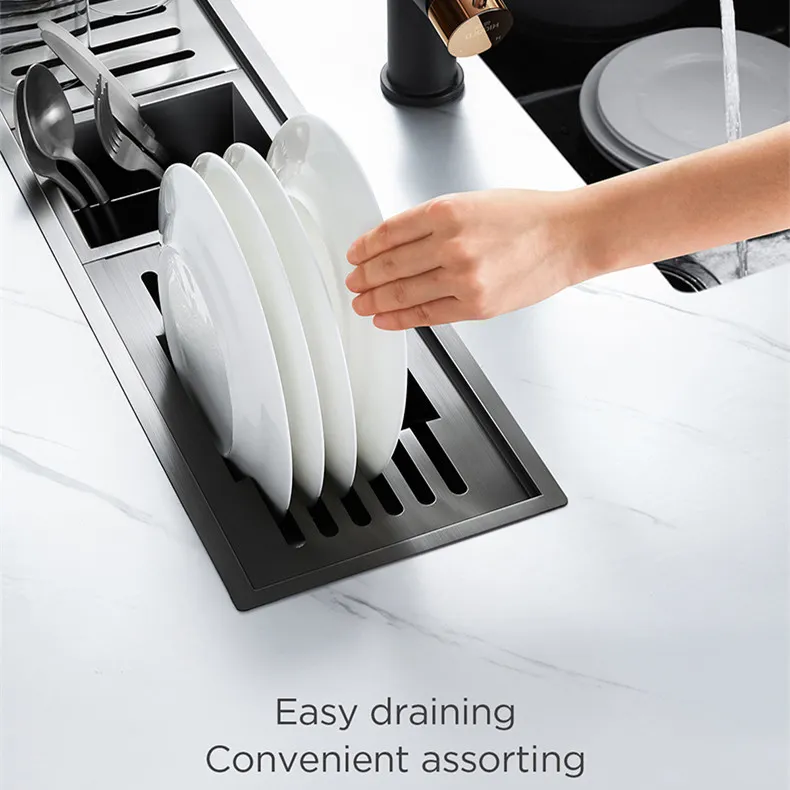
Which is better, a PVD sink or a stainless steel sink?
The final conclusion can be summarized as:
• Stainless steel sinks: practical, durable, cost-effective, and easy to clean.
• PVD sinks: high-end appearance, rich colors, and a more wear-resistant and corrosion-resistant surface.
Both are essentially stainless steel sinks, just with different surface treatments. You need to choose based on your kitchen style, usage habits, and budget.
Why Do Buyers Worldwide Trust Higold as a Supplier?
Higold operates one of Asia’s largest intelligent manufacturing bases for kitchen hardware, integrating R&D, production, and global sales. With 500+ patents and award-winning designs, Higold delivers innovative kitchen stainless steel sinks and stainless steel faucets recognized worldwide. Buyers from retail chains, e-commerce brands, and builders rely on Higold for stable supply, professional project support, and competitive wholesale pricing.

