

In kitchen and bathroom design, 304 stainless steel sinks are undoubtedly one of the most popular product types among homeowners and interior designers. Their corrosion resistance, high stability, and ease of cleaning make them a standard feature in modern kitchens.
With increasing aesthetic demands, more and more sus304 sinks are adopting various surface treatment processes, among which PVD coating (Physical Vapor Deposition) is currently a very mainstream method.
So, what exactly is the PVD coating on sus304 stainless steel sinks? Why does it enhance the sink's value and user experience? This article will provide an in-depth analysis from multiple perspectives, including materials, processes, performance, advantages, and disadvantages.
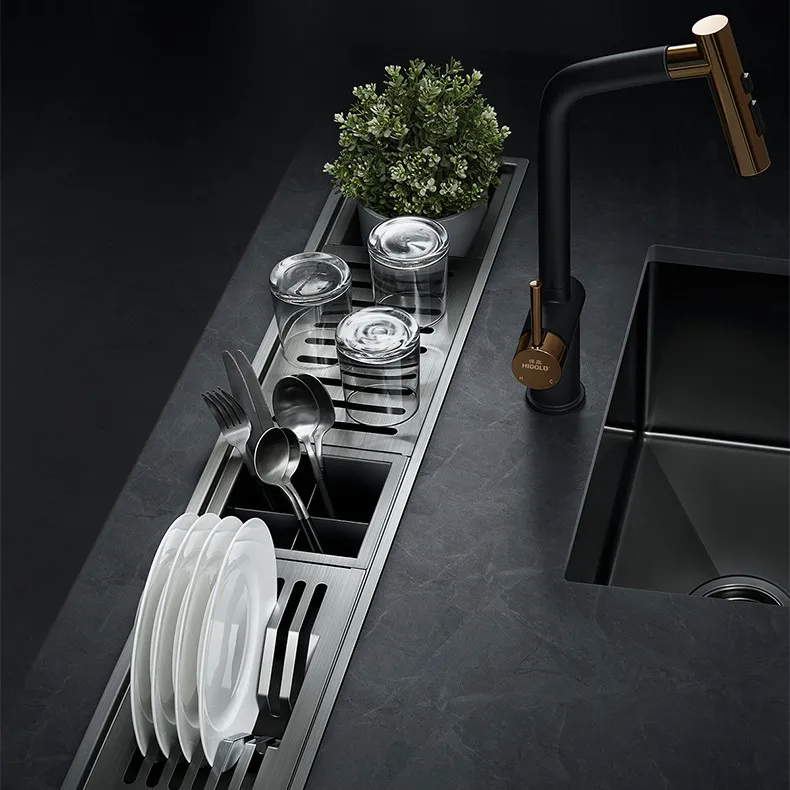
Why is PVD coating suitable for 304 stainless steel sinks?
304 stainless steel is an internationally standardized food-grade stainless steel with the following characteristics:
• Contains approximately 18% chromium and 8% nickel, offering strong corrosion resistance.
• It is rust-resistant, suitable for humid kitchen environments.
• It has good ductility, making it suitable for deep-drawing sink manufacturing.
• It has high surface stability and can withstand various surface treatment processes.
• It is safe and non-toxic, meeting kitchen hygiene requirements.
These characteristics make 304 stainless steel sinks not only durable but also ideal for adding further decorative or functional coatings. PVD coating is currently one of the most widely used and effective processes.
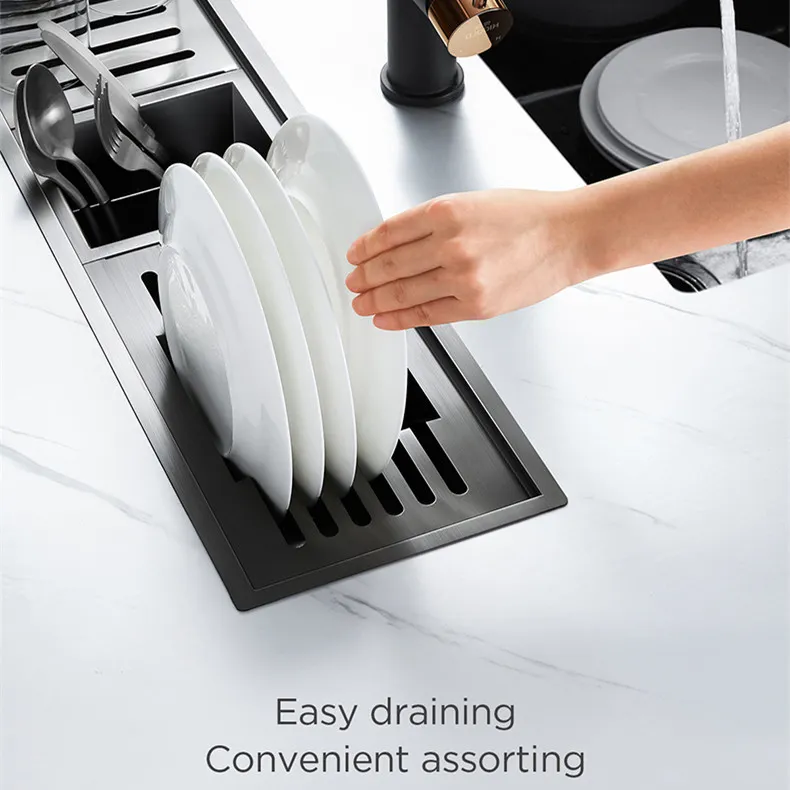
What is PVD coating on 304 stainless steel sinks?
PVD coating (Physical Vapor Depsosition) is a coating technology that deposits metal or ceramic materials onto the surface of a 304 stainless steel sink in a vacuum environment through physical vaporization, evaporation, or sputtering. This process does not involve chemical reactions, resulting in a high-purity, dense, and strongly adhesive coating.
In short, PVD coating is a physical process that allows other metal ions to adhere to the surface of a sus304 stainless steel sink, forming an extremely thin but extremely hard functional layer that ensures stable color, aesthetics, and durability.
Common PVD coating colors include:
• Black (e.g., gunmetal black, sink black gold)
• Gold (champagne gold, rose gold)
• Copper
• Gray, brushed gray
These colors are not paint or electroplating, but rather the colors inherent to the metal layer itself, making them more wear-resistant and less prone to fading.
How is a PVD coating formed on a 304 stainless steel sink?
What are the unique aspects of the process?
The formation of a PVD coating generally involves the following steps:
1. Vacuum Environment Preparation
The sus304 stainless steel sink is placed in a vacuum chamber to remove air impurities. This step is crucial because only a high vacuum environment allows for uniform coating deposition.
2. Evaporation Source Heating or Sputtering
Depending on the process method (e.g., evaporation, sputtering), the metal or ceramic coating material is vaporized.
Commonly used coating materials include:
• Titanium nitride (TiN)
• Zirconium nitride (ZrN)
• Chromium nitride (CrN)
• Carbide materials
These materials, after vaporization, exist in an atomic or ionic state.
3. Ion Deposition
The vaporized coating material ions adhere to the surface of the sus304 sink under the influence of an electric field, forming an extremely thin and uniform coating layer.
4. Curing
After adhesion, the coating cures through cooling and deposition. The final PVD layer has:
• A thickness typically between 0.1–5 micrometers
• Stable and uniform color, high hardness
Because the entire process is physical and does not involve chemical pollution, it is also more environmentally friendly.
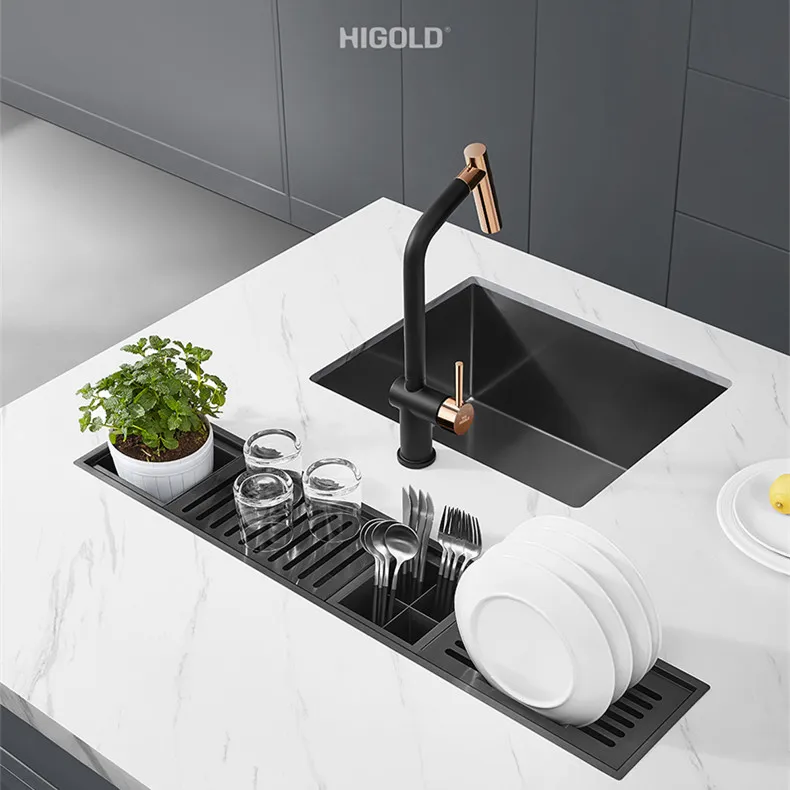
Why is PVD coating suitable for 304 stainless steel sinks?
The main reasons for using PVD coating include:
(1) Enhancing aesthetic appearance
Most sus304 stainless steel sinks are silver-brushed, while PVD offers a variety of colors, allowing for greater flexibility in matching design styles and creating a more modern look for the kitchen.
(2) Increasing surface hardness
The surface hardness of PVD coatings can reach HV1800–HV2500, several times higher than that of ordinary 304 stainless steel, making it more wear-resistant and less prone to scratches.
(3) Improving corrosion resistance
Although 304 stainless steel already has good corrosion resistance, PVD coatings can further enhance its surface stability, making it resistant to:
• Acidic substances
• Alkaline cleaners
• Mild salt spray environments
This helps extend the lifespan of sus304 stainless steel sinks.
(4) Enhancing fingerprint resistance
Some PVD coatings can form a smooth, dense surface, reducing fingerprint adhesion and making sus304 sinks easier to clean.
Will the PVD coating on a 304 stainless steel sink fade?
This is a question many users are very concerned about.
The answer is: it's not easy to fade, but that doesn't mean it will never fade.
Generally, with proper use, PVD coatings can maintain a stable color for a very long time because of their dense structure, strong adhesion, and the color coming from the metal itself, not paint.
However, the following situations may damage the coating:
• Repeatedly rubbing with hard objects such as steel wool
• Prolonged contact with strong acids and alkalis
• Scratches from sharp objects
• Use of cleaning agents with high chlorine content
Therefore, even a high-hardness PVD coating requires proper maintenance.
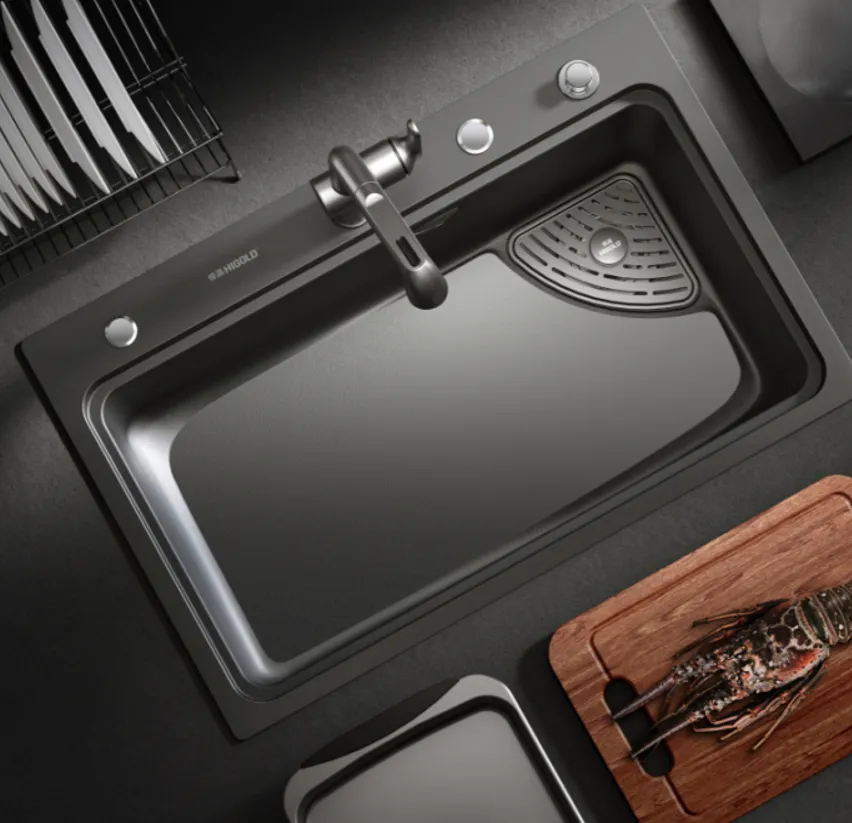
What are the advantages of PVD coating on 304 stainless steel sinks?
From an application perspective, PVD coating brings several advantages to 304 stainless steel sinks:
1. High hardness and wear resistance
The surface hardness of the coating is more than ten times higher than that of 304 stainless steel, making it less prone to scratches from everyday items.
2. Corrosion resistance and longer service life
The PVD layer has excellent corrosion resistance, making sus304 sinks more stable in humid environments.
3. Natural color, resistant to fading
Because the color originates from metal ions, not paint, its durability is far superior to spray-coated surface treatments.
4. Environmentally friendly process, no chemical pollution
PVD is a physical deposition process that does not emit pollutants.
5. Easy to clean, good fingerprint resistance
The dense surface makes cleaning easier.
Are there any disadvantages to using PVD coating on 304 stainless steel sinks?
While PVD coating performs excellently, it also has certain limitations:
1. Higher cost
PVD equipment is expensive, and the processing is complex, so using PVD coating on sus304 stainless steel sinks increases the cost.
2. Poor repairability
Once the coating is damaged, it is difficult to repair locally; the entire sink must be re-treated.
3. Not resistant to strong impacts
Although wear-resistant, impacts from heavy objects may cause surface dents or slight peeling.
4. Requires specific cleaning methods
It is not recommended to use steel wool, metal brushes, or other strong abrasive tools, as these may damage the coating.
What issues can affect the lifespan of the PVD coating on a sus304 sink?
1. Improper cleaning agents
Cleaners containing bleach or strong acids/alkalis may corrode the coating surface.
2. Incorrect cleaning methods
Prolonged use of abrasive cleaning tools can damage the coating.
3. Prolonged exposure to high temperatures
Although sus304 stainless steel sinks are heat-resistant, the PVD coating may develop micro-cracks under extreme conditions.
4. Heavy impacts or scratches from sharp objects
Drops of knives or other sharp objects can damage the coating.
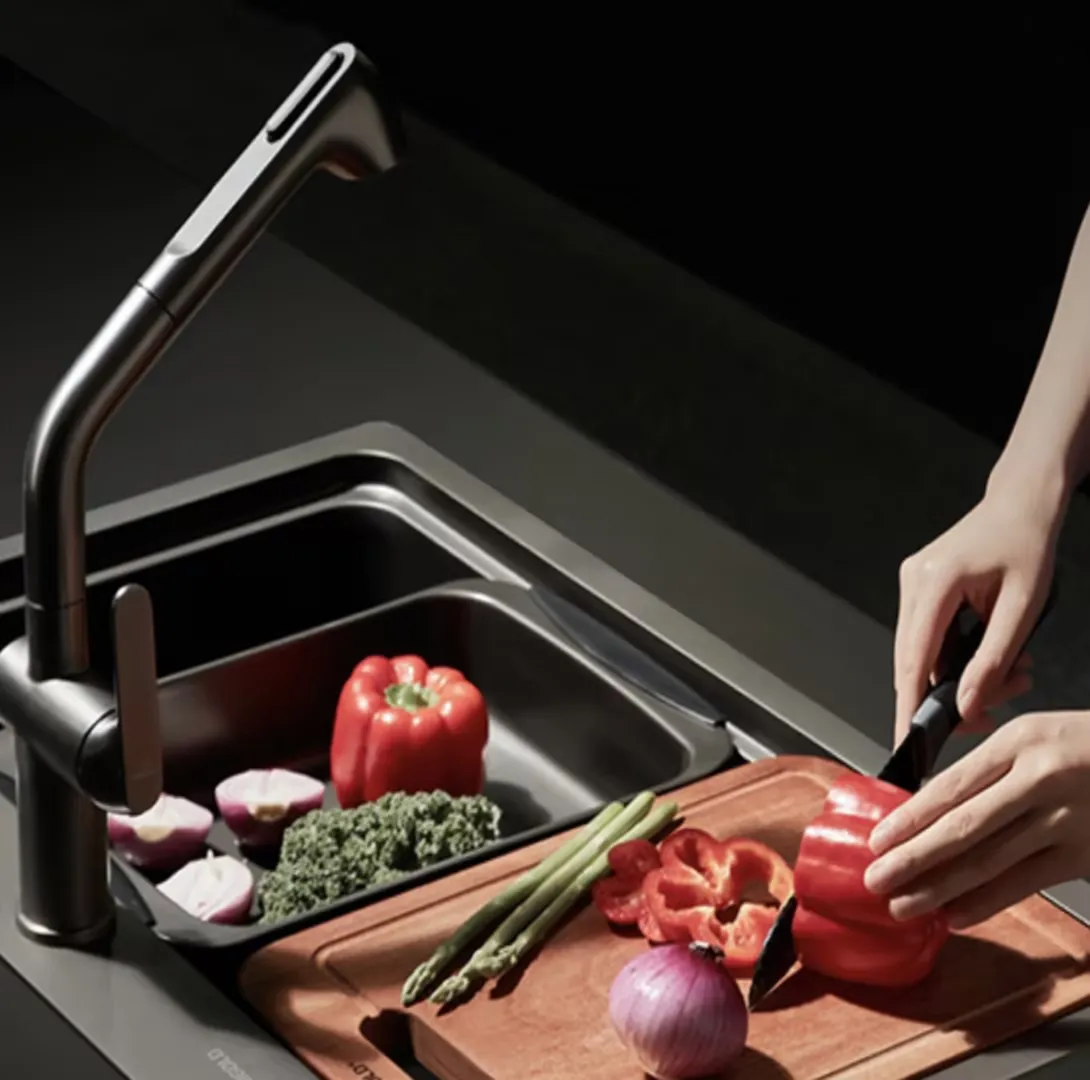
How to maintain the PVD coating of a sus304 sink to extend its lifespan?
The following maintenance methods are crucial:
(1) Avoid using abrasive cleaning tools
Such as steel wool, sandpaper, metal brushes, etc.
(2) Use neutral cleaning agents
Recommended:
• Neutral dish soap
• Non-abrasive kitchen cleaner
(3) Dry promptly after each use
Prevent water stains from accumulating and forming deposits.
(4) Avoid contact with strong acids and alkalis
Especially bleach and chlorine-containing cleaners.
(5) Avoid impacts and drops of heavy objects
Try to prevent cookware from falling into the sink from a height.
Proper maintenance can keep the PVD coating of a 304 stainless steel sink shiny for many years.
Will the PVD coating affect the food safety of a 304 stainless steel sink?
No.
The PVD coating material itself is an inert metal or ceramic, contains no harmful chemical components, will not dissolve or migrate, and will not react chemically with food.
It is commonly used in:
• Medical devices
• Food processing equipment
• Knife processing
• Watches and jewelry
Therefore, its application on sus304 stainless steel sinks is completely safe and reliable.
What should you pay attention to when choosing a sus304 sink with a PVD coating?
1. Check the coating uniformity: A high-quality PVD coating has a consistent color with no obvious color difference.
2. Check surface hardness and abrasion resistance: Branded products usually provide hardness testing standards.
3. Understand coating thickness: A coating that is too thin affects lifespan, while one that is too thick affects color performance.
4. Choose a trustworthy brand: PVD equipment requires significant investment, and small factories may not be able to guarantee stable processes. "Higold" focuses on kitchen and bathroom hardware, committed to creating one-stop high-end hardware solutions for global users.
5. Pay attention to after-sales service: High-quality 304 stainless steel sinks generally offer a longer warranty period.
How Does Higold Guarantee High Quality in Sink Production?
Higold maintains strict quality control through advanced automation, including robotic welding, automated edge polishing, and precision bending. Each handmade sink and stainless steel faucet undergoes leak tests, finish inspections, and durability checks.
Combined with certifications like cUPC, CSA, and CE, Higold ensures global compliance and consumer safety. Buyers trust Higold as a reliable supplier offering consistent quality and low defect rates for wholesale and retail sales.

