
News

  • What is the size of a comfortable kitchen sink?
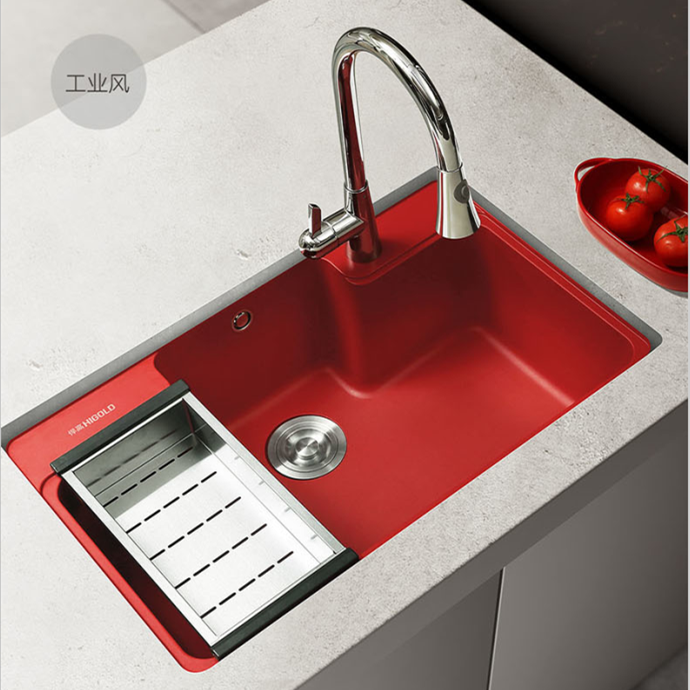
    Single-bowl sinks are usually the most commonly used sink type in home kitchens, suitable for small kitchens or families that require simpler cleaning operations. Common sizes of single-bowl sinks are 50cm x 40cm, 60cm x 45cm, 70cm x 50cm, etc.
    2025-02-03
    Learn More
  • Where is the kitchen sink most likely to get clogged?
    The sink drain is the first place where water flows into the pipe and is also the area most prone to blockage. Because the sink drain is connected to the bottom of the sink, a large amount of food residue, grease, foam and other dirt often accumulates in this position.
    2025-01-28
    Learn More
  • Which kitchen sink is best for hard water?
    Quartz composite sinks are made of a combination of natural quartz sand and resin, and have very high durability and anti-fouling properties. The surface of quartz sinks is denser and smoother than stainless steel sinks, and is not easy to absorb scale, so it is very popular in hard water areas.
    2025-01-27
    Learn More
  • What is the best material for a kitchen sink?
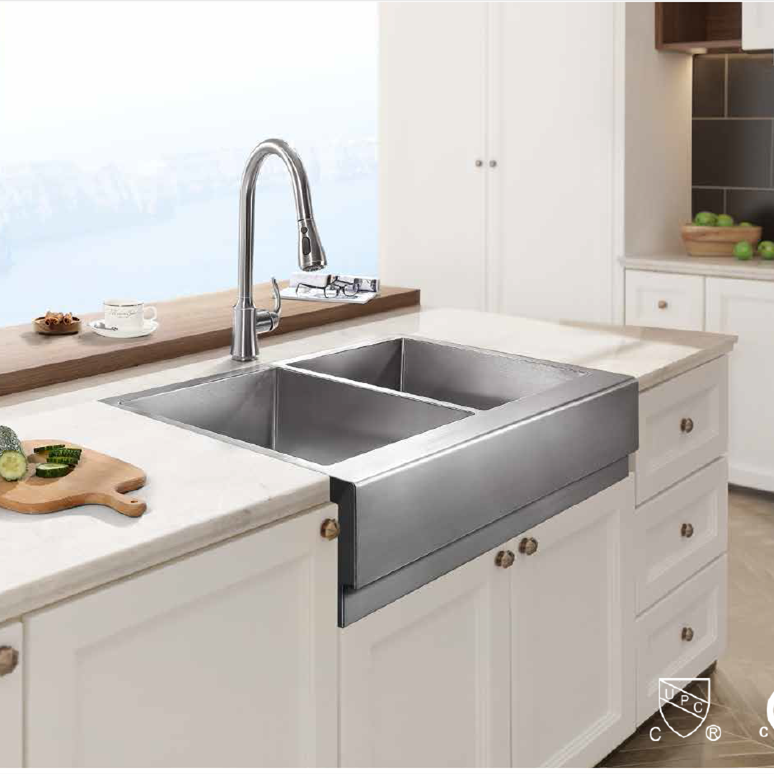
    Stainless steel is one of the most common and popular kitchen sink materials, especially in modern home and commercial kitchens. High-quality stainless steel sinks usually use 304 or 316 grades of stainless steel, which contain a higher proportion of chromium and nickel and have strong corrosion resistance.
    2025-01-23
    Learn More
  • What is the best material for kitchen faucets?
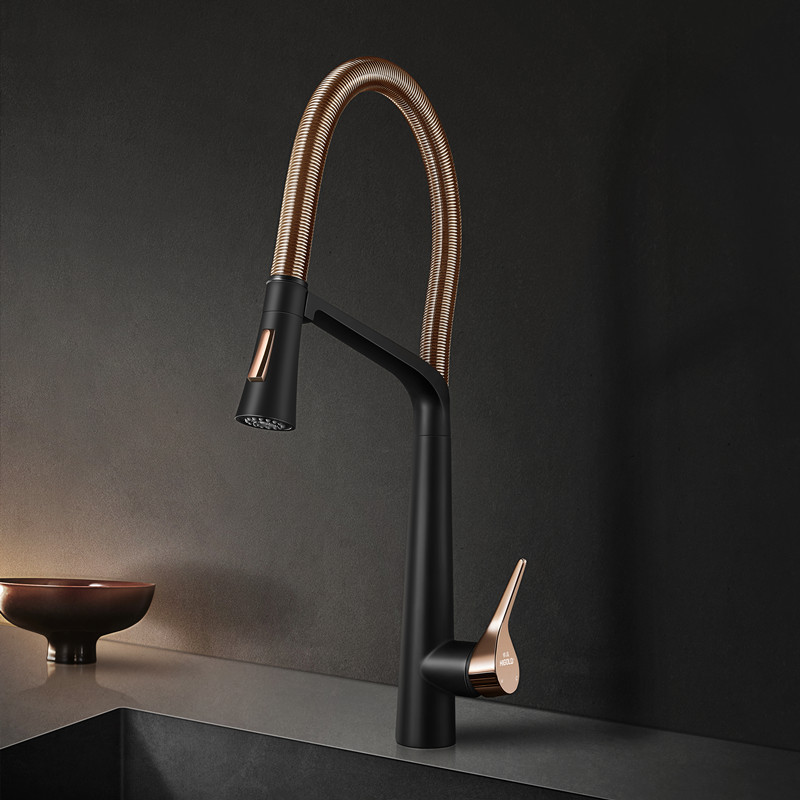
    Stainless steel is currently one of the most common materials for kitchen faucets. It has strong corrosion resistance, oxidation resistance and stain resistance, so it is particularly suitable for use in high humidity and high temperature environments such as kitchens.
    2025-01-21
    Learn More
  • Does a single-bowl sink need a vent?
    The pipe between the drain in the sink and the sewer needs to maintain a certain air pressure balance. If the drainage pipe is completely sealed and there is no vent, the water will flow through the pipe, which will cause negative pressure inside the pipe, which will affect the drainage speed and may even cause the water in the sink to be unable to be discharged smoothly.
    2025-01-20
    Learn More
  • Will quartz kitchen sinks be stained?
    Although the surface of quartz sinks appears smooth and dense after treatment, there may still be fine pores and textures under the microscope. If the sink is exposed to substances with high pigment concentrations for a long time, such as red wine, coffee, soy sauce, etc., the pigment particles of these substances may be deposited in these tiny pores, forming stains.
    2025-01-17
    Learn More
  • Do I need to install a vent under my kitchen sink?
    The space under the sink usually hides facilities such as water pipes, drainage pipes, and garbage disposals. These devices may cause moisture accumulation and lead to a series of problems. Installing vents can help keep the area dry and reduce moisture accumulation.
    2025-01-16
    Learn More
  • How do I know which faucet is suitable for my kitchen sink?
    if you cook frequently or have a lot of cooking and cleaning needs, you may need a stretch faucet or a high-flow faucet to provide a stronger water flow and more operating space. If there are multiple users in the kitchen or there are multiple sinks, you may need to choose a double-hole or multi-hole sink and faucet combination to meet the needs of family members or kitchen staff.
    2025-01-15
    Learn More
  • Is it safe to pour boiling water into the kitchen sink?
    When pouring boiling water into the sink, avoid pouring a large amount of boiling water at one time, especially when the temperature difference is large. The boiling water can be properly cooled to about 80℃ before pouring it into the sink to reduce the damage caused by temperature changes.
    2025-01-13
    Learn More

Get the latest price? We will reply as soon as possible (within 12 hours)