
2026-05-06
Learn MoreNews

- Under standard conditions, undermount kitchen sinks require 24–72 hours to fully cure and reach a safe usable state. In most cases, professional installers will recommend: • Wait at least 24 hours before touching the sink. • It is best to wait at least 48 hours before starting a large-volume water test or using it with water.2025-12-29Learn More
- Yes, the standard procedure requires the undermount sink to be installed before the countertop. The undermount sink needs to be secured under the countertop first, and then the countertop is placed and installed.2025-12-19Learn More
- Common fixing methods for undermount sinks: ✔ Metal clips ✔ Support frame/wooden board ✔ Structural adhesive/silicone Therefore, when replacing an undermount sink, all operations are: Climb into the cabinet and move the sink from below, without touching the countertop.2025-12-16Learn More
- Strong Adhesives are a Core Securement Method A key to securing an undermount sink is using professionally applied stone adhesive, structural adhesive, or epoxy adhesive. High-quality structural adhesives can withstand long-term tensile, sagging, and impact forces, ensuring the undermount sink's stability.2025-12-15Learn More
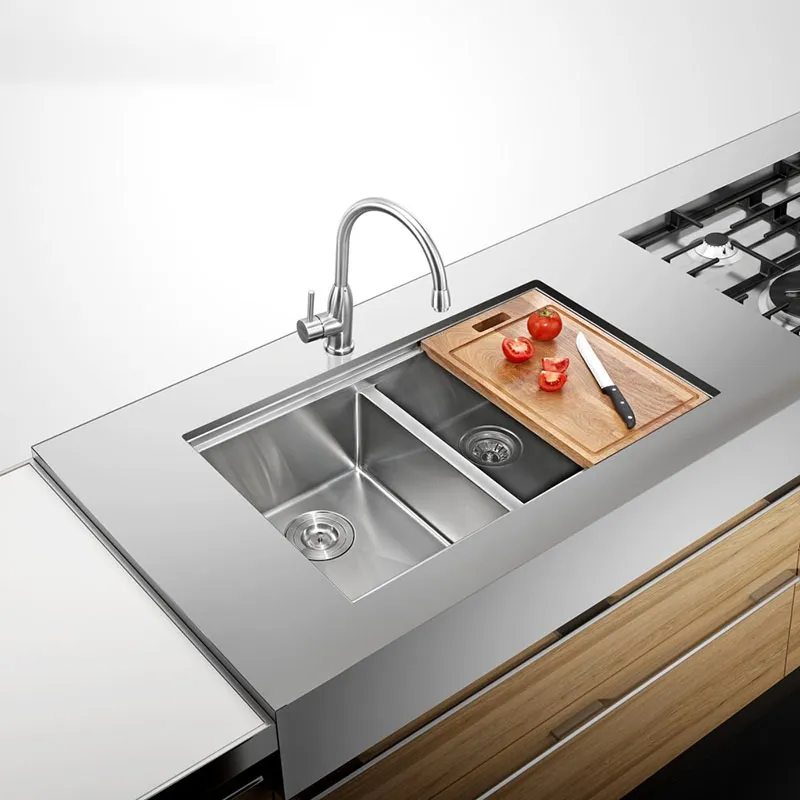
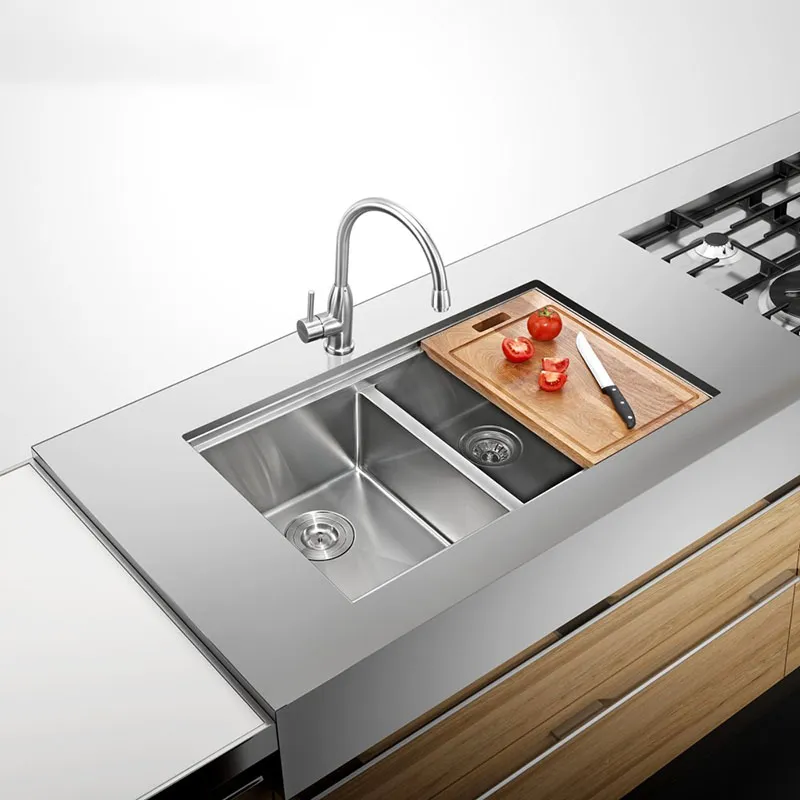
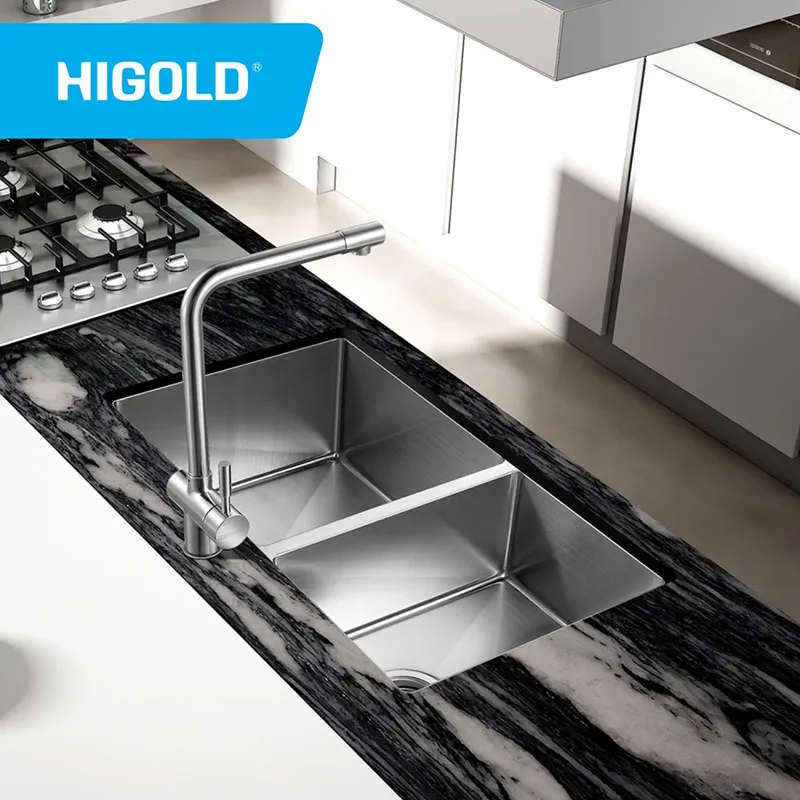
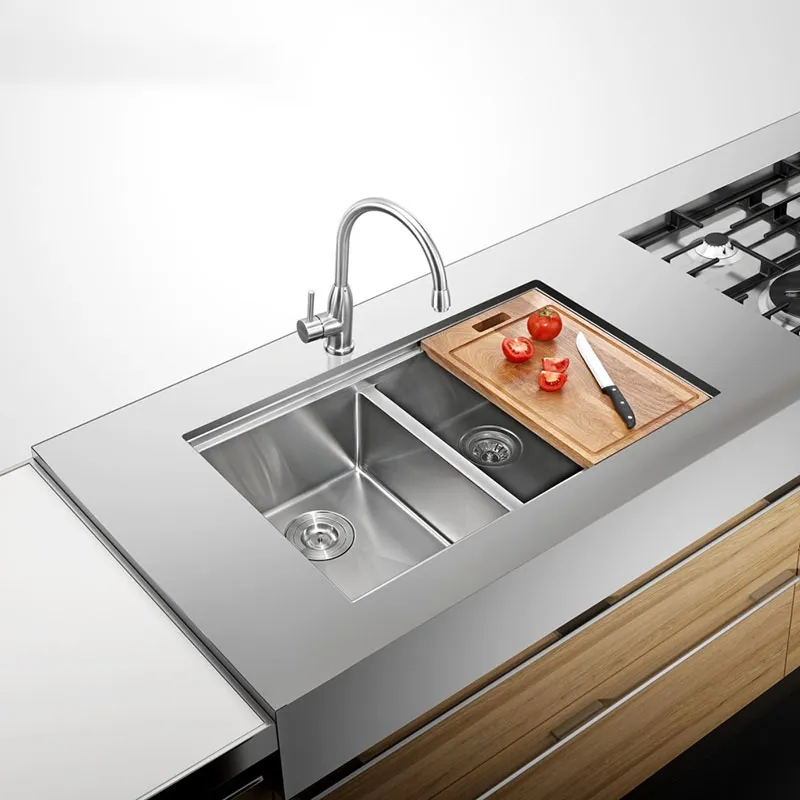
- Countertop sinks, due to their raised edges, easily accumulate limescale, grease, and food residue. Undermount kitchen sinks, with their recessed design, allow dirt from the countertop to be directly swept into the sink with a cloth or scraper.2025-12-10Learn More
- Undermount sinks are primarily fixed in the following ways: 1. Wrap-around metal brackets (common on stone countertops) 2. Structural adhesive bonding under the countertop (glass glue/marble glue/epoxy resin) 3. Countertop weight pressing structure (some sinks have pre-drilled edges that prevent upward passage) Based on the above reasons: Undermount sinks almost never can be removed upwards; replacement must be done by disassembling from below and removing them downwards.2025-11-28Learn More
- In actual design and installation, the standard depth of undermount kitchen sinks is typically between 18 cm and 25 cm (approximately 7 to 10 inches). However, this is only a general reference range. The specific choice should be made in conjunction with the kitchen countertop height and the user's height.2025-11-21Learn More
- The installation process for undermount sinks is one of the main reasons for their higher price. Because the rim must be completely recessed into the countertop and seamlessly connected, the installation requires extremely precise alignment between the countertop and sink.2025-09-30Learn More
- Stainless steel sinks are one of the most common undermount sink materials. They are widely used in both home and commercial kitchens due to their corrosion, heat, and impact resistance. Stainless steel undermount kitchen sinks are particularly resistant to cracking.2025-09-26Learn More