

Most people think a kitchen tap faucet is simply a pipe that delivers water. But inside every modern tap, there is a miniature engineering marvel — especially when it comes to the pull-out spray. Today, we dive into the unexpected science behind what makes a kitchen tap faucet feel effortless or frustrating.
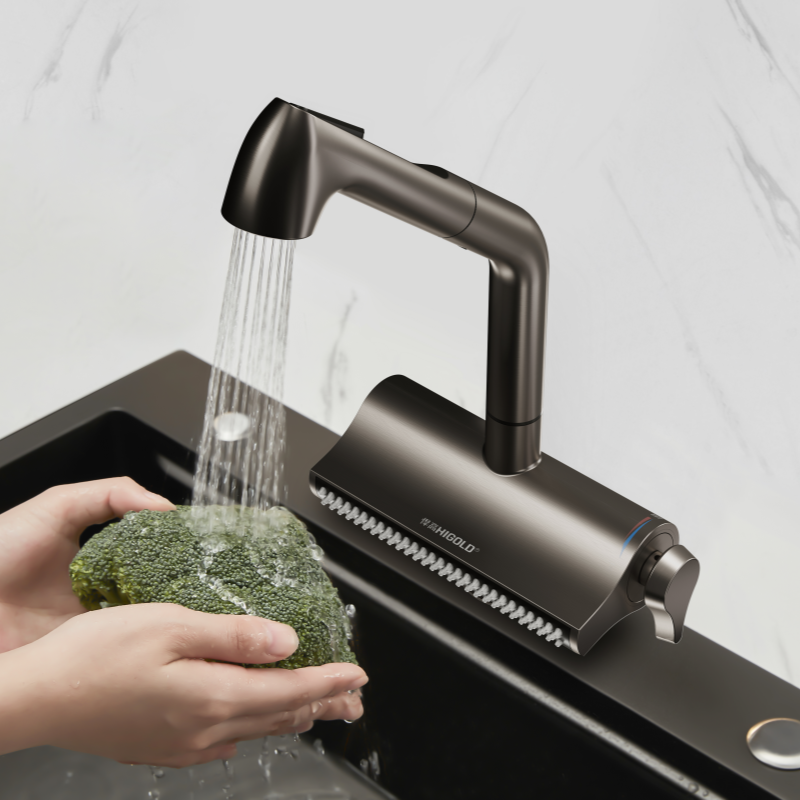
Let’s start with water flow. A standard kitchen tap faucet releases a solid stream. But a kitchen tap with pull out spray does something much smarter. It breaks the water into hundreds of tiny jets. This increases surface area, allowing you to rinse vegetables or clean corners with less water. In fact, tests show that a quality kitchen tap with pull out spray can save up to 40% of water compared to a traditional spout. That is why many experts say the best kitchen taps are not the heaviest or shiniest — they are the ones that balance pressure and atomization.
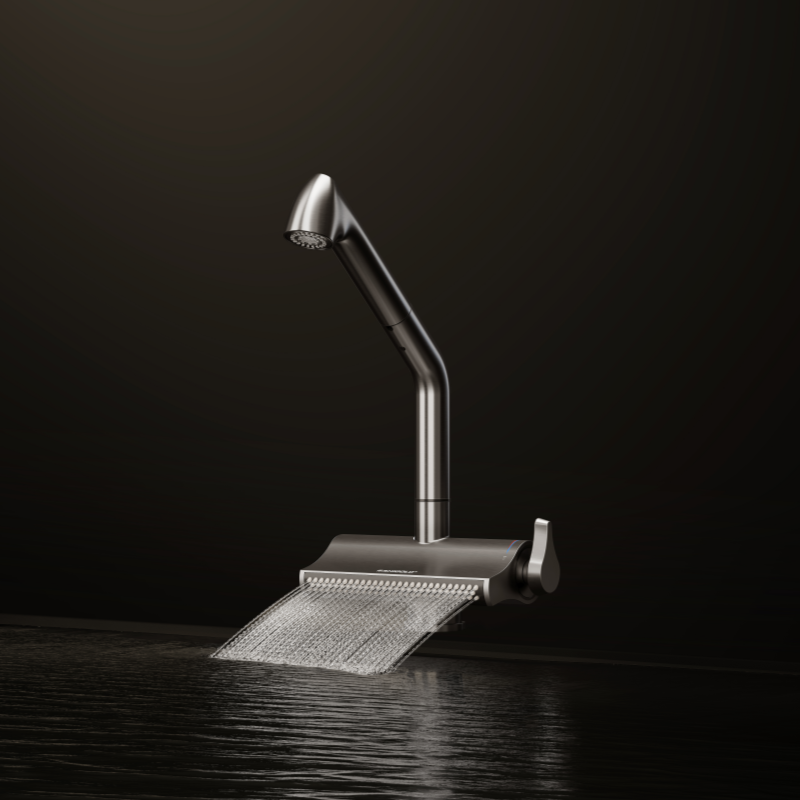
However, there is a problem that manufacturers rarely discuss: hose drag. When you pull out the spray head, you are fighting against gravity and internal friction. Cheap designs use a simple rubber hose. After a few months, the hose twists and kinks. Suddenly, your kitchen tap faucet feels like wrestling a snake. The solution? High-end kitchen tap with pull out spray models use a nylon-wrapped, memory-retentive hose. This material returns to its original shape every time. If you want one of the best kitchen taps, look for this feature even if the packaging does not advertise it.
Another hidden detail is the spray toggle mechanism. A kitchen tap faucet with a pull-out spray typically has a button or switch to change between stream and spray. But how many cycles can it survive? The best kitchen taps use ceramic disc valves inside the spray head itself. These discs can withstand over 500,000 toggles. Lesser models use rubber plungers that wear out in a year. That is why a truly reliable kitchen tap with pull out spray should come with a lifetime warranty on the diverter.
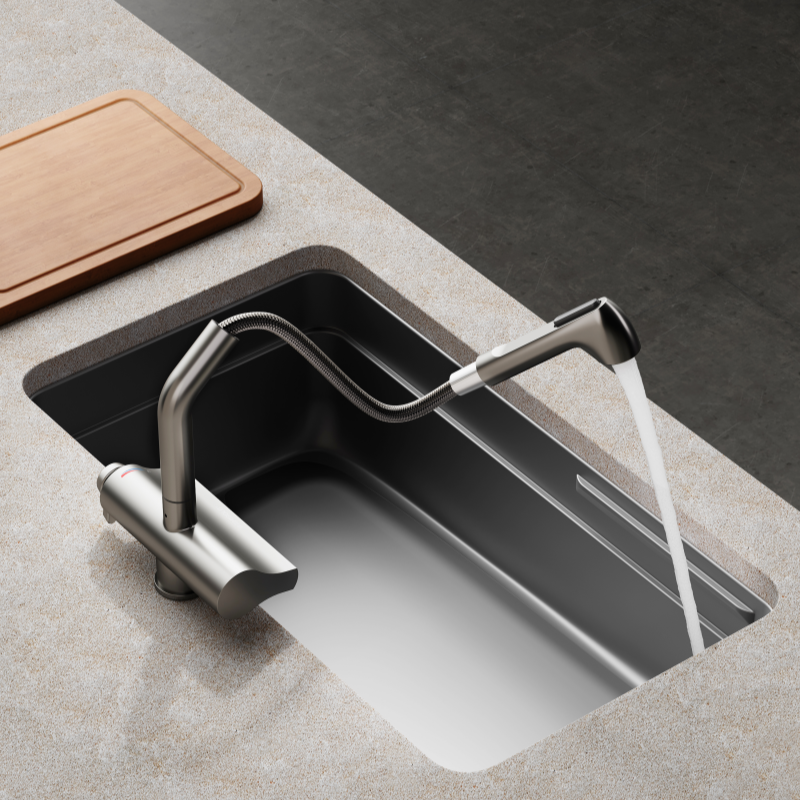
We also need to talk about weight balancing. A kitchen tap faucet is usually mounted with a heavy metal counterweight under the sink. That weight pulls the hose back. But if the weight is too heavy, the spray head slams into the spout. Too light, and the hose dangles loosely. The best kitchen taps allow you to adjust the counterweight position along the hose. This simple customization makes a kitchen tap with pull out spray feel perfectly balanced — like a high-end car door closing with a solid thud.
What about cleaning? Many people avoid a kitchen tap faucet with pull-out spray because they think the spray head collects dirt. The truth is that modern designs have self-cleaning nozzles. Silicone tips prevent limescale buildup. A quick wipe restores the spray pattern. Some of the best kitchen taps even feature nozzles that can be removed for dishwasher cleaning. That is a level of hygiene that fixed spouts cannot match.
The pull-out spray also changes how we interact with the sink. A standard kitchen tap faucet forces you to bring pots to the water. A kitchen tap with pull out spray brings water to the pots. You can fill a tall vase on the counter, rinse a turkey in the sink, or spray down a cutting board without splashing everywhere. This freedom is why interior designers often specify a kitchen tap with pull out spray for open-plan kitchens.
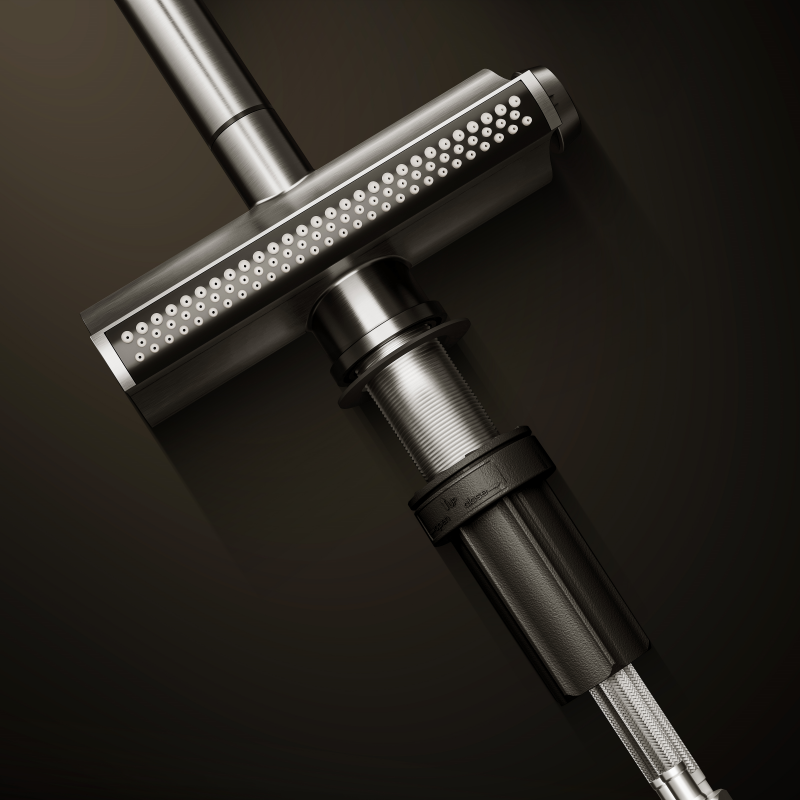
There is even a noise factor. A harsh spray sounds like a pressure washer. But the best kitchen taps use flow straighteners and aerated spray modes. The water is mixed with air, creating a quiet, foamy blanket. This is especially valuable early in the morning or late at night. A thoughtful kitchen tap faucet respects the peace of a home.
From a technical standpoint, the hose material matters more than most people realize. A kitchen tap with pull out spray requires a flexible, food-grade inner tube. Cheap versions use PVC that can leach plasticizers. The best kitchen taps use cross-linked polyethylene (PEX) or silicone. These materials are inert and safe for drinking water. So when you shop for a kitchen tap faucet, do not just look at the finish — ask about the hose material.
Finally, let’s talk about longevity. The average kitchen tap faucet is used over 20 times per day. For a kitchen tap with pull out spray, the spray head is pulled out and retracted at least ten times daily. That means over 3,600 cycles per year. The best kitchen taps are tested to 50,000 cycles. Some are tested to 100,000. A poorly made kitchen tap faucet will fail at the swivel joint or the hose connection within two years. That is why professional plumbers recommend spending a little more on a kitchen tap with pull out spray from a brand that publishes test data.
In conclusion, a kitchen tap faucet is not a commodity. It is a precision tool. The difference between a frustrating sink and a joy to use often comes down to a few unseen details in the pull-out mechanism. When you understand the physics of drag, the chemistry of hose materials, and the engineering of toggles, you realize why the best kitchen taps are those that disappear into the background — silent, smooth, and effortless. And that is exactly what a great kitchen tap with pull out spray should be.

