

In kitchen renovations, the sink is a frequently used core component. Among various installation methods, undermount sinks are increasingly favored by families due to their visual simplicity, ease of cleaning, and seamless integration with the countertop. Among many materials, stainless steel has always been the first choice for many users of undermount sinks. So, why is stainless steel recommended for undermount sinks?
This article will provide a professional analysis from multiple dimensions, including structural reliability, user experience, installation compatibility, brand popularity, and maintenance convenience, and comprehensively discuss why undermount stainless steel sinks are more suitable for undermount installation compared to other materials.
For ease of understanding and retrieval, the article uses multiple question-style subheadings, providing a better structure for search engine optimization and allowing you to quickly locate key content.
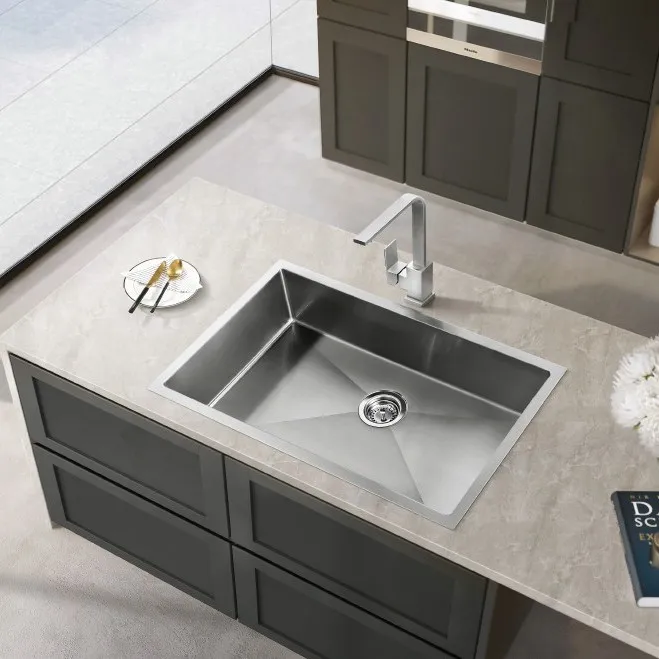
Why are Stainless Steel Undermount Sinks More Suitable for Undermount Installation?
When choosing an undermount sink, the sink material must be able to withstand the weight, tension, and long-term stress brought about by the suspended installation method. Stainless steel has a natural advantage in this regard, making stainless steel undermount sinks exceptionally stable during installation.
1. Lightweight yet high strength, less burden on the countertop
Undermount installation is a method of fixing the sink under the countertop. The weight of the sink directly affects the stress on the adhesive, joists, and support components. Compared to composite materials such as artificial stone, ceramic, and granite, stainless steel has significantly lighter weight characteristics.
Lightweight means:
• Easier transportation, handling, and installation
• Less prone to countertop cracking
• Support components do not bear additional pressure
Lightweight yet strong, this is a key advantage of stainless steel undermount sinks.
2. High material toughness, able to absorb stress without cracking
Undermount installation places extremely high demands on the overall toughness of the sink body, as the adhesive fixing the sink and the support components need to withstand the water volume inside the sink, the impact of appliances, and the tensile forces between the countertop and the sink over a long period.
Stainless steel possesses high toughness, effectively absorbing external forces and preventing cracking or shattering from accidental impacts.
While ceramic or stone materials are hard, they are brittle, and undermount installations may make them more prone to cracking in certain situations. Stainless steel, however, rarely exhibits such problems.
3. Stable lifespan, ideal for high-frequency use
Kitchen sinks are frequently used items, including washing vegetables, pots, pouring hot water, and rinsing soup, all of which cause long-term wear and tear on the basin.
Stainless steel undermount sinks are durable and resistant to damage, maintaining their stable structure even after prolonged use. This is one of the main reasons why many people choose them.
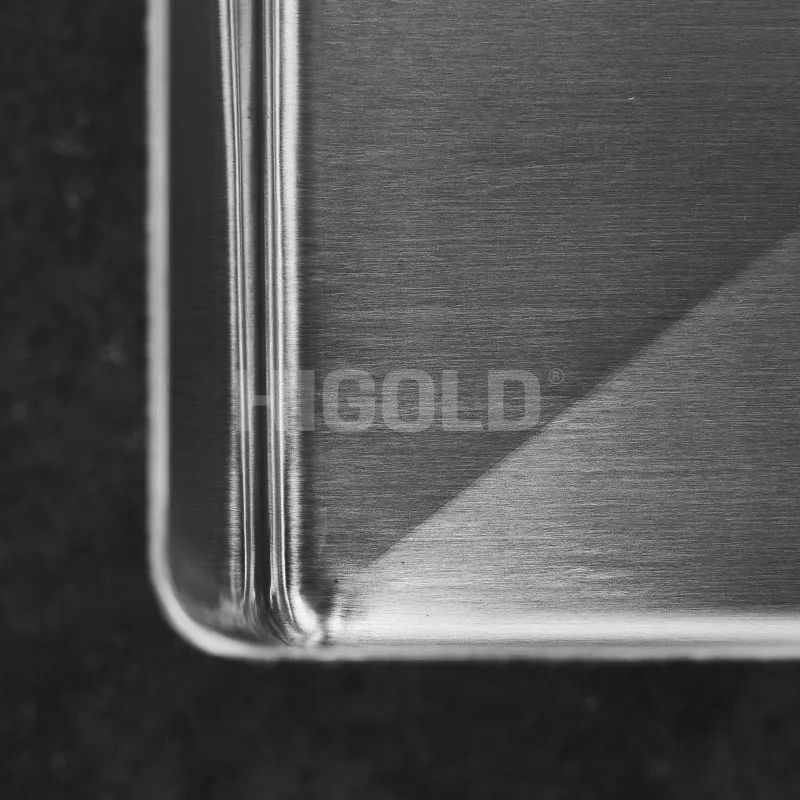
Are undermount stainless steel sinks easier to maintain their appearance than other materials?
Another reason many people choose undermount stainless steel sinks is their visually cleaner and more aesthetically pleasing appearance. The undermount installation method and stainless steel have a natural aesthetic appeal, combining to create a simple, modern, yet practical kitchen effect.
1. Stainless Steel and Undermount Design: A Natural Fit
A key advantage of undermount sinks is the seamless connection between the countertop and the basin, creating a clean and crisp visual boundary.
Stainless steel undermount sinks have very thin edges, fitting snugly against the countertop and presenting a smooth, flowing line. The countertop has no raised edges, resulting in significantly better tidiness compared to top-mount sinks.
2. Easier to Clean
Stainless steel is a material perfectly suited for the kitchen environment.
• Less prone to bacterial growth
• Water-resistant
• Oil-resistant
• Easy to wipe clean
When the sink is installed under the countertop, water and dirt can be easily pushed into the sink from the countertop, and the stainless steel surface makes cleaning even smoother.
Choosing a stainless steel undermount sink will significantly improve the cleanliness of your kitchen countertop.
3. Resistant to Discoloration and Hot/Cold Temperature Changes
The kitchen environment frequently involves switching between hot and cold water, and occasionally, hot soups or scalding water from pots and pans may be spilled.
Stainless steel is unaffected by thermal expansion and contraction, and will not discolor or crack.
In contrast, some composite material or artificial stone undermount sinks may experience slight deformation or localized color differences under prolonged temperature fluctuations.
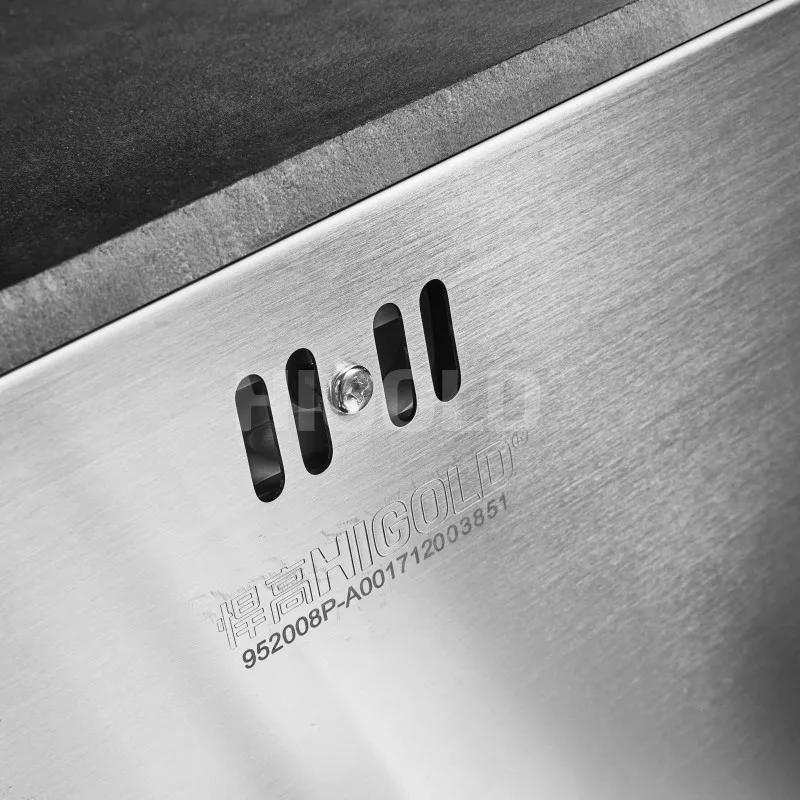
What are the advantages of stainless steel undermount sinks in terms of corrosion resistance?
The kitchen is an environment involving large amounts of water, oil, and acidic or alkaline foods, therefore sinks must have high corrosion resistance. Stainless steel has natural corrosion resistance, making it an ideal material for undermount sinks.
1. The protective film on the surface of stainless steel provides long-lasting corrosion resistance
High-quality stainless steel is typically made of 304 or 316, which contains chromium.
When stainless steel is exposed to air, a dense chromium oxide film forms on its surface, preventing further oxidation.
This protective film makes undermount stainless steel sinks less prone to corrosion even after years of use, maintaining good condition even with prolonged contact with detergents, acidic foods, and limescale.
2. Unaffected by Humid Environments
Undermount sinks are installed in a concealed area, and the area above them is often kept moist. While some materials are prone to damage when exposed to water or moisture, stainless steel is completely unaffected.
Even with prolonged exposure to moisture, the back of a stainless steel undermount sink will not swell, peel, or corrode.
Why are stainless steel undermount sinks more adaptable to different installation materials?
Smooth installation and long-term stability are key concerns for many users when choosing an undermount sink. Undermount stainless steel sinks have a natural advantage in this regard, making installation simpler and more stable.
1. Compatible with Various Countertop Materials
Undermount installations are commonly used on:
• Quartz countertops
• Artificial stone countertops
• Granite countertops
• Marble countertops
• Sintered stone countertops
Stainless steel undermount sinks have thinner edges and are lightweight, requiring no additional support structure for the countertop, making them suitable for almost all hard countertop materials.
2. Edges Fit Better to the Countertop
The flexibility of stainless steel allows its edges to fit better to the countertop during bonding, reducing gaps and the risk of leaks. This good fit also contributes to long-term stability.
3. Easier to Level Precisely
Undermount sinks require very precise leveling during installation; otherwise, drainage efficiency and the appearance of the countertop will be affected. Stainless steel is lightweight and adjustable, allowing installers to level it more quickly and reduce errors.
Are Stainless Steel Undermount Sinks Easier to Maintain and Care For?
Long-term maintenance costs are a factor many people overlook, but they directly impact the user experience. Stainless steel undermount sinks offer significant advantages in terms of maintenance.
1. No Special Maintenance Required
Stainless steel surfaces only require daily rinsing with water and light wiping to maintain cleanliness; no special maintenance oils or expensive care products are needed.
2. Easy to Repair Surface Scratches
Another major characteristic of stainless steel is that minor scratches can be repaired by brushing or even blend naturally with daily use, unlike other materials where they are more noticeable.
This is especially important for undermount sinks, as the boundary between the countertop and the sink frequently comes into contact with cookware, and stainless steel offers superior wear resistance.
3. Strong stain resistance, unaffected by prolonged water accumulation
Undermount designs often require managing water stains around the countertop, but undermount stainless steel sinks are completely waterproof and will not develop mold or blacken on the edges even after prolonged water accumulation.
Why are stainless steel undermount sinks more cost-effective?
Choosing a sink requires considering not only material performance but also cost. Stainless steel undermount sinks, with their high cost-effectiveness, are the best choice for many families.
1. More reasonable price yet outstanding performance
Among sinks of the same size and function, stainless steel undermount sinks are generally more affordable than granite composite or ceramic sinks, yet their durability and versatility are in no way inferior.
2. Lower installation costs
Because stainless steel is lightweight, non-brittle, and not easily broken, no additional crack-resistant treatment or support structures are needed during installation, thus reducing construction costs.
3. Extremely Low Maintenance Costs
Stainless steel requires no expensive maintenance and is not easily damaged, meaning there are virtually no additional costs in the long run, resulting in long-term economic savings for families.
What are the significant advantages of stainless steel undermount sinks in actual use?
Besides their structural and material advantages, undermount stainless steel sinks also offer an excellent daily user experience.
1. Superior Noise Reduction
High-quality undermount stainless steel sinks often have a sound-absorbing coating or pad on the back, effectively reducing water noise and impact sounds, enhancing the comfort of using the kitchen.
2. Diverse Styles, Suitable for Various Kitchen Styles
Stainless steel is highly malleable, allowing for the creation of:
• Single bowl
• Double bowl
• Extra-deep bowl
• Rounded corner design
• Flat bottom design, etc.
This gives users more design options when choosing an undermount sink, easily matching different kitchen styles.
Why are stainless steel undermount sinks more reliable in the long run?
As one of the most important kitchen fixtures, a longer lifespan is always better. Stainless steel undermount sinks rarely experience functional problems even after long-term use, a feat difficult to achieve with other materials.
1. No Deformation, Cracking, or Delamination
The one-piece stretching technology of stainless steel gives the sink exceptional integrity, making it less prone to deformation over time and more reliable than composite or glued materials.
2. Edges Resistant to Aging
The most critical aspect of undermount sinks is the edge bonding area. Stainless steel edges are stable and won't swell, detach, or crack due to water absorption like some other materials.
What Types of Kitchen Sinks Does Higold Produce?
Higold manufactures a wide range of kitchen stainless steel sinks, including handmade sinks, undermount sinks, topmount sinks, workstation sinks, and PVD-coated SUS304 sinks. Matching stainless steel faucets and accessories are also available. As a China factory-direct manufacturer, Higold offers efficient production capacity, competitive wholesale prices, and fast customization services.

