News

  • Are PVD-coated Stainless Steel Sinks Harmful?
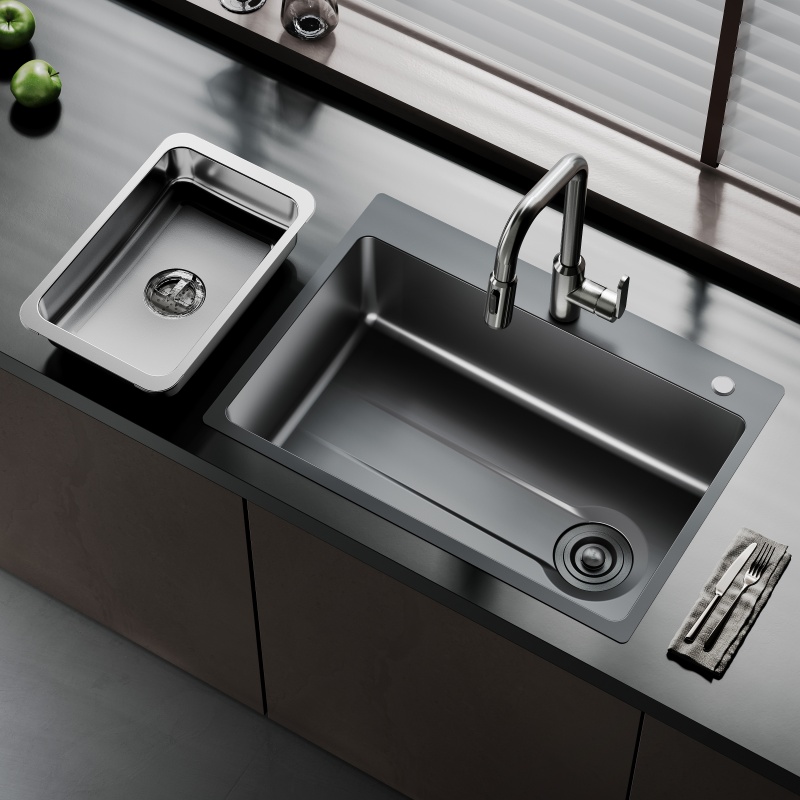
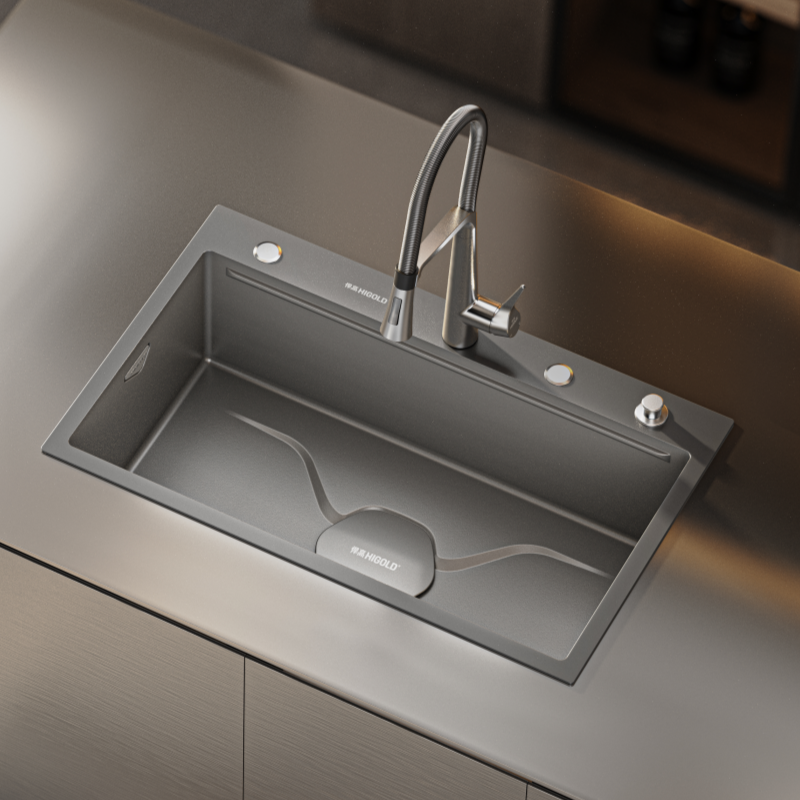
    —PVD-coated stainless steel sinks are non-toxic and pose no health risks to humans. PVD is a process that uses physical methods under high vacuum to transform a metal target into atoms or molecules, which are then deposited onto the surface of a stainless steel sink to form a dense thin film.
    2025-12-23
    Learn More
  • Will PVD stainless steel sinks scratch?
    Yes, but not easily. While the PVD coating does improve the surface hardness and wear resistance of the stainless steel sink, it still cannot completely prevent scratches. In other words: • It is not easily scratched under normal use • However, improper handling and strong friction can still cause scratches.
    2025-12-22
    Learn More
  • What are the differences between PVD sinks and stainless steel sinks?
    PVD sinks are not a new sink material; they are essentially still stainless steel sinks. PVD refers to a surface coating process, short for Physical Vapor Deposition. This process deposits a layer of metal ion plating on the surface of the stainless steel sink to improve surface color, wear resistance, and corrosion resistance.
    2025-12-08
    Learn More
  • Stainless Steel Sinks vs. Composite Sinks: Which is More Scratch-Resistant?
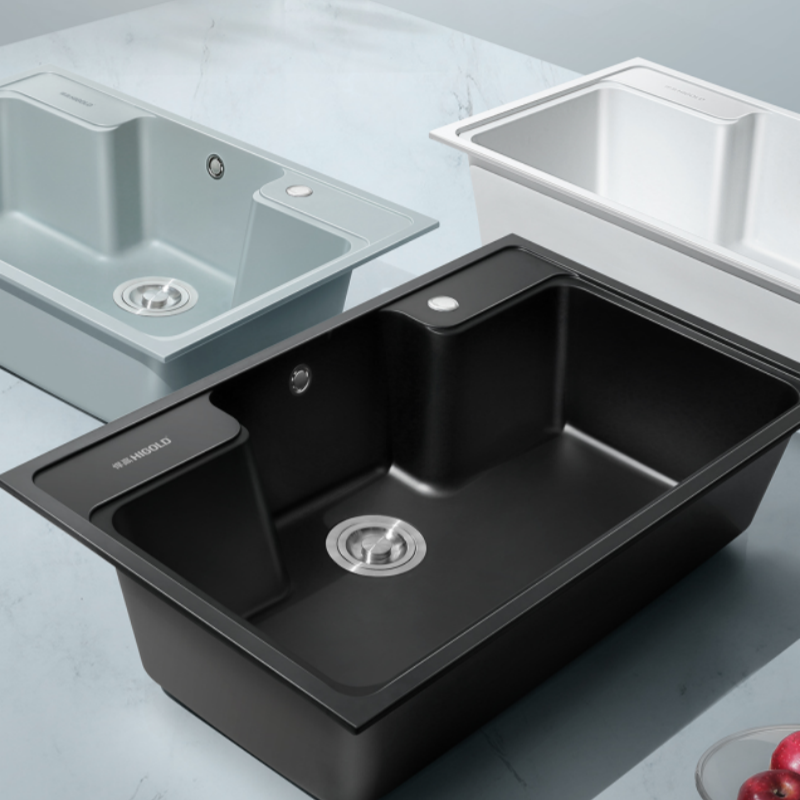
    If you care about maintaining a perfect surface appearance, composite sinks are more scratch-resistant; If you prioritize impact resistance and long-term stable use, stainless steel sinks are more durable.
    2025-11-25
    Learn More
  • Do hot and cold sink faucets rotate in the same direction?
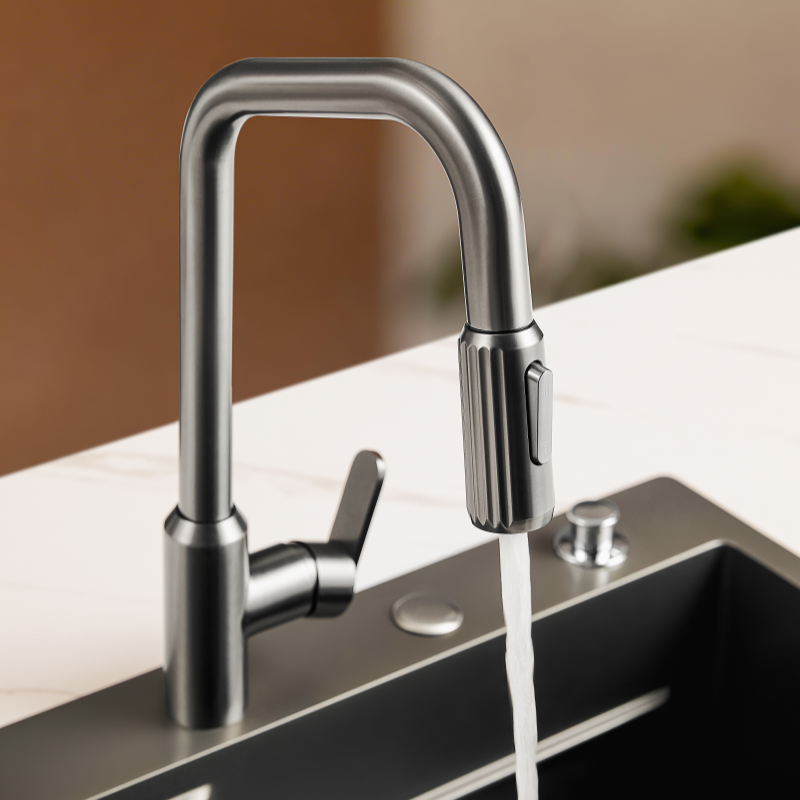
    Not exactly. The rotation direction of hot and cold sink taps may vary across regions, brands, and designs. In most cases, the hot on the left, cold on the right is the most common direction, but improper installation or product variations can also cause reversed directions.
    2025-10-21
    Learn More
  • Are all dual-flow mixer taps suitable for kitchen sinks?
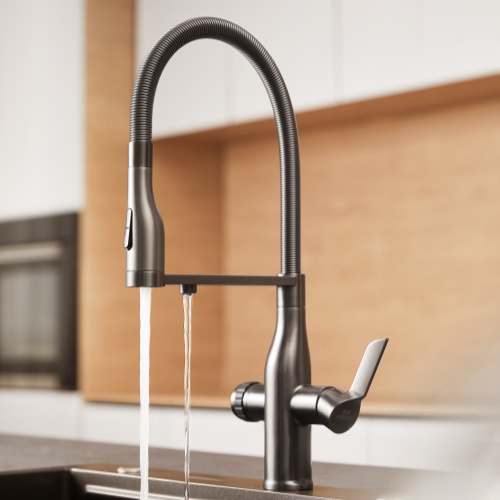
    While dual-flow mixer taps offer the ability to mix hot and cold water and provide multiple water flow modes, their suitability for kitchen sinks depends on factors such as design, spout height, swivel angle, water flow pattern, and durability. Basin-type dual-flow mixer taps are generally not suitable for kitchen sinks; dedicated dual-flow mixer taps are the ideal choice.
    2025-10-17
    Learn More
  • What are the benefits of an apron-front sink?
    The extended front panel of an apron-style sink effectively prevents water from splashing out of the sink, protecting cabinets and floors from water stains. Water splashing around the sink is a common problem during daily cooking and cleaning. The extended front design of an apron-style sink significantly improves kitchen cleanliness and tidiness.
    2025-10-16
    Learn More
  • Can a dual-flow mixer tap be used in a kitchen sink?
    Dual-flow mixer taps can certainly be used in kitchen sinks, but consideration must be given to matching the sink's hole diameter, spout height, material, and flow design. Kitchen sinks typically have single or multiple holes. Dual-flow mixer taps typically support single or three-hole installations and can be adapted to different sinks using a base or adapter.
    2025-10-10
    Learn More
  • Can sinks made of any material be flush-mounted?
    Not all sink materials are suitable for flush-mount installation. While sink materials like stainless steel, quartz, and composite materials generally meet flush-mount installation requirements, more fragile materials like ceramic and copper sinks require extra care during installation to ensure they are not damaged by external forces.
    2025-10-02
    Learn More
  • How do I know if my kitchen sink is topmount or undermount?
    If you run your finger over the rim of the sink, you can feel a noticeable transition. If the sink rim is smooth and inaccessible, it's likely an undermount sink. If the rim is prominent and you can feel a distinct "countertop-to-sink" transition line, it's a topmount sink.
    2025-09-19
    Learn More

    Get the latest price? We will reply as soon as possible (within 12 hours)