News

  • What Secures an Undermount Kitchen Sink?
    Strong Adhesives are a Core Securement Method A key to securing an undermount sink is using professionally applied stone adhesive, structural adhesive, or epoxy adhesive. High-quality structural adhesives can withstand long-term tensile, sagging, and impact forces, ensuring the undermount sink's stability.
    2025-12-15
    Learn More
  • High vs. Low-curvature Kitchen Sink Faucets: Which is Better?
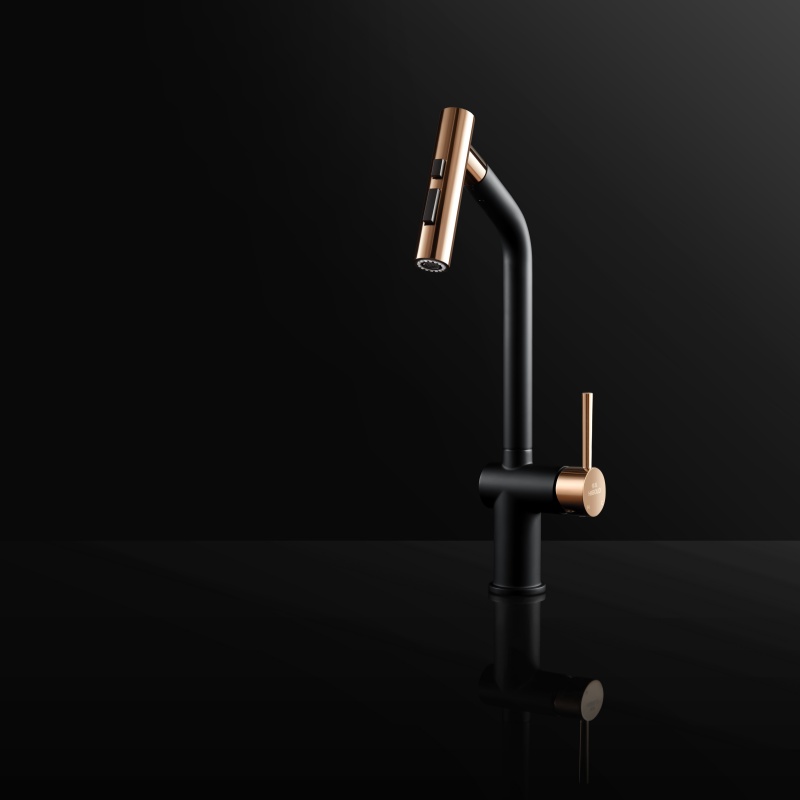
    High-curve kitchen sink faucets have a higher spout position, typically rising 25-45 cm from the countertop. Low-curve kitchen sink faucets have a lower spout position, typically 15-25 cm high. They have a more compact and simpler appearance and are often used in small kitchens or areas with low wall cabinets.
    2025-12-12
    Learn More
  • Why is Stainless Steel Recommended for Undermount Sinks?
    When choosing an undermount sink, the sink material must be able to withstand the weight, tension, and long-term stress brought about by the suspended installation method. Stainless steel has a natural advantage in this regard, making stainless steel undermount sinks exceptionally stable during installation.
    2025-12-11
    Learn More
  • Why Do People Prefer Undermount Kitchen Sinks?
    Countertop sinks, due to their raised edges, easily accumulate limescale, grease, and food residue. Undermount kitchen sinks, with their recessed design, allow dirt from the countertop to be directly swept into the sink with a cloth or scraper.
    2025-12-10
    Learn More
  • Which Stainless Steel Sink is the Healthiest?
    304 stainless steel sinks, under normal kitchen conditions, can withstand long-term contact with water, salt, and the acidic and alkaline substances in everyday food without easily rusting. Their smooth surface is easy to clean, making them suitable for most family kitchens and a basic guarantee of a healthy kitchen sink.
    2025-12-09
    Learn More
  • What are the differences between PVD sinks and stainless steel sinks?
    PVD sinks are not a new sink material; they are essentially still stainless steel sinks. PVD refers to a surface coating process, short for Physical Vapor Deposition. This process deposits a layer of metal ion plating on the surface of the stainless steel sink to improve surface color, wear resistance, and corrosion resistance.
    2025-12-08
    Learn More
  • What can I use to clean a stainless steel kitchen sink?
    Daily Cleaning: • Rinse with water • Wipe with a soft sponge and neutral detergent • Rinse thoroughly with hot water • Dry with a microfiber cloth Deep Cleaning: • Sprinkle with baking soda • Spray with white vinegar • Let it sit and scrub • Rinse thoroughly • Dry • Lightly wipe the sink surface with a small amount of stainless steel polish
    2025-12-05
    Learn More
  • What is the PVD coating on 304 stainless steel sinks?
    PVD coating (Physical Vapor Depsosition) is a coating technology that deposits metal or ceramic materials onto the surface of a 304 stainless steel sink in a vacuum environment through physical vaporization, evaporation, or sputtering. This process does not involve chemical reactions, resulting in a high-purity, dense, and strongly adhesive coating.
    2025-12-04
    Learn More
  • Is PVD Coating Better for 304 Stainless Steel Sinks?
    It evaporates a metal target into ions, which are then deposited onto the surface of a 304 stainless steel sink, forming a dense, strong, and corrosion-resistant metal film. This film is very thin, yet possesses extremely high strength and adhesion, significantly enhancing the appearance and performance of the 304 stainless steel sink.
    2025-12-03
    Learn More
  • Replacing an Undermount Sink: Should You Remove It from Below or Above?
    Undermount sinks are primarily fixed in the following ways: 1. Wrap-around metal brackets (common on stone countertops) 2. Structural adhesive bonding under the countertop (glass glue/marble glue/epoxy resin) 3. Countertop weight pressing structure (some sinks have pre-drilled edges that prevent upward passage) Based on the above reasons: Undermount sinks almost never can be removed upwards; replacement must be done by disassembling from below and removing them downwards.
    2025-11-28
    Learn More

Get the latest price? We will reply as soon as possible (within 12 hours)