

News

  • Replacing an Undermount Sink: Should You Remove It from Below or Above?
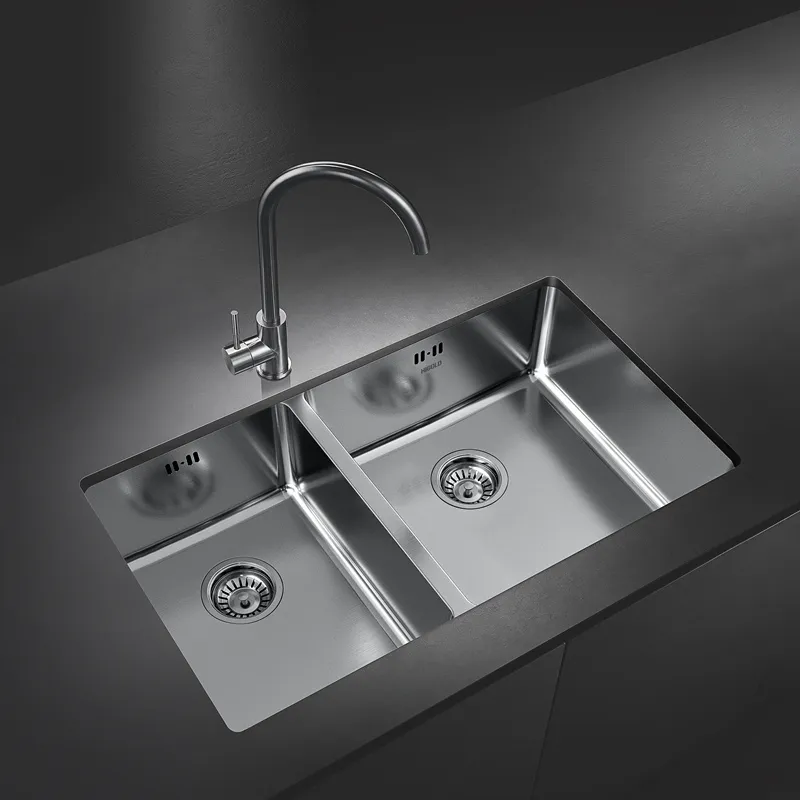
    Undermount sinks are primarily fixed in the following ways: 1. Wrap-around metal brackets (common on stone countertops) 2. Structural adhesive bonding under the countertop (glass glue/marble glue/epoxy resin) 3. Countertop weight pressing structure (some sinks have pre-drilled edges that prevent upward passage) Based on the above reasons: Undermount sinks almost never can be removed upwards; replacement must be done by disassembling from below and removing them downwards.
    2025-11-28
    Learn More
  • Are scratches on stainless steel kitchen sinks permanent?
    Minor Scratches are Not Permanent Most of the fine scratches seen on stainless steel kitchen sinks are actually minor surface wear. These scratches are typically: • Very shallow • Irregularly distributed • More noticeable when the angle of light changes • Can be faded or even disappeared with appropriate methods
    2025-11-24
    Learn More
  • How Deep Should an Undermount Kitchen Sink Be?
    In actual design and installation, the standard depth of undermount kitchen sinks is typically between 18 cm and 25 cm (approximately 7 to 10 inches). However, this is only a general reference range. The specific choice should be made in conjunction with the kitchen countertop height and the user's height.
    2025-11-21
    Learn More
  • Is a thicker handmade stainless steel kitchen sink always better?
    Moderately increasing the thickness can indeed enhance the stability and lifespan of the sink. However, beyond a certain range (such as exceeding 1.5mm), the benefits diminish significantly. For example: • Limited increase in strength from thicker sinks; • Significantly increased weight, making installation more difficult; • Increased cost, but little improvement in daily user experience.
    2025-11-20
    Learn More
  • Is a Black Kitchen Faucet a Good Idea?
    Absolutely. A black kitchen faucet is an excellent design choice that combines aesthetics and practicality. It can add a modern touch to the kitchen space, enhance the overall texture, and has the advantages of being relatively stain-resistant and easy to match with other elements.
    2025-11-18
    Learn More
  • Can stainless steel kitchen sinks be installed under the countertop?
    Many people worry: Will stainless steel kitchen sinks be unstable when installed under the countertop? In fact, stainless steel undermount sinks are very reliable in terms of load-bearing capacity and durability. Compared to ceramic or granite sinks, stainless steel is lighter, placing less strain on the countertop and making undermount installation safer.
    2025-11-17
    Learn More
  • Why is my double bowl kitchen sink not draining properly?
    Compared to single-bowl sinks, double-bowl sinks require two drain outlets to converge on the same drainpipe. If the connection is poorly designed, such as a T-joint with an excessively small angle, it can easily cause water flow to clash and pressure imbalance, leading to poor drainage.
    2025-11-14
    Learn More
  • Why You Should Choose a 304 Stainless Steel Kitchen Sink?
    Many people, upon hearing "316 is better than 304," mistakenly believe that a higher-grade material must be more suitable for the kitchen. This is a common misconception. 304 can easily resist common kitchen irritants such as water, salt, alkali, and grease. The "extra corrosion resistance" of 316 is almost meaningless in a typical home environment.
    2025-11-13
    Learn More
  • Do Handmade Stainless Steel Kitchen Sinks Have Welds?
    Stamped sinks are formed from a single sheet of stainless steel using a large stamping machine, with the body and corners naturally shaped without welding. The manufacturing process for handmade sinks is completely different. Therefore, welds are an inevitable part of the structure of handmade stainless steel kitchen sinks.
    2025-11-12
    Learn More
  • How to Remove Rust from Stainless Steel Kitchen Sinks?
    Baking soda is a common and safe alkaline cleaner that has a neutralizing effect on rust. Instructions: • Mix baking soda with a small amount of water to form a paste. • Apply evenly to the rusted areas of the stainless steel kitchen sink. • Let it sit for 10-15 minutes, then gently wipe with a soft sponge. • Rinse thoroughly and dry.
    2025-11-11
    Learn More

Get the latest price? We will reply as soon as possible (within 12 hours)